Set your numbers to see what to budget, and when profit shows up
Thank you! Your submission has been received!
An illustration, not a forecast. These results aren’t guaranteed and your spend will vary, but to aim for these numbers, plan to invest at least this budget.
Who closes the sale: your product or your team?
The answer changes the campaigns, the message, the offer and what we count as success.
Your product closes
- Conversion
- Sign-ups at volume, sent straight into the product.
- Message
- Speed and simplicity: the product has to sell itself.
- Offer
- Free trial, freemium or a short walkthrough.
- Success
- Sign-upActivationPaid upgrade
Your team closes the sale
- Conversion
- Demo requests from the right roles at target accounts, sent to your sales team.
- Message
- Business case, risk and ROI: several people have to agree.
- Offer
- Demo, consultation, case studies or ROI guides.
- Success
- Qualified leadOpportunityClosed deal
The six defining variables
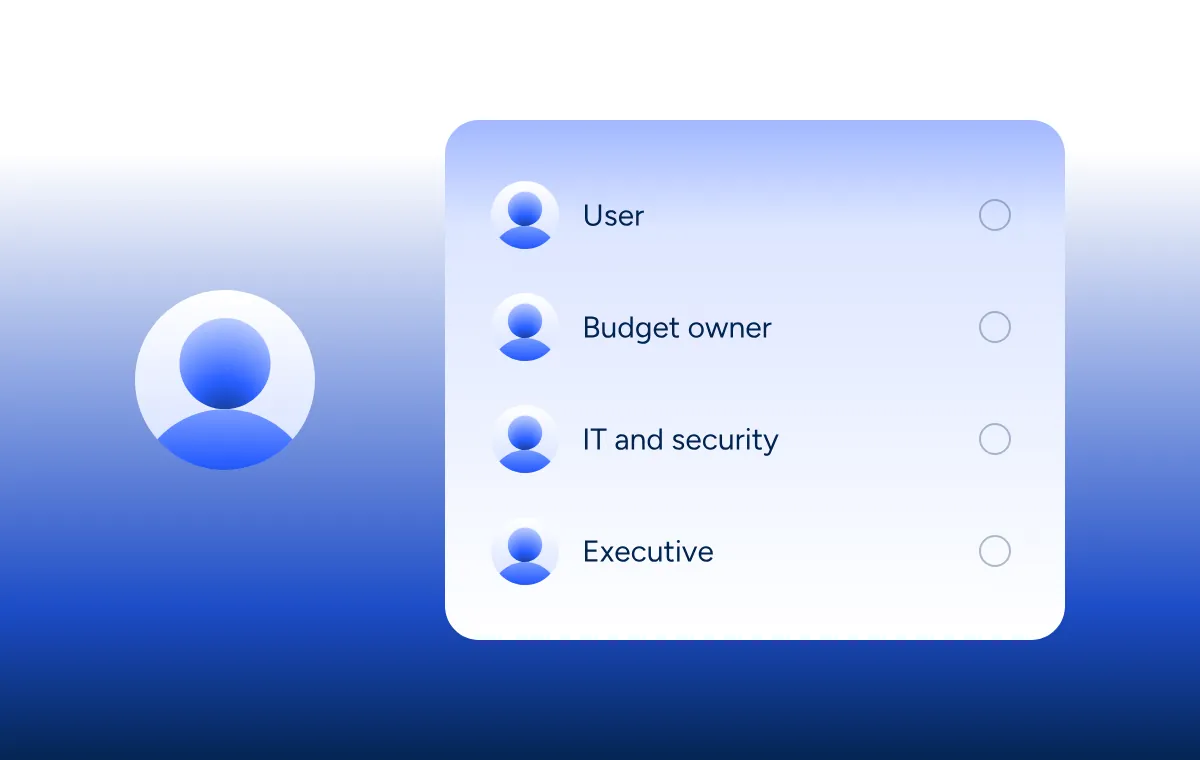
Problem it solves
Context for messaging.
Differentiation and competitors
Proof points.
Buyers and users
Targeting.
Conversion path definition
Trial, demo or contact.
Sales cycle length
Measurement window and journey length.
Funnel and tracking
Conversion events and reporting depth.
Framework over guesswork
Six stages, run as a loop: every campaign feeds the next round of decisions.
Competitive analysis
Strategy
Campaign execution
Ongoing management
Constant analytics & analysis
Optimization & automation
Each stage compounds the one before it: by stage six, every decision runs on data, not opinions.
The misreading of the lower-converting campaign
A campaign that brings fewer conversions can look like it’s failing. If those customers stay, it’s the one building your revenue.
How we spot the customers who stay
- Before launchYour won and lost deals show who to target.
- First weeksYour sales team tells us which leads are real buyers.
- After one sales cycleClosed deals per channel move the budget.
- Months laterWho stays and who cancels shapes the next round.
Volume campaign
15 new customers a month at $2,000 each. 8% leave monthly.
Quality campaign
10 new customers a month at $3,000 each. 1.5% leave monthly.
After 6 months, net profit per month: volume campaign minus $2,322, quality campaign minus $8,327.
Interest but few customers? Identify the issue
Targeting
Leads don’t match your ICP
How many leads match your ideal customer: role, company size, industry.
Targeting or message: the audience is too broad or the ad attracts the wrong roles.
Landing page
Clicks, but few conversions
How many visitors convert, ad by ad.
The offer or landing page doesn’t match the ad’s promise or the buyer’s stage.
Onboarding
Sign-ups never reach value
How many sign-ups reach the moment the product proves itself.
Onboarding: users don’t get to the point where the product proves itself.
Sales
Qualified leads stall
How fast the first contact happens, and how many demos take place.
The sales process: slow follow-up, demo no-shows, weak qualification.
Pricing
Good-fit leads lost for the same reason
Whether one reason for lost deals keeps coming back.
Pricing or product fit: price, a missing feature, a stronger competitor.
An ICP your ads can actually reach
Ad platforms can’t target a pain point, and they tag many companies with more than one industry. We turn your ideal customer into audiences, keywords and creative angles, built from your won deals, your sales calls and campaign data.
- AudiencesRole, company size, industry
- KeywordsPain points
- Creative anglesPain points, role
How we target without cutting real buyers
- 01
Read the leads first
We check each lead against your ICP, with your sales team, before changing the targeting.
- 02
Narrow by role, not by industry
Excluding an industry can cut real buyers, so we filter by job title and seniority instead.
- 03
Exclude company by company
Once you have an account list, broad filters give way to exclusions based on your demos.
Capture today’s buyers, create tomorrow’s
Lead generation captures people who are already looking. Demand generation creates the reason they start, and without it capture thins out. We set the ratio for your category and measure both on pipeline.
Demand generation
Creates future buyers
- Brand discovery
- Problem education
- Solution research
- Preference
Future demand
Upstream, to the people who will run those searches in two quarters.
Lead generation
Converts ready buyers
- Capture existing intent
- Qualify the fit
- Sales conversation
Qualified pipeline
Search terms with intent already in them, gated assets and retargeting.
The T.A. Monroe approach
Four steps from foundation to brand
- 1
Build the foundation
Audit the strategy, tech stack, website and sales funnel, then set KPIs and conversion tracking.
- 2
Seize existing demand
Start with the hand-raisers: the buyers already searching for what you offer.
- 3
Grow new demand
Win trust with content that solves your buyers’ problems, and test until KPIs show the right audience.
- 4
Win on brand
The compounding payoff of steps 1 to 3: brand strength that lowers acquisition costs over time.
Validate demand before the spend scales
New products and segments fail on the same thing: a go-to-market built around features instead of around who has the problem and what they do about it today. Then sales spends two quarters inventing the positioning on live calls.
What small tests answer before the budget is set
- DemandDoes the segment respond at all?
- MessageWhich message lands, and with which role?
- CostWhat does it cost to reach them?
- 01None
Align the team
Owners and a plan
- 02None
Define the ICP
The buyer and their problem
- 03Small
Test the message
Small paid tests on search and social
- 04Full
Launch
Scale what the evidence supports
- 05Full
Measure
Pipeline, then the next round
Proof across 3,500+ B2B SaaS campaigns
Across the paid campaigns we’ve built and optimized for B2B SaaS companies, our frameworks have delivered these averages.
3,500+
paid campaigns built and optimized
8 years
of B2B SaaS campaign data
4 channels
- Meta
Trusted by B2B SaaS companies worldwide
What you get
An audit of your site before we change anything, a live view of your account, a full review every quarter, and a dedicated team.
 At kickoff
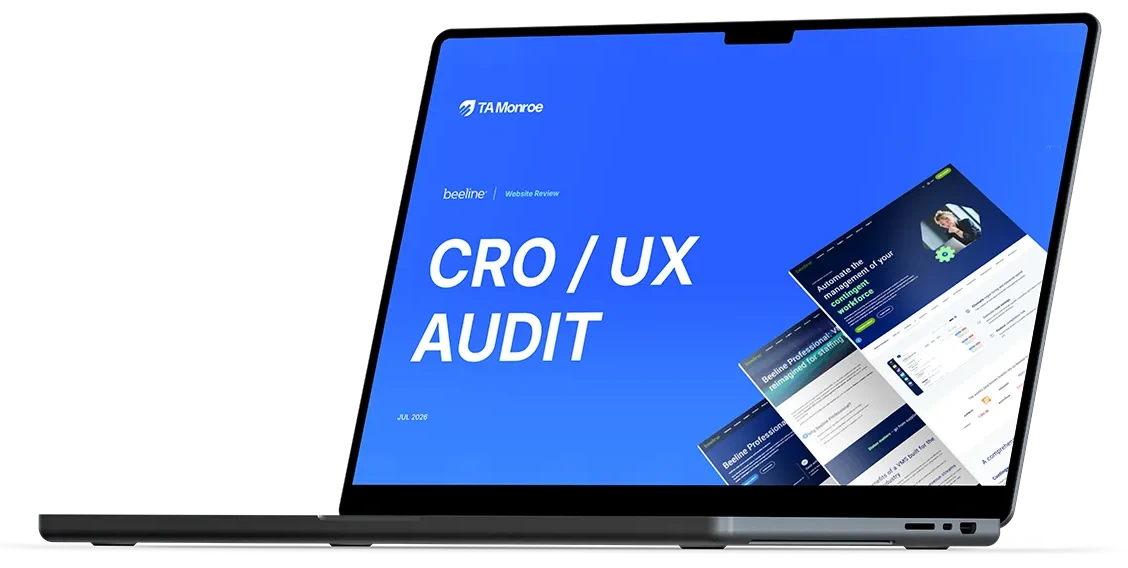
UX and CRO audit
We audit your site and the landing pages your conversions come from. You get a scored verdict, a 17-point breakdown and a prioritized fix list your team can ship.
 Always on
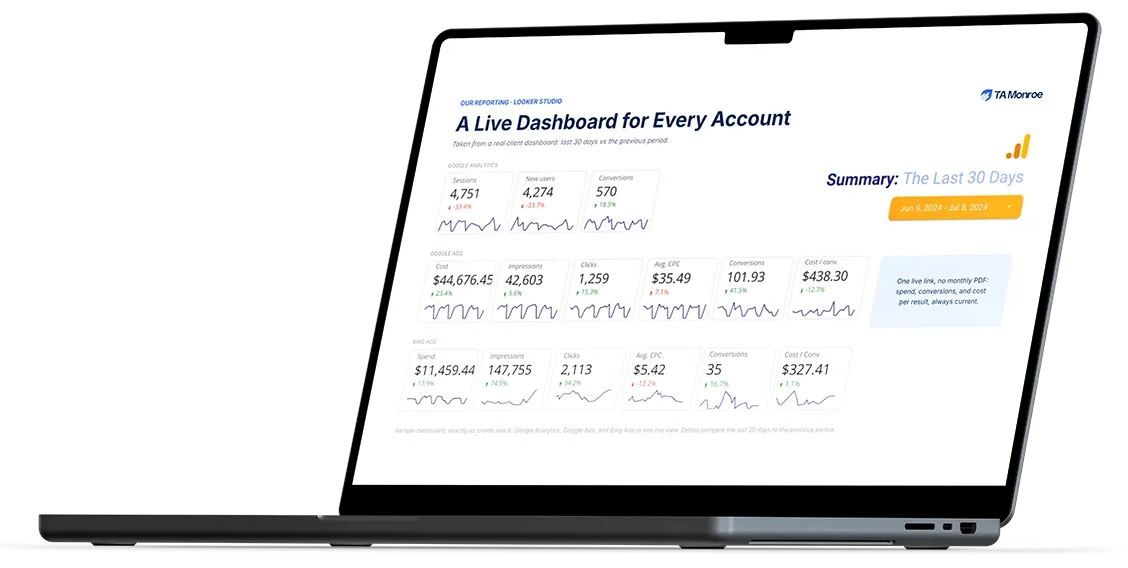
Live dashboard
Your account in Looker Studio: spend, conversions and cost per result for every channel, always current. One live link, no monthly PDF.
 Every quarter
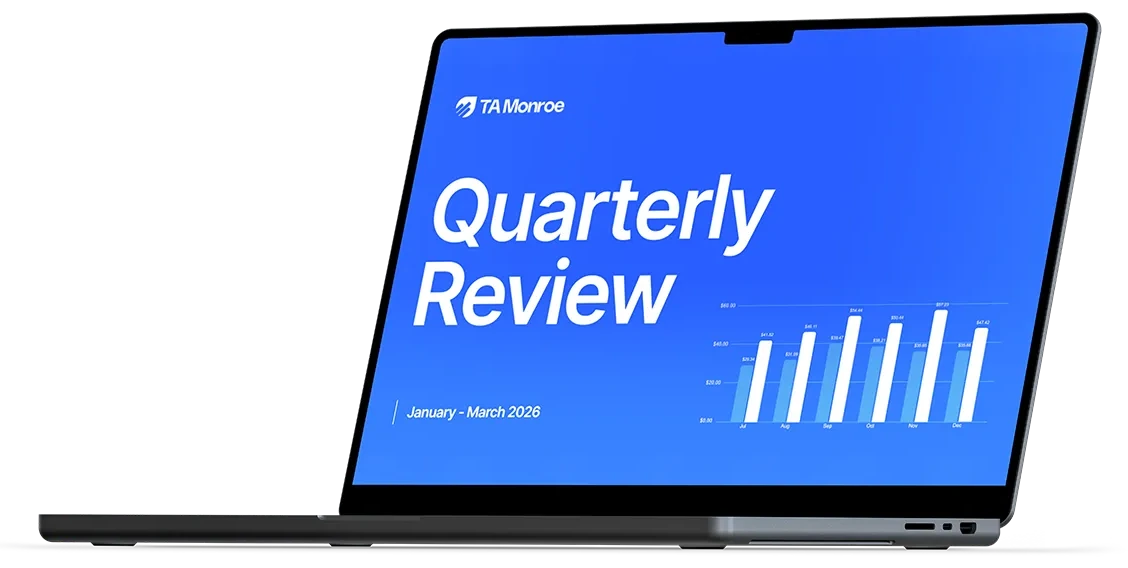
Quarterly review
Every three months, a review of how everything is going: results by month down to SQLs and customers, what we improved, and the plan for the next quarter.
The people on your account


Dedicated account manager
Your point of contact, keeping the work aligned with your pipeline goals and your ICP.


Dedicated PPC specialist
Builds, runs and optimizes your campaigns on Google, LinkedIn, Reddit and Meta.



Creative team
On hand for your campaigns’ creative and content: landing pages, banners and supporting assets.
- Copywriting
- Graphic design
- Web design
What our clients say


“We were nervous about what to expect with an unknown product. When we saw results from our initial campaigns, we knew we needed a better digital strategy. T.A. Monroe took us to the next level. The team really brought that next layer of expertise we needed. The results speak for themselves. I highly recommend T.A. Monroe Digital.”
Read more“T.A. Monroe has been an instrumental partner in speeding up customer acquisition in the SMB segment. With their help, we’ve been able to reach our ideal customers more effectively, resulting in meaningful revenue growth.”
Read more“T.A. Monroe has proven to not only be knowledgeable in the digital marketing space but also agile enough to optimize where needed and shift strategies to meet our requirements. They have successfully improved the quality of our lead generation and enhanced the overall sales pipeline and cycle.”
Read more“T.A. Monroe’s expertise in Paid Advertising, specifically for lead gen and b2b SaaS has been very valuable to Valimail. Their strategic approach, attention to detail, and continuous optimization efforts have significantly improved our lead quality and reduced our cost per acquisition.”
Read moreAnswares before you ask
A SaaS demand generation agency builds the demand that becomes your pipeline, rather than only capturing the demand that already exists. That means defining the ideal customer profile, creating and capturing demand across paid search and paid social, aligning messaging across the funnel, and measuring the whole thing on pipeline and revenue rather than lead volume.
No. Lead generation captures people who are already searching. Demand generation creates the reason they start. Most B2B SaaS companies need both, and the right ratio depends on how much existing demand your category already has.
We start with a free 15-minute strategy session. We review your product, market, ICP and current marketing, then map where pipeline is actually stalling and what to change first. You keep the map whether or not we work together.
On pipeline contribution, revenue influence and efficiency. We report demand generation KPIs that predict revenue, such as lead to opportunity rate and pipeline created per channel, and use cost per lead as a diagnostic.
As a SaaS demand generation agency we bring the whole system: proven playbooks, evidence from 3,500+ campaigns, and a dedicated team that owns your account, not a rotating one.
Full-Funnel Paid Media and Demand Generation for B2B SaaS
Paid Media
We plan, build, and optimize multi-channel campaigns that attract and convert high-value leads.
Paid Social
Engage your audience with strategic social ad campaigns built to generate demand and pipeline.
Paid Search
Capture high-intent buyers through precision-targeted search campaigns that drive measurable ROI.
Creative & Content
From ad visuals to landing pages, we craft creative that connects and content that converts.