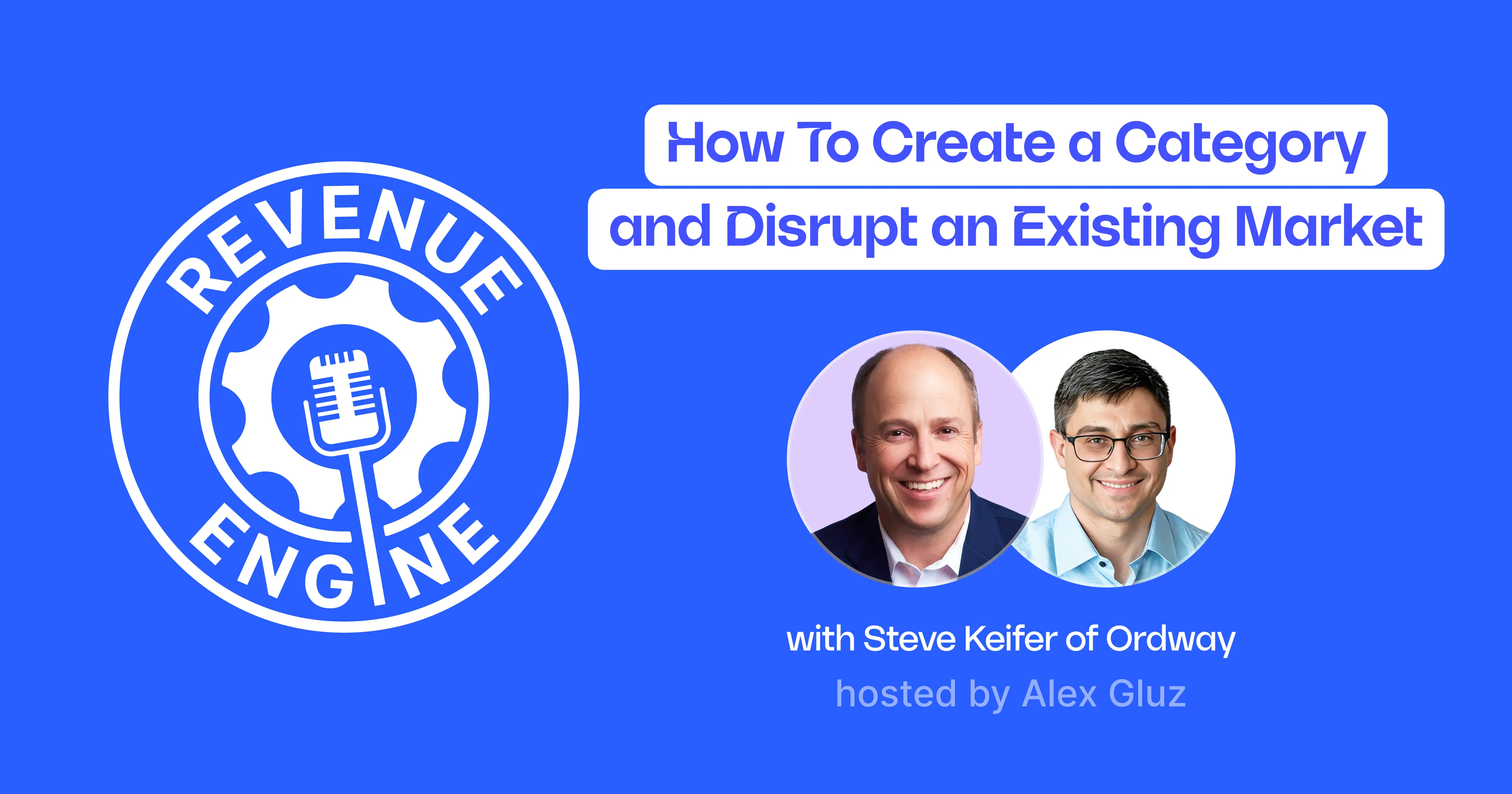
Workshop: Marketing Complex Products in an AI-Driven World With Steve Keifer

About Guest
Steve Keifer is the Chief Marketing Officer at Ordway, a fintech company whose finance and accounting software handles subscription billing, payments, revenue recognition, and SaaS financial reporting for companies with complex pricing and contract models. Ordway's customers include venture-backed businesses in SaaS, fintech, crypto, AI, and B2B marketplaces. Steve is leading a marketing organization for the fifth time, with more than 20 years across SaaS, cloud, and fintech, and has worked everywhere from early-stage startups to multi-billion-dollar public companies. He was a 2025 CMO of the Year finalist and has been named a CMO to Watch by CMO Alliance.
In this Workshop
Fintech and B2B SaaS products are complex, and their buyers often think they already understand the problem. They have managed billing, cash flow, and payments for years, so anything new first has to get past "we already have something for that." So how do you market a category buyers don't know they need, or win them away from tools they already trust?
In this workshop, Alex Gluz, founder of T.A. Monroe, a B2B SaaS marketing agency, speaks with Steve Keifer, CMO at Ordway, about category creation, market disruption, and what it takes to win skeptical finance buyers. Steve explains why creating a category and disrupting an existing one are hard in different ways, why new categories get no search traffic or AI citations, and why buyers have to feel the problem before you can sell the solution. He breaks down how CFOs became some of the most powerful buyers in B2B tech, how to speak their language with ROI and TCO, and what role paid media plays as AI platforms split on advertising. The conversation also covers customer advocacy, dark social, and why specialist content and consultative selling need people with real industry experience, a useful lens for anyone weighing a B2B SaaS agency vs. an in-house team.
Workshop Highlights:
01:48 – What makes fintech one of the hardest markets to crack
02:44 – Why complex fintech topics need specialist content writers
05:49 – Why no amount of paid spend fixes a positioning problem
10:15 – Category creation vs disruption: why both are hard in different ways
10:50 – Why new categories get no search traffic or AI citations
13:46 – Why category creators have to sell the problem before the solution
15:40 – Why the CFO has become one of the most powerful buyers in B2B tech
19:48 – How to win over finance leaders on the buying committee with ROI, TCO, and a clear narrative
27:56 – What role paid media plays as buyers shift to AI search
35:38 – Why customer advocacy and peer trust beat corporate brand claims
Resources Mentioned
- Alex Gluz on LinkedIn
- Steve Keifer on LinkedIn
- Ordway
- Bobby Patrick on LinkedIn
- OpenAI
- ChatGPT
- Anthropic
- Perplexity
- Gong
- G2
- Capterra
- Cursor
- Lovable
Quotable Moments
"If people don't know that a product exists or they need it, you can't really have an outbound BDR motion."
"You really got to have a product, in my opinion, that's 10 times better than what's out there."
"Marketing can lead that effort, but you can't do it alone."
"Having to have a big demand generation budget, I think, is actually a flaw in your business in a way."
"They do trust the completely anonymous random person on Reddit."
Action Steps
- Lead with why you're different, not what the product does: Finance buyers already know the category, so get to what makes you different and worth their time quickly.
- Fix positioning before you scale paid spend: If buyers don't see that their current setup is the problem, more budget only scales the disconnect.
- Educate the market before you sell a new category: Conferences, podcasts, PR, analysts, and influencers build the awareness a new category needs before demand generation can work.
- Bring your own ROI narrative to the CFO: Come in with the ROI, TCO, cost savings, or revenue uplift finance leaders expect, and be honest about what you don't know.
- Invest in customer advocacy and peer communities: Buyers trust peers over brand claims, so help happy customers speak for you in the communities where shortlists form.