Google Ads vs LinkedIn Ads for B2B SaaS: Which Deserves the Next Dollar

Neither channel deserves the whole budget, and the question is rarely asked correctly. Google Ads wins on cost efficiency because it captures demand that already exists: someone is searching, and intent is the discount. LinkedIn Ads wins on precision because it reaches the buyer before they search, by title, seniority, and company, which matters most when the deal involves a committee, not a single buyer. The right split depends on deal size, sales cycle length, and how much of your pipeline has to be created rather than captured.
The question behind the question
Most B2B SaaS teams that ask “Google or LinkedIn” are really asking a different question: where is the next incremental dollar most likely to return a marketing-sourced pipeline dollar, not just a click. That framing changes the answer, because Google Ads and LinkedIn Ads are not substitutes for each other. They sit at different points in the buying journey, and they are built to answer different problems in a full-funnel strategy. Treating the decision as either-or is how accounts end up starving the channel that was actually working.
This is the same discipline T.A. Monroe applies inside client accounts: define what “working” means before moving budget, because a channel that looks expensive on cost per click can be the cheapest channel per closed-won deal once sales cycle and deal size are accounted for.
What Google Ads is actually good at
Google Ads sells to intent. A buyer typing “best B2B SaaS paid media agency” or “Google Ads vs LinkedIn Ads B2B” has already named the problem and is comparing solutions, which is why search remains the highest-converting channel per click for bottom-funnel and mid-funnel keywords. It is also the fastest channel to read: cost per click and conversion rate are visible within days, not weeks, which makes it the easier channel to defend in a monthly reporting cycle.
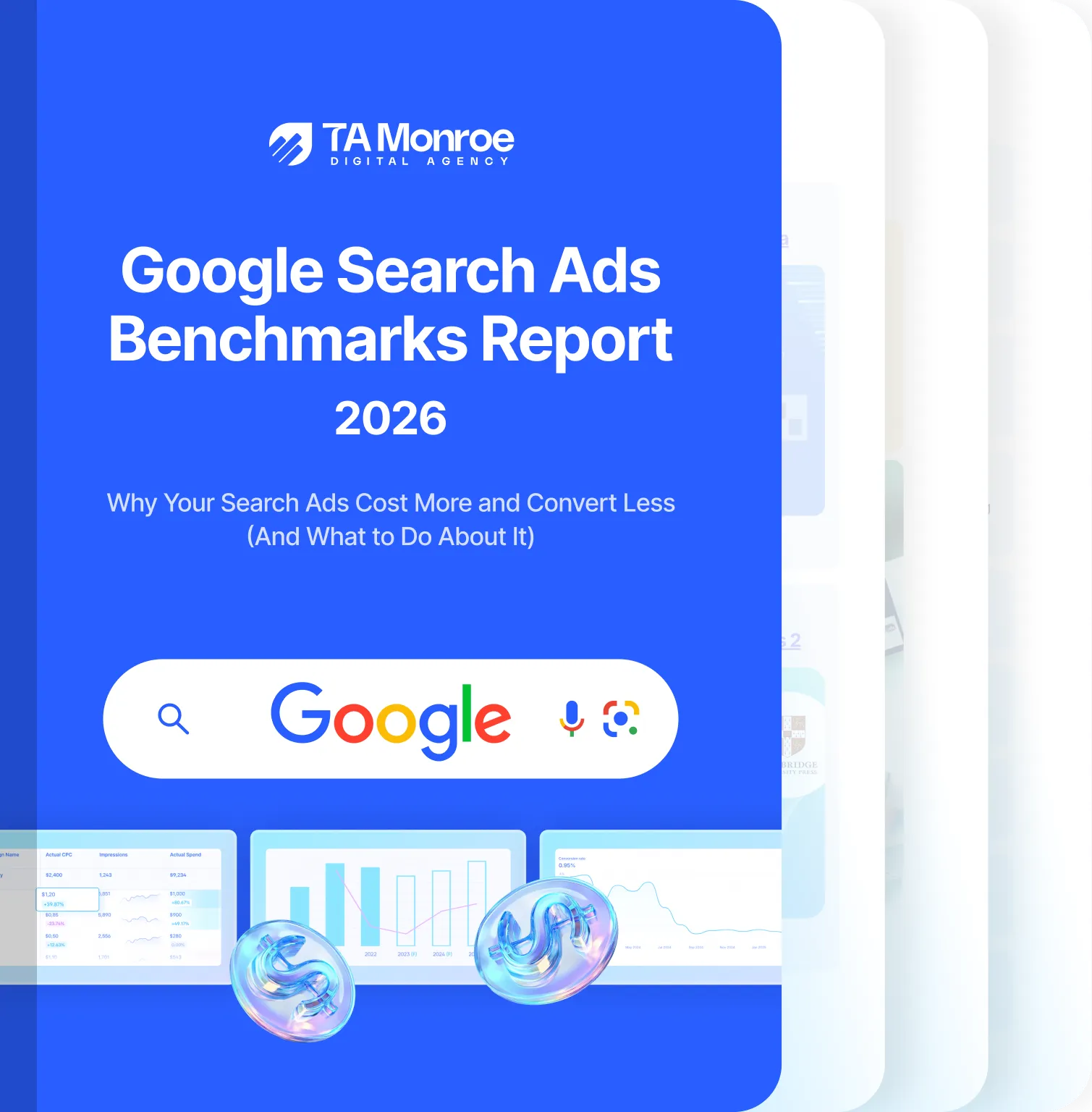
That intent is getting more expensive to buy, though. Average non-branded search CPC for B2B advertisers rose from $4.13 to $5.34 between August 2024 and July 2025, a 29% increase, while click-through rate fell from 5.47% to 4.04%, a 26% decline, as AI Overviews change where and whether an ad appears on the results page. B2B marketers have responded by pulling budget out of non-branded search, from 38.1% of paid media spend to 32.8% over the same window.
The trade-off is coverage. Google Ads can only capture demand that already exists in the form of a search. If the buying committee has not started looking, or if the person searching is not the economic buyer, search spend alone will not build the account-level awareness a longer, multi-stakeholder B2B SaaS sales cycle depends on.
What LinkedIn Ads is actually good at
LinkedIn Ads sells to precision. It is the only major paid channel that lets a B2B SaaS team target by job title, seniority, function, and company list simultaneously, which is what account-based targeting actually requires. That makes it the stronger channel for creating demand rather than capturing it: reaching a VP of Marketing or a Head of Growth before they have typed a single search query, and staying in front of every member of a buying committee, not just the one person doing the Googling.
The channel's own trend is moving in the opposite direction to Google Search. Cost per company influenced fell from €154 to €70.11 year over year, a 54% reduction, and LinkedIn's share of B2B paid social budget grew from 39% to 41%. Return on ad spend moved from 113% to 121% over the same period, while Google Search's fell from 78% to 67%.
The trade-off is cost per click and patience. LinkedIn Ads runs $15 to $31 per click depending on format, against Google's $5.34 average, and the return is slower to show up in a last-click report because its job is upstream of the search that eventually converts. Judging LinkedIn purely on cost per click against a Google Ads benchmark is close to the most common channel-allocation mistake in B2B SaaS paid media, and it is the mistake this article exists to correct.
The benchmark comparison
The two source reports are not the same vintage: the LinkedIn Ads Benchmarks Report is dated 2026 and the Google Search Ads Benchmarks Report is dated 2025; refreshing the Google report to 2026 is already a Q4 asset priority in the Sprint Register. Read the direction of each trend as the reliable signal, the absolute percentages as approximate until both reports share a year.
Google's own report does not publish a cost-per-lead figure, and that gap is the report's own argument: it tracks CPC and CTR erosion, not what a lead actually costs once it lands. Do not backfill this cell with an estimate. If a Google Ads cost-per-lead benchmark is wanted here, it needs its own data pull, not a guess dressed up as one.
4.4.1 Inside LinkedIn, format matters more than channel
The CPL gap between LinkedIn's own formats is bigger than the CPC gap between Google Ads and LinkedIn Ads. Before moving budget across channels, most accounts have a cheaper fix sitting inside their LinkedIn account already.
Document Ads carry the highest CPC in the mix at $30.62, and still deliver the lowest CPL, because a 26.77% completion rate does more work than a lower CPM ever could. Carousel is the reverse: a competitive CPM buys a 2.27% completion rate and the most expensive lead on the page. A team asking whether the next dollar goes to Google or LinkedIn should first check whether its LinkedIn dollars are already going to the right format.
Where the money actually goes: a framework for the split
The market-level trend favours LinkedIn: rising ROAS against Google Search's falling ROAS, a lower and falling cost per company influenced, and a growing share of B2B budget. That is a directional signal, not an account-level instruction. Three inputs decide the actual split more reliably than copying the market average.
- Average contract value. Below roughly $15k to $20k ACV, one buyer usually decides or heavily influences the deal, and Google Ads' intent capture tends to produce the cheaper qualified lead. Above that range, a buying committee is typically involved, and LinkedIn's account and title targeting starts to earn its higher cost per click, consistent with LinkedIn's 36% share of influenced new-business deals against Google Search's 31%.
- Sales cycle length. A 30-day cycle rewards the channel that converts fastest, which is usually Google Ads. A 90-day-plus cycle gives LinkedIn Ads room to build familiarity across the committee before a different channel drives the search-based conversion, a pattern a last-click report will never credit.
- How much demand already exists. A category with high, stable search volume for the buyer's problem favours Google Ads, because the demand is already there to capture. A newer category, or a specific ICP segment such as fintech that searches less predictably, favours LinkedIn Ads, because the job is to create the awareness a search campaign would otherwise have nothing to capture.
None of these inputs produces a single right answer on their own. Most B2B SaaS accounts T.A. Monroe has audited are not actually choosing between the two channels: they are running both at the wrong ratio for their deal profile, or running LinkedIn in the wrong format for its objective, which reads as “paid media isn't working” when the real fault is allocation, not channel.
The fintech case
Fintech accounts are the sharpest version of this decision. Longer compliance-aware sales cycles and multiple stakeholders (a Head of Growth, a Head of Compliance, sometimes a CFO) push naturally toward LinkedIn's account-based strength, while category search volume for fintech-specific terms is thinner and less consistent than in broader B2B SaaS, which weakens the case for a Google Ads-only strategy. In practice, this usually means fintech accounts carry a higher LinkedIn Ads share of budget than the median B2B SaaS account in the table above, not a lower one.
The Reddit wildcard
Reddit is not yet a default third channel for most B2B SaaS teams, but it is not a rounding error either, particularly ahead of a product launch or for reaching a technical buyer who researches in public communities rather than on LinkedIn. It belongs in the conversation once Google Ads and LinkedIn Ads are already allocated correctly, not before. For the specific conditions where it earns a budget line, see When to Add Reddit to a B2B SaaS Paid Mix (and When Not To).
How T.A. Monroe decides this for clients
T.A. Monroe has built and optimized more than 3,500 paid campaigns across Google, LinkedIn, and Facebook over the past 8 years, and the channel-split question above is one of the first diagnostics run on any new account, before any creative or targeting work starts. Across those accounts, the frameworks behind this article have delivered an average 53% increase in high-quality leads and a 27% reduction in CAC. One recent client cut its average MQL-to-SQL time by 41%, working from the same format-first prioritization this article argues for.
The system is the same one behind every account: benchmark the account against the category median, name the deal profile (ACV, cycle length, committee size), check the format mix inside each channel before moving budget between channels, then set a starting split and test from there rather than guessing. It is a system, not a single tool, and it is why the answer to “Google or LinkedIn” is almost always “both, in a specific ratio, in the right formats,” not “pick one.”
FAQ
1. Is LinkedIn Ads more expensive than Google Ads for B2B SaaS?
Yes, on cost per click: LinkedIn runs $15 to $31 depending on format, against Google's $5.34 average for non-branded search. It is not necessarily more expensive per qualified lead. LinkedIn's Document Ads format produces a $253.93 CPL, cheaper than Carousel's $582.97 on the same channel, and Google does not publish a comparable CPL figure at all. Compare formats and funnel stage, not a single blended cost per click.
2. Should a B2B SaaS company run both channels at once?
Most should, at different ratios depending on ACV, sales cycle, and how much demand already exists to capture. Running only one channel usually means either overpaying for a Google Ads keyword an account cannot win, or spending on LinkedIn awareness with no search campaign in place to catch the demand it creates.
3. What ACV is the tipping point for prioritizing LinkedIn Ads?
There is no fixed number, but roughly $15k to $20k ACV is where a buying committee typically starts to replace a single buyer, which is the point LinkedIn's account and title targeting starts to outperform Google Ads' single-buyer intent capture. Sales cycle length matters as much as ACV here.
4. Does Google Ads work for enterprise, multi-stakeholder deals?
It can capture the one buyer on the committee who is actively searching, but it cannot reach the rest of the committee who never search at all. Enterprise accounts generally need LinkedIn Ads to cover the committee and Google Ads to capture the searcher, run together rather than in place of each other.
5. How does Reddit fit next to Google and LinkedIn?
As a third channel added once the Google Ads and LinkedIn Ads split is already working, not a replacement for either. It tends to earn its budget around a product launch or with a technical buyer who researches in public communities. See the Reddit spoke article for the specific conditions.
6. What's a realistic starting split for a team running both for the first time?
Start from the benchmark table above for your ACV band, then adjust for sales cycle length and how much of the category's demand is already searchable. Treat the starting split as a hypothesis to test for one full sales cycle, not a permanent allocation.
7. How long before an account has enough data to trust its own comparison?
Typically one full sales cycle at minimum, so the comparison includes closed-won deals, not just leads or MQLs. A shorter read tells you which channel is cheaper to fill the top of the funnel, not which one is actually paying back.
Start with a free strategy call. We'll dig into your account, and campaigns, and will apply the same process that has cut client CAC by 17% in 30 days.






.webp)



.avif)