Workshop: Events, Paid Media, and Pipeline Signals: The Technical B2B Marketing Playbook
About Guest
Matt Lyman is a B2B marketing leader with nearly 20 years of experience across demand generation, ABM, marketing operations, and B2B growth. He most recently served as Vice President of Marketing at Flosum, an enterprise Salesforce-native platform for DevOps, data protection, backup, security, and governance, where he led marketing strategy for technical audiences and helped translate complex products into clear, human-centered messaging. Matt has also held marketing leadership roles at Chef Software and LeanData, and brings a people-first perspective shaped by his background in theater and community building.
In this Workshop
Marketing to technical audiences exposes weak assumptions quickly. These buyers rarely respond to vague promises or generic campaigns, and they tell you immediately when the message is wrong. So how can marketers build systems that earn trust, generate demand, and keep improving?
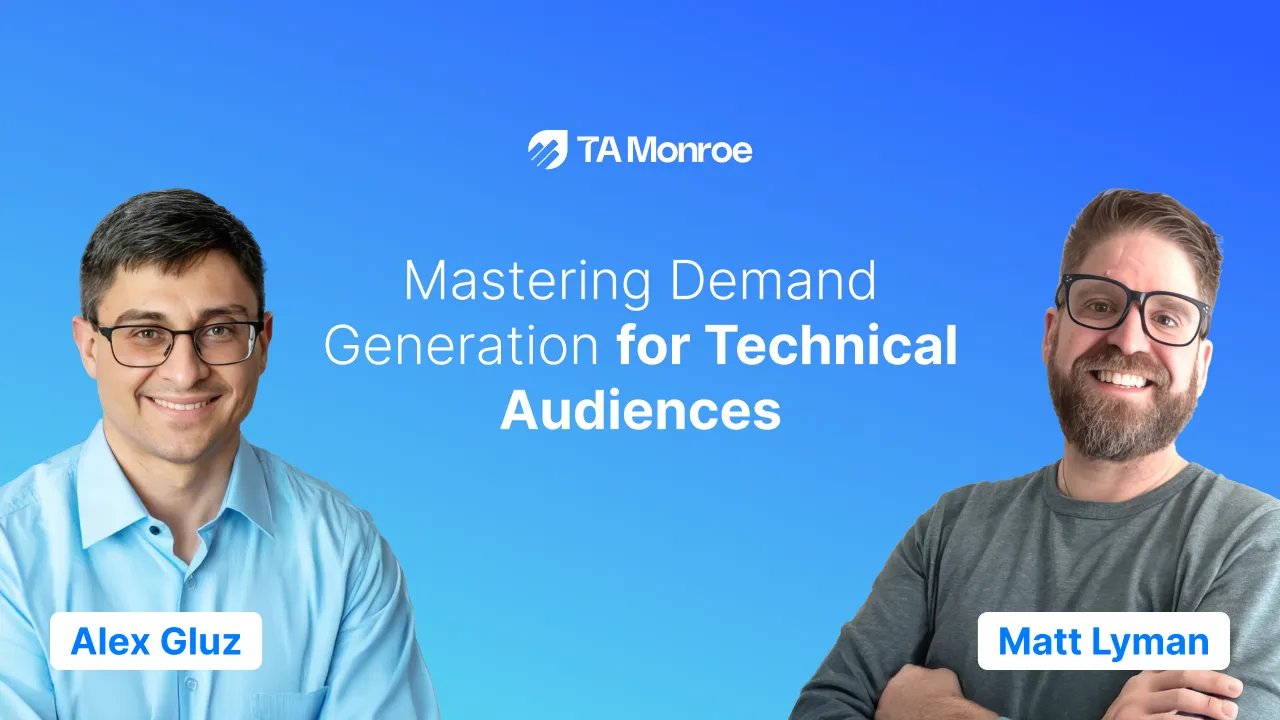
In this workshop, Alex Gluz speaks with Matt Lyman, former Vice President of Marketing at Flosum, about building effective marketing engines for technical audiences. Matt explains why technical buyers should be treated as the fastest feedback loop a marketer can have, how to make disciplined bets on events and paid media instead of spreading budget thin, and which leading indicators reveal pipeline trouble before it hits the revenue numbers. The conversation also explores the role of AI in accelerating execution without replacing human strategy, and why community and relationships remain durable growth drivers in B2B.
Workshop Highlights:
01:25 – Meet Matt Lyman and why he keeps running toward technical audiences
01:54 – Matt's career path through financial services, Chef Software, and LeanData, and discovering B2H marketing
03:31 – Selling to enterprise executives and hands-on practitioners at the same time
04:56 – Why technical buyers give real feedback fast and how that fuels demand gen testing
05:43 – Growing a thick skin, treating messaging as a hypothesis, and the baseball batting-average mindset
07:11 – How to decide which events are worth the big swing
08:05 – Doing a booth right, guerrilla marketing rules, and the Salesforce ecosystem constraints
09:35 – Driving people to the booth across sales, CS, and BDRs
11:31 – How the pressure to show up everywhere spreads budget so thin you lose the signal
12:20 – Choosing events and channels by who is actually in the room, not the rough category
14:10 – The leading indicators that reveal pipeline trouble before the numbers catch up
16:18 – Why demo requests should be watched monthly to quarterly, not week over week
17:52 – Mid-funnel engagement drop-offs as the earliest warning sign
19:15 – Using leading indicators to spot holes in the physical funnel and reporting gaps
20:31 – The lead quality conversation: why volume can look fine while sales stays frustrated
21:41 – Where paid media breaks down: context, ad-to-landing-page match, and executive vs practitioner messaging
24:42 – The Flosum results: 10x leads and 100x impressions in a month after Dreamforce
25:34 – Handling personal Gmail leads, nurture, and speaking to buyers based on funnel stage
29:37 – The one growth lever for 2026
30:18 – Building big-C and small-C community, partnerships, and developer communities
33:08 – Matt's mentors and the best advice they gave him
Resources Mentioned
Quotable Moments
"As a leader, you have to be able to help your team understand that mistakes are going to happen."
"When you actually are going to do a booth, it has to be done right."
"I like to say there's no silver bullet with marketing."
"I am a very firm believer in not looking at demo requests week over week."
"You still need that human to think through it, to strategize it, to edit it, to review it."
Action Steps
- Tailor messaging to each technical buyer: Speaking differently to executives and practitioners ensures each audience hears the value that matters most to them.
- Treat marketing feedback as a fast learning loop: Technical audiences quickly reveal weak messaging, helping teams refine campaigns before wasted spend compounds.
- Choose events based on audience fit: Prioritizing events with the right buyers in the room prevents teams from spreading budget and effort too thin.
- Align paid media with the full conversion path: Matching ads, landing pages, and follow-up messaging creates better context and improves lead quality.
- Keep humans at the center of AI-driven marketing: AI can speed up execution, but strategic judgment, editing, and creativity still require human oversight.