When to Outsource vs. Build In-House: Balancing Resources to Optimize SaaS Marketing ROI

Executive Summary: The SaaS Marketing Resource Dilemma
For SaaS companies seeking fast growth in a competitive landscape, one major challenge often emerges: Should your marketing initiatives be outsourced to agencies, or should you build and scale an in-house team?This question isn't just about cost or convenience. It's about aligning your marketing capabilities with your business goals, tech stack, growth stage, and unique value proposition.The decision to outsource or hire internally shapes everything from your speed to market and control over messaging, to your access to top talent and ability to pivot as priorities shift.What you'll discover in this guide:
- Key factors that determine your optimal marketing resource model
- Comprehensive comparison of outsourcing vs in-house advantages
- Decision-making framework for evaluating each marketing function
- Best practices for managing hybrid teams successfully
The Marketing Resource Challenge: Understanding Your Options
The Strategic Importance of Resource Allocation
Effective resource allocation in marketing directly impacts ROI, determines how quickly you can seize opportunities, and ultimately influences your company's trajectory in the SaaS ecosystem.Marketing budgets across SaaS firms have tightened. Gartner reports that average marketing spend as a percent of revenue dropped from 9.1% to 7.7% between 2023 and 2024, with only about a quarter of CMOs feeling they have sufficient budget to execute their strategies fully.
Why Resource Decisions Matter More Than Ever
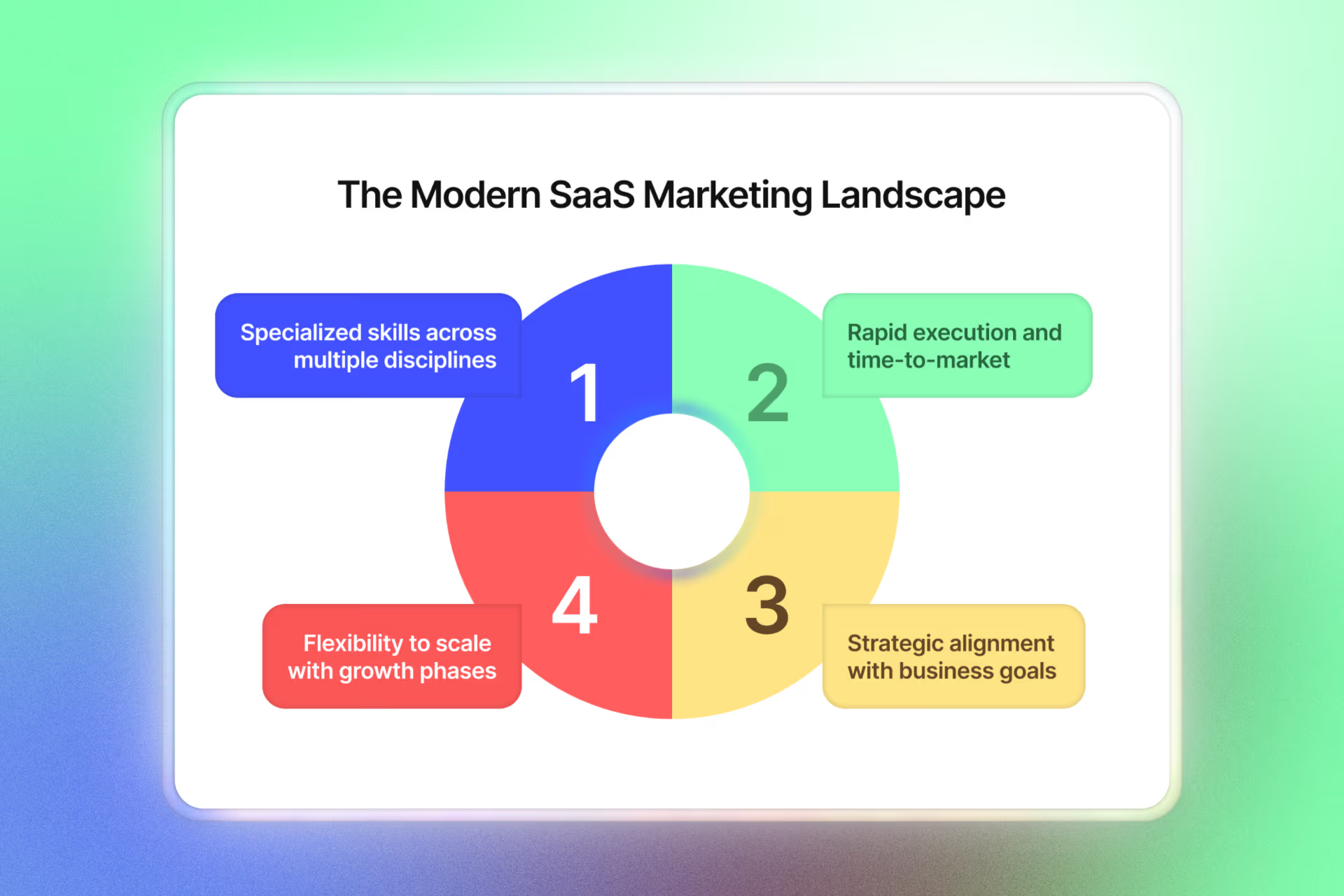
The Modern SaaS Marketing Landscape Demands:
- Specialized skills across multiple disciplines
- Rapid execution and time-to-market
- Strategic alignment with business goals
- Flexibility to scale with growth phases
Section Takeaway:
Companies face a fundamental choice that goes beyond simple cost calculations to strategic alignment of capabilities with business objectives.
What is Outsourcing in SaaS Marketing?
Outsourcing involves partnering with external companies or contractors to perform some or all marketing activities. This can include:Agencies: Specialized SaaS marketing agencies or digital marketing firms that offer expertise in areas such as:
- Content creation and SEO
- Paid advertising and lead generation
- Social media management
- Email marketing and automation
- Product launches and positioning
Agencies bring experienced teams that have worked with diverse SaaS companies and understand industry-specific challenges.
What is Building an In-House SaaS Marketing Team?
Building in-house means hiring full-time employees to create an internal marketing team that handles all or most marketing functions. An in-house team is deeply integrated into the company culture and operations, providing:
- Direct control over strategy and execution with faster alignment to product teams, sales, and executive leadership
- Deeper product and brand understanding, critical for complex SaaS solutions requiring nuanced messaging and long-term relationship building
- Institutional knowledge retention and long-term capability development within the company
Common SaaS Marketing Functions
Whether outsourced or managed in-house, typical SaaS marketing activities cover several specialized functions:
- Content Marketing:Creating blogs, whitepapers, case studies, ebooks, and video content that educate and nurture leads
- Search Engine Optimization (SEO):Optimizing website content and technical structures to increase organic search visibility and inbound traffic
- Paid Media & Advertising:Managing pay-per-click (PPC), social media ads, display advertising, and retargeting campaigns
- Product Marketing:Positioning the SaaS product, driving user adoption, and crafting messaging aligned to customer segments and journey stages
- Email Marketing and Automation:Designing email nurture programs and workflows that engage prospects and customers
- Demand Generation & Lead Nurturing:Orchestrating multi-channel campaigns to generate qualified leads and move them through the sales funnel
- Analytics & Performance Measurement:Tracking campaign performance, ROI, user behavior, and using data to optimize marketing strategies
Section Takeaway:Understanding the full spectrum of outsourcing and in-house options is essential for making informed resource decisions that maximize ROI.
Key Decision Factors: Evaluating Your Options
1. Budget Constraints and Resource Allocation
Budget is often the deciding factor in resource decisions.Outsourcing Benefits:
- Converts fixed costs into variable expenses
- Pay only for needed services or projects
- Valuable flexibility for startups and scaling firms
- Better cash flow management
In-House Considerations:
- Requires upfront investment in recruiting, onboarding, salaries, and training
- Better for firms with steadier budgets and longer-term growth plans
- Can yield better institutional knowledge and quicker iterative improvements
Section Takeaway:Consider dividing your budget into one-time foundational costs (like website development) and ongoing operational expenses (agency retainers or staff salaries).
2. Time-to-Market and Scalability Requirements
Speed is key in SaaS marketing - where attracting and converting leads quickly can mean the difference between growth and stagnation.Outsourcing Advantages:
- Immediate access to experienced marketing specialists
- Ready-to-go teams accelerating campaign rollout
- Dynamic scaling up or down to match campaign fluctuations
- No delays from hiring or layoffs
In-House Timeline:
- Longer lead times to hire and train before full productivity
- Excel at rapid coordination with sales and product teams once established
3. Access to Specialized Skills and Technology
SaaS marketing requires a diverse set of skills (technical SEO, content marketing, paid media, marketing automation, analytics, product positioning, and more), plus access to sophisticated tools.External Expertise:
- Deep expertise in niche areas
- Continuously updated technology stack
- Best-in-class tactics, especially in emerging areas like AI-driven marketing
- Access to expensive tools without direct investment
Internal Development:
- Proprietary expertise closely aligned with your product
- Acquiring and retaining niche skills can be challenging and expensive
- Investment in AI tools and automation technologies required
4. Control, Data Security, and Institutional Knowledge
Control over marketing strategy, execution, and data is critical. Especially in B2B SaaS, where messaging nuance and customer data security dictate success.In-House Control:
- Better direct control over branding, messaging, and customer interactions
- Faster feedback loops
- Preserve institutional memory crucial for nuanced product marketing
Outsourcing Risks:
- Potential data privacy concerns
- Brand consistency challenges
- Knowledge silos if communication protocols aren't robust
Section Takeaway:Hybrid models combining both can help balance control with flexibility but require clear processes for communication and documentation.
5. Aligning with Business Goals and Growth Stages
Your company's size, growth trajectory, and strategic priorities should guide your decision.Early-Stage Companies:
- Often benefit from outsourcing for rapid access to expertise
- Avoid overhead of building teams
- Focus on product-market fit and fundraising
Growth-Stage and Mature Firms:
- Increasingly build in-house teams
- Embed marketing tightly with product, sales, and customer success
- Enhance cross-functional collaboration and long-term brand building
Section Takeaway:The decision should be revisited regularly to adapt to evolving priorities, budget changes, or market shifts.
The Case for Each Approach: Detailed Benefits Analysis
Advantages of Outsourcing SaaS Marketing
Access to Expert Talent and Latest Best Practices
Marketing agencies and contractors specialize in SaaS marketing and continually refine their skills. According to HubSpot's 2024 State of Marketing report, outsourced SaaS marketers often introduce innovative tactics faster than internal teams constrained by legacy processes.Benefits include:
- Deep experience across multiple clients and industries
- Proven strategies that avoid common pitfalls
- Immediate access to experts in AI-driven campaign analytics and programmatic advertising
- No time or budget spent on training
Flexibility and Scalability for Specific Campaigns or Growth Phases
Outsourcing allows SaaS companies to scale marketing support based on current priorities and budget cycles. This on-demand scalability is especially valuable during periods of unpredictable growth or market shifts, as noted by Gartner's 2024 Marketing Budget report.Key advantages:
- Expand capacity quickly for product launches or market entry
- Scale down during slower periods without layoffs
- Experiment with new channels without long-term commitments
- Adapt to market changes rapidly
Reduced Overhead and Lower Risk
Outsourcing converts fixed costs into variable expenses, significantly reducing financial risk. Especially for startups or early-stage SaaS companies with fluctuating budgets.Financial benefits:
- No salaries, benefits, office space, or training costs
- Turnover risks managed by the agency
- Freedom from HR burdens
- More effective cash flow management
Objectivity and External Perspective
External marketing teams provide fresh eyes and an unbiased view of the company's positioning, messaging, and campaigns.Strategic advantages:
- Avoid internal blind spots and groupthink
- Benchmark against competitors and industry trends
- Data-driven recommendations
- Creative campaigns that resonate better with target customers
Advantages of Building an In-House Marketing Team
Deep Understanding of Product and Brand
Internal teams develop intimate knowledge that is difficult for external partners to replicate fully. According to Forrester's 2024 B2B Tech Marketing research, in-house marketers drive higher engagement in buyer enablement content and product-focused campaigns.Core benefits:
- Authentic, accurate messaging
- Campaigns that resonate with nuanced buyer journeys
- Deep understanding of features and user pain points
- Better competitive differentiation
Greater Control and Faster Alignment with Company Values
In-house marketing teams are embedded in your organization culture and can rapidly align messaging, tone, and strategy.Control advantages:
- Direct oversight of brand voice and customer experience
- Quick crisis response capability
- Faster iteration based on feedback
- Consistent alignment with evolving company values
Long-Term Strategy and Institutional Memory
Unlike outsourced teams that typically focus on short to medium-term projects, in-house marketers develop institutional knowledge about your market, customers, and business evolution.Strategic benefits:
- Build on past learnings continuously
- Sustained brand equity and pipeline growth
- Smoother onboarding of new staff
- Prevention of knowledge loss during transitions
Immediate Integration with Sales, Product, and Executive Teams
Marketing's effectiveness in SaaS depends heavily on alignment with other departments.Integration advantages:
- Daily, direct interaction with stakeholders
- Seamless collaboration
- Faster decision-making
- Shared ownership of goals
- Better coordination for complex campaigns like ABM programs
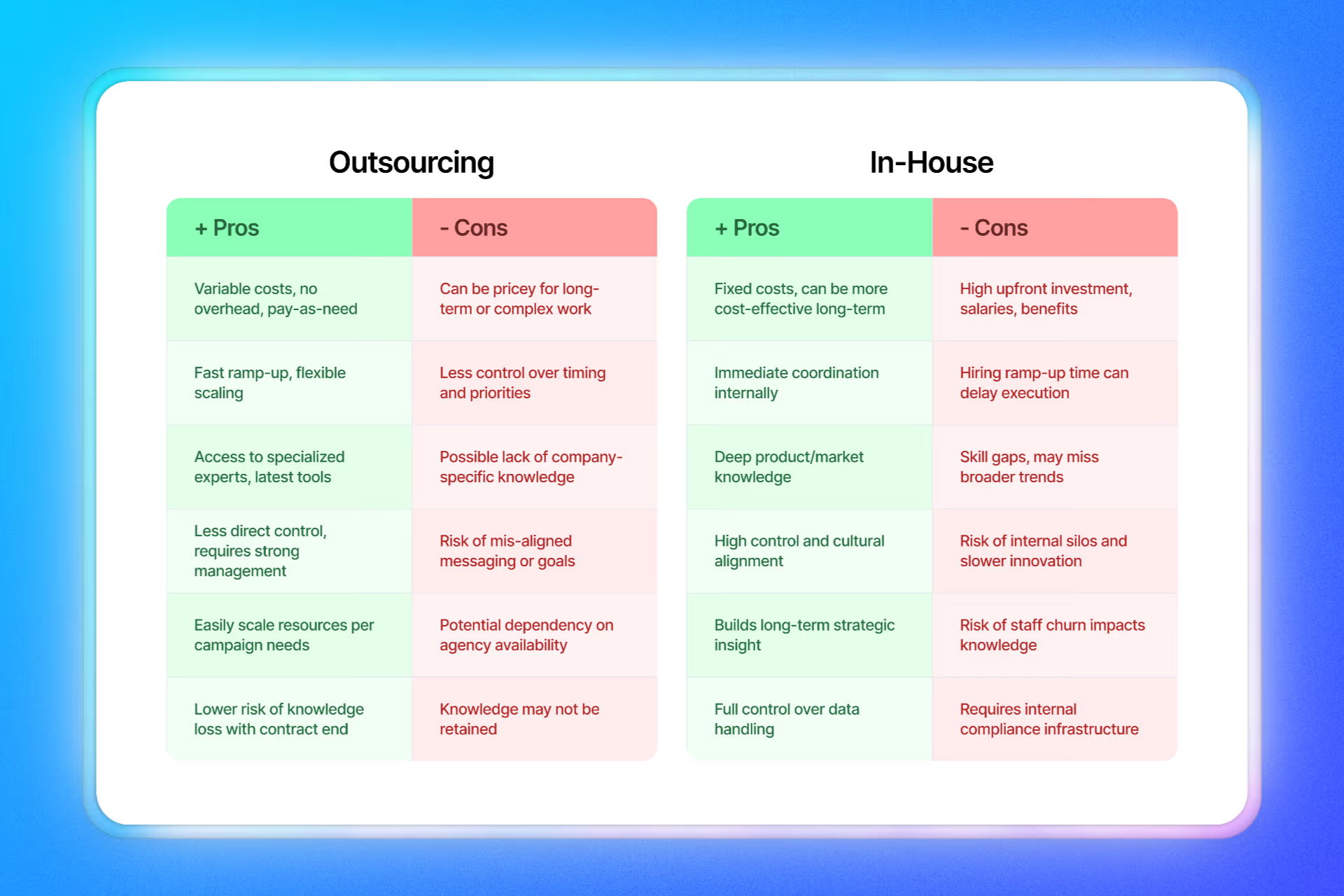
Pros & Cons of Outsourcing vs. Building In-House
Did You Know?57% of SaaS firms report faster campaign launches leveraging outsourced marketing
Common SaaS Marketing Tasks: In-House vs. Outsource Matrix
Content Marketing
- Common Practice: Often in-house + outsource hybrid
- In-House Benefits: Deep product knowledge for authentic messaging
- Outsourcing Benefits: Speed and scalability; access to diverse writers
Notes & Considerations: Core strategy internally; production often outsourced
SEO
- Common Practice: Mix of both
- In-House Benefits: Control over website and technical SEO
- Outsourcing Benefits: Expert specialists for link building, audits
Notes & Considerations: Technical SEO in-house; tactical execution outsourced
Paid Media
- Common Practice: Mostly outsourced
- In-House Benefits: Budget control and targeting strategy
- Outsourcing Benefits: Expert paid media managers and tools
Notes & Considerations: Fast-moving campaigns benefit from agency expertise
Product Marketing
- Common Practice: Mostly in-house
- In-House Benefits: Intimate product knowledge
- Outsourcing Benefits: Niche consultants for launches
Notes & Considerations: Usually core in-house function
Email Marketing
- Common Practice: Mostly in-house
- In-House Benefits: Control of nurture flows
- Outsourcing Benefits: Technical setup and complex workflows
Notes & Considerations: Strategy in-house; technical execution supported externally
Demand Generation
- Common Practice: Mixed
- In-House Benefits: Sales team alignment
- Outsourcing Benefits: Scalable campaign execution
Notes & Considerations: Hybrid models common
Social Media
- Common Practice: Often outsourced or hybrid
- In-House Benefits: Brand voice consistency
- Outsourcing Benefits: Day-to-day posting, engagement
Notes & Considerations: Routine tasks often outsourced
PR
- Common Practice: Mostly outsourced
- In-House Benefits: Internal messaging ownership
- Outsourcing Benefits: Media relations specialists
Notes & Considerations: Agency networks valuable
Creative Design
- Common Practice: Hybrid
- In-House Benefits: Brand consistency oversight
- Outsourcing Benefits: Fresh ideas and specialized skills
Notes & Considerations: External creatives; internal alignment
Analytics
- Common Practice: Mostly in-house
- In-House Benefits: Data context understanding
- Outsourcing Benefits: Attribution modeling expertise
Notes & Considerations: Core in-house; advanced modeling outsourced
Section Takeaways:• In-house teams excel at tasks requiring deep product knowledge, strategic alignment, and ongoing operational control—such as product marketing, email nurturing, and data analytics.• Outsourcing shines when scalability, specialized expertise, and rapid execution are needed—especially for paid media, technical SEO tasks, creative design, and social media execution• Most SaaS companies opt for a hybrid approach, owning core strategic marketing functions internally while outsourcing specialist execution or scaling tasks
Decision-Making Framework
Systematic Evaluation Checklist
- What is our current budget and how flexible is it?
- Assess fixed vs variable spending capacity
- Determine upfront vs ongoing allocation options
- What is our time-to-market pressure?
- Identify urgent campaigns or launches
- Evaluate if internal hiring can meet deadlines
- Do we have internal capabilities and specialist skills?
- Map current team competencies
- Identify gaps in SEO, paid media, product marketing
- How critical is control over messaging and data?
- Consider security and compliance requirements
- Evaluate brand consistency needs
- What is our growth stage and marketing maturity?
- Early-stage: Consider outsourcing for speed
- Mature: Develop in-house expertise
- Are we prepared to manage a hybrid team?
- Assess organizational readiness
- Evaluate coordination capabilities
- What is our strategic vs tactical balance?
- Determine long-term ownership needs
- Identify short-term execution requirements
Phased Transition Approach
- Start with outsourcing for rapid launch or pilot campaigns
- Gradually build internal capabilities in core strategic areas
- Retain agencies for specialized, scalable roles
- Continuously reassess as market conditions evolve
Pro Tip:Assess your current budget flexibility and time-to-market urgency first. It shapes the whole outsourcing vs. in-house decision.
Implementation Excellence: Managing Hybrid Teams
Best Practices for Hybrid Success
Clear Role Definition
- Define responsibilities to avoid overlap or gaps
- Example: Internal teams manage brand voice; agencies execute campaigns
Regular Communication & Alignment
- Schedule weekly or biweekly check-ins
- Share updates, blockers, and insights consistently
Unified Goal Setting
- Align KPIs across all teams
- Ensure accountability to same targets
Robust Documentation
- Maintain shared repositories for:
- Style guides
- Campaign briefs
- Performance reports
- Standard operating procedures
Technology Infrastructure
- Use collaborative platforms (Asana, Slack, Confluence)
- Create centralized analytics dashboards
- Integrate data sources for real-time monitoring
Partner Onboarding
- Treat external partners like internal hires
- Invest in culture and product knowledge transfer
- Set clear expectations from start
Relationship Building
- Foster mutual trust and respect
- Create informal touchpoints
- Build cohesive team culture
Common Pitfalls to Avoid
Critical Mistakes and Solutions
Underestimating Onboarding Time
- Problem: Skipping thorough onboarding leads to misaligned expectations
- Solution: Invest proper time in agency/contractor onboarding
Failing to Align Goals and KPIs
- Problem: Disparate objectives fracture efforts and obscure ROI
- Solution: Create unified KPIs from the start
Neglecting Documentation
- Problem: Knowledge loss when agencies leave or staff churns
- Solution: Mandate documentation requirements
Poor Communication Workflows
- Problem: Lack of structured updates and unclear escalation paths
- Solution: Establish regular communication cadences
Overloading In-House Teams
- Problem: Burnout from tactical execution without strategic focus
- Solution: Balance strategic leadership with execution support
Ignoring Data Privacy Risks
- Problem: Security vulnerabilities in B2B SaaS
- Solution: Implement robust security protocols
Remember:Skipping onboarding and misaligned KPIs are top reasons outsourced and in-house teams fail to deliver ROI.
Maximizing ROI: Measurement and Optimization
Key Performance Strategies
Set Unified KPIs Across Teams
- MQLs and SQLs
- Lead-to-customer conversion rate
- CAC (Customer Acquisition Cost)
- LTV (Customer Lifetime Value)
- Channel-specific ROIs
Attribution Modeling
- Employ multi-touch attribution
- Credit both internal and external efforts fairly
- Track complete buyer journey
Regular Performance Reviews
- Weekly or monthly data integration
- Continuous alignment checks
- Rapid course correction
Technology Stack
- HubSpot, Salesforce for CRM
- Google Analytics for web tracking
- Tableau for visualization
- Real-time dashboards for all stakeholders
Optimization Approach
- Test and learn methodology
- Data-driven decision making
- Cost vs. impact analysis by channel
- Identify best ROI opportunities
FAQ
When should a SaaS company outsource vs. build in-house?
Outsource when speed, specialist skills, or variable budgets are priorities; build in-house for deep product knowledge, cross-functional alignment, and long-term capability.
How does outsourcing impact time-to-market?
Agencies launch in weeks with ready specialists. Hiring typically takes months for recruiting, onboarding, and ramp.
How often should we reassess our outsource vs. in-house mix?
Run quarterly reviews and a deeper bi-annual audit, or after major shifts (new product, funding, tool migrations).
ROI/breakeven: agency vs. hire?
Total the costs for each, track monthly value, and mark breakeven when cumulative value minus cost is equal. Agencies often hit it sooner because they deliver immediately, while hires need ramp time.
What differentiates you from other B2B SaaS marketing agencies?
We adopt a strategic, data-driven approach, focusing on tangible outcomes rather than vanity metrics. Through rigorous optimization, we ensure you receive the maximum return on your marketing investment, maximizing every dollar spent towards achieving real growth.
Can you share results you've achieved for similar clients?
We have a portfolio of case studies demonstrating our success in significantly increasing our clients’ growth. These include examples of improvements in demand and lead generation results and substantial ROI increases.
Conclusion: Making the Strategic Choice
Deciding whether to outsource or build an in-house SaaS marketing team is a nuanced, evolving choice shaped by budget, speed, capabilities, control, and growth stage. There is no one-size-fits-all solution.Successful SaaS companies in 2025 often blend internal strategic ownership with external execution flexibility, carefully managing hybrid teams to harness the strengths of both models while mitigating risks.By deploying a structured decision-making framework, embracing best practices in hybrid management, avoiding common pitfalls, and rigorously measuring ROI, SaaS leaders can optimize marketing resources to drive sustainable growth and maximize return on investment.
Your Next Steps:
- Assess your current marketing resource allocation
- Identify gaps and opportunities using our framework
- Design your optimal hybrid model
- Implement with clear processes and measurement
- Continuously optimize based on performance data
The question isn't whether to outsource or build in-house. It's how to create the right balance for your unique situation and goals.