How to Create an Effective Go-to-Market Plan

Launching a new product successfully can mean the difference between market leadership and obscurity. A well-executed product launch not only introduces your offering to the world but also sets the stage for long-term success. This comprehensive guide will walk you through creating a complete go-to-market plan for your product launch, ensuring you're equipped with the strategies and insights needed to make a significant impact.
1. Understanding Product Launch Marketing
Product launch marketing is more than just a series of promotional activities—it's a strategic process that can define your product's trajectory in the market. At its core, it's about creating a narrative around your product that resonates with your target audience and differentiates you from competitors.
Consider the launch of the first iPhone in 2007. Apple didn't just release a new phone; they revolutionized the concept of smartphones. Their launch strategy focused on creating anticipation, showcasing unique features, and positioning the iPhone as a groundbreaking device that would change how people interact with technology. This approach not only led to immediate success but also established Apple as a leader in the smartphone market for years to come.
A go-to-market plan is the roadmap that guides your product launch. It encompasses everything from identifying your target audience to determining your pricing strategy and distribution channels. Think of it as the blueprint for your product's introduction to the world.
2. Pre-Launch Phase: Laying the Groundwork
2.1 Market Research and Analysis
Effective market research goes beyond surface-level data gathering. It involves diving deep into your target audience's needs, preferences, and pain points. For instance, when Dollar Shave Club prepared to launch their subscription razor service, they didn't just look at demographic data. They delved into the frustrations men experienced with traditional razor purchases, identifying pain points like high costs and the inconvenience of store visits.
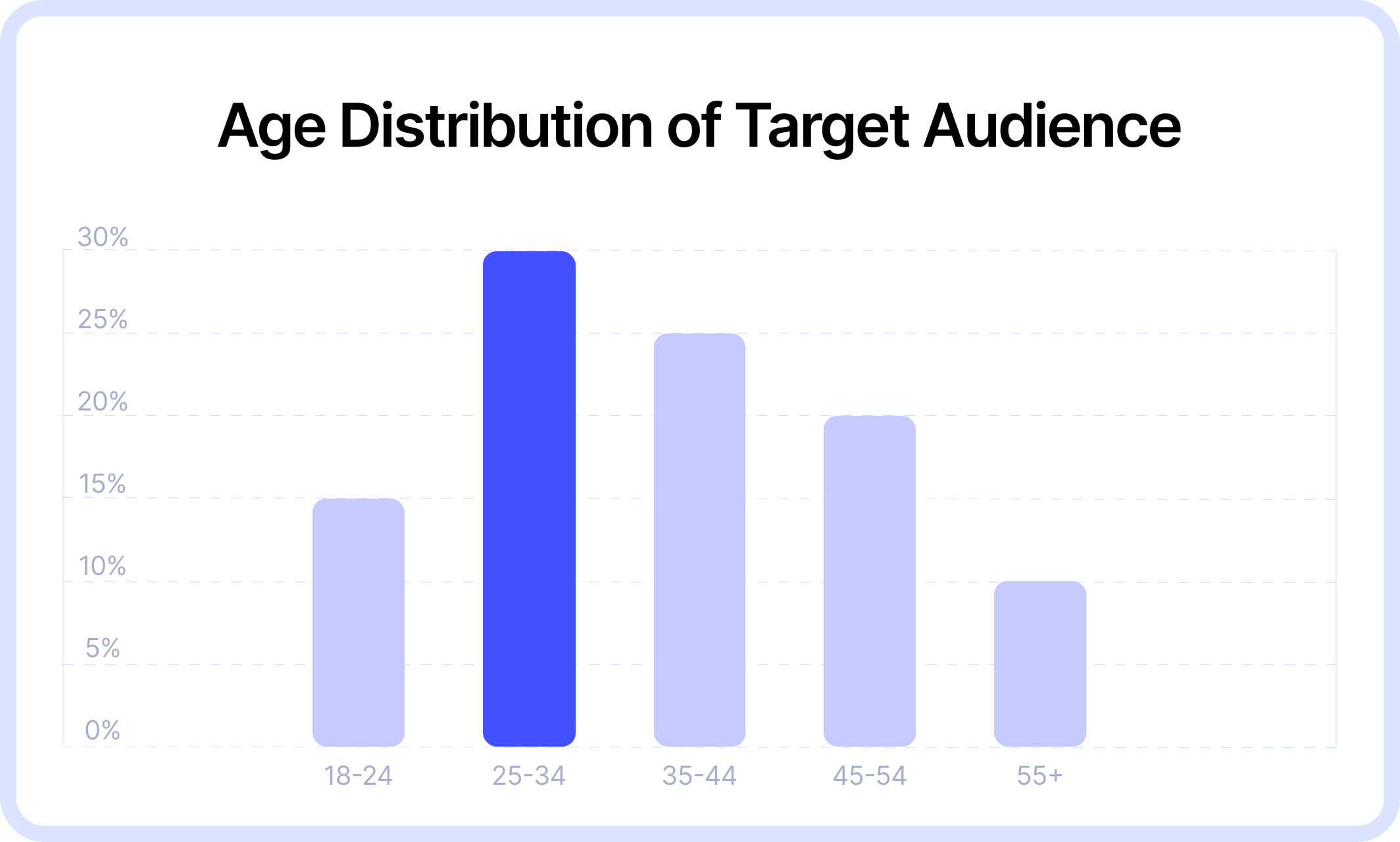
To conduct thorough market research:
- Use a mix of quantitative and qualitative methods. Surveys can provide broad insights, while focus groups or in-depth interviews can uncover nuanced perspectives.
- Analyze social media conversations and online reviews related to similar products. These can reveal unmet needs or common complaints that your product could address.
- Study successful and failed product launches in your industry. What strategies worked? What pitfalls should you avoid?
Remember, the goal isn't just to gather data, but to gain actionable insights that will inform your entire launch strategy.
2.2 Define Your Unique Value Proposition (UVP)
Your UVP is the cornerstone of your product launch strategy. It's not just about listing features; it's about articulating the unique value your product brings to customers' lives.
Take Airbnb's initial launch. Their UVP wasn't just "find a place to stay." Instead, they positioned themselves as offering unique, local experiences that hotels couldn't match. This UVP tapped into travelers' desire for authenticity and connection, setting Airbnb apart in the crowded hospitality market.
To craft a compelling UVP:
- Identify your product's key features, but more importantly, translate these into clear benefits for the user.
- Understand your competitors' offerings and ensure your UVP highlights what makes your product different and better.
- Test your UVP with potential customers. Does it resonate? Does it clearly communicate the value you're offering?
Your UVP should be concise, memorable, and powerful enough to drive your entire marketing campaign.
2.3 Set Clear Objectives and KPIs
Setting objectives isn't just about picking numbers out of thin air. It's about aligning your product launch goals with your overall business strategy and market realities.
When Spotify launched in the U.S. in 2011, they set clear objectives tied to user acquisition and engagement. Their KPIs included not just download numbers, but also metrics like daily active users and time spent on the platform. This comprehensive approach allowed them to measure not just initial interest, but long-term user adoption.
When setting your objectives:
- Ensure they're SMART (Specific, Measurable, Achievable, Relevant, and Time-bound).
- Align your objectives with your overall business goals. How does this product launch fit into your company's long-term strategy?
- Consider both short-term and long-term objectives. While immediate sales are important, factors like brand awareness and market positioning can have lasting impacts.
Your KPIs should provide a holistic view of your launch's success. Consider metrics like:
- Sales figures and revenue
- Market share gains
- Customer acquisition cost
- User engagement rates
- Net Promoter Score (NPS)
By setting clear objectives and KPIs, you create a framework for measuring success and identifying areas for improvement throughout the launch process.
2.4 Develop Your Pricing Strategy
Pricing is more than just a number—it's a key part of your product positioning and overall marketing strategy. The right pricing strategy can communicate value, drive adoption, and maximize profitability.
Consider the launch of Tesla's Model 3. Tesla used a tiered pricing strategy, starting with higher-priced versions to capitalize on early adopters' willingness to pay a premium. This approach allowed them to generate higher initial revenues while gradually scaling up production for lower-priced versions.
When developing your pricing strategy:
- Understand your costs, including production, marketing, and distribution. This forms the baseline for your pricing decisions.
- Analyze competitor pricing, but don't be bound by it. Your unique value proposition might justify a higher price point.
- Consider psychological pricing tactics. For example, pricing at $99 instead of $100 can have a significant impact on consumer perception.
- Explore different pricing models. Subscription-based pricing, freemium models, or value-based pricing might be more appropriate than traditional one-time purchase models, depending on your product and market.
Remember, your initial pricing strategy isn't set in stone. Be prepared to adjust based on market response and changing conditions.
2.5 Choose Your Distribution Channels
Your distribution strategy can significantly impact your product's accessibility and market penetration. The key is to choose channels that align with your target audience's preferences and your product's characteristics.
When Warby Parker launched their online eyewear business, they disrupted the traditional optical industry by focusing on direct-to-consumer e-commerce. This approach allowed them to offer lower prices and a unique try-at-home experience. However, as they grew, they recognized the value of physical retail and began opening stores to provide an omnichannel experience.
When selecting your distribution channels:
- Consider your target audience's buying habits. Where do they prefer to shop?
- Evaluate the pros and cons of different channels. Direct sales might offer higher margins but require more resources to manage.
- Think about scalability. Can your chosen channels support your growth projections?
- Don't be afraid to innovate. Could a unique distribution approach become part of your competitive advantage?
Your distribution strategy should be flexible enough to evolve as your product gains traction and market conditions change.
3. Launch Phase: Executing Your Go-to-Market Plan
3.1 Create a Compelling Brand Story
In a crowded marketplace, a strong brand story can be the difference between blending in and standing out. Your brand story should go beyond features and benefits to connect with your audience on an emotional level.
Patagonia, the outdoor clothing company, has mastered the art of brand storytelling. Their narrative goes beyond selling outdoor gear; it's about environmental responsibility and adventure. This story resonates deeply with their target audience, creating loyal customers who align with the brand's values.
To create a powerful brand story:
- Identify the problem your product solves, but frame it in a way that connects with your audience's aspirations or pain points.
- Use storytelling techniques like conflict, resolution, and character development to make your narrative more engaging.
- Ensure your story aligns with your overall brand values and mission. Consistency across all touchpoints is key.
- Consider using customer stories or testimonials to make your narrative more relatable and authentic.
Your brand story should be woven throughout all your marketing materials, from your website copy to your social media posts.
3.2 Design a Multi-Channel Marketing Campaign
In today's digital age, a successful product launch requires a presence across multiple channels. However, it's not about being everywhere—it's about being in the right places with the right message.
When Netflix launched its streaming service, they used a multi-channel approach that included TV ads, online marketing, and partnerships with device manufacturers. This comprehensive strategy allowed them to reach potential customers through various touchpoints, accelerating adoption of their new service.
To create an effective multi-channel campaign:
- Start with a content marketing strategy. Develop valuable, informative content that addresses your audience's needs and positions your product as the solution.
- Leverage social media platforms strategically. Choose platforms where your target audience is most active and tailor your content to each platform's unique characteristics.
- Incorporate email marketing to nurture leads and keep your audience engaged throughout the launch process.
- Consider influencer partnerships to extend your reach and add credibility to your product.
- Use retargeting ads to re-engage potential customers who have shown interest in your product.
Remember, the key to a successful multi-channel campaign is consistency in messaging while adapting to each channel's strengths.
3.3 Develop Sales Enablement Materials
Equipping your sales team with the right tools and knowledge is crucial for a successful product launch. Effective sales enablement materials can help your team communicate your product's value proposition clearly and address customer objections confidently.
When Salesforce launches a new product or feature, they provide their sales team with comprehensive enablement materials. This includes not just product specs, but also customer personas, use cases, and competitive comparisons. This approach ensures that every salesperson can effectively communicate the product's value to potential customers.
To develop effective sales enablement materials:
- Create a comprehensive product guide that covers features, benefits, and technical specifications.
- Develop case studies and success stories that demonstrate real-world applications of your product.
- Prepare objection handling guides to help your sales team address common customer concerns.
- Create demo scripts or videos that showcase your product in action.
- Provide regular training sessions to keep your sales team updated on product developments and market trends.
Remember, your sales team is on the front lines of your product launch. Equipping them with the right tools and knowledge is crucial for success.
3.4 Plan Your Launch Event
A well-executed launch event can generate buzz, attract media attention, and create a memorable experience for your audience. Whether physical, virtual, or hybrid, your launch event should be a manifestation of your brand story and product value.
Apple's product launch events are prime examples of how to create anticipation and excitement. Their carefully choreographed presentations, often led by key executives, generate global attention and set the stage for successful product rollouts.
When planning your launch event:
- Choose a format that aligns with your product and target audience. A tech product might benefit from a live-streamed demo, while a physical product could shine in an interactive, in-person event.
- Create a detailed run-of-show that outlines every aspect of the event, from presentations to product demonstrations.
- Incorporate opportunities for audience engagement, whether through Q&A sessions, hands-on product experiences, or interactive elements in virtual events.
- Plan for media coverage by preparing press kits and arranging interviews with key company spokespersons.
- Consider creating exclusive or VIP experiences for key customers, partners, or influencers.
Your launch event is a unique opportunity to make a strong first impression. Make it count by aligning every element with your overall launch strategy.
3.5 Implement a Customer Onboarding and Support Strategy
The post-purchase experience is crucial for customer satisfaction and long-term success. A smooth onboarding process can turn new customers into loyal advocates, while effective support can address issues before they become major problems.
Slack, the team communication platform, is known for its excellent onboarding experience. They use in-app tutorials, helpful tips, and personalized onboarding sessions for team administrators to ensure users quickly see the value in their product.
To create an effective onboarding and support strategy:
- Develop clear, user-friendly documentation and tutorials. Consider using various formats like written guides, videos, and interactive walkthroughs.
- Implement a robust customer support system, including multiple channels for customer inquiries (e.g., email, chat, phone).
- Use data analytics to identify common issues or questions, and proactively address these in your onboarding materials.
- Consider implementing a customer success program for high-value clients, providing personalized guidance and support.
- Regularly solicit feedback from new customers to continually improve your onboarding process.
Remember, the goal is not just to sell your product, but to ensure customers derive value from it. A strong onboarding and support strategy is key to achieving this.
3.6 Monitor and Respond to Early Feedback
The early days of your product launch are critical for gathering feedback and making necessary adjustments. This period can provide valuable insights into how your product is being received and areas for improvement.
When Coca-Cola launched New Coke in 1985, they faced significant backlash from customers who preferred the original formula. By listening to this feedback and quickly reintroducing the original Coca-Cola as "Coca-Cola Classic," they were able to turn a potential disaster into a marketing triumph.
To effectively monitor and respond to early feedback:
- Set up social listening tools to track mentions of your product across social media and online forums.
- Implement a system for collecting and analyzing customer support inquiries and feedback.
- Conduct early customer surveys to gauge satisfaction and identify potential issues.
- Be prepared to make quick adjustments based on feedback. This could involve tweaking your marketing messages, addressing product issues, or even adjusting your pricing strategy.
- Communicate transparently with your customers about any changes or improvements you're making based on their feedback.
Remember, how you respond to early feedback can set the tone for your product's long-term reputation. Be responsive, transparent, and committed to continual improvement.
In a Nutshell
Launching a new product is a complex, multifaceted process that requires careful planning, cross-functional collaboration, and strategic execution. This comprehensive go-to-market plan provides a solid foundation for navigating the challenges and capitalizing on the opportunities that come with introducing a new product to the market.
However, we've only scratched the surface of what's possible in product launch marketing. If you're looking to take a deeper dive into these strategies and gain more detailed insights, we suggest you download our full product launch guide. This comprehensive resource expands on the topics covered here and provides additional tools, case studies, and actionable tips to supercharge your product launch.