Proven Strategies to Lower B2B SaaS Customer Acquisition Costs in 2025
Executive Summary: The B2B SaaS Marketing CAC Crisis (And How to Fix It)
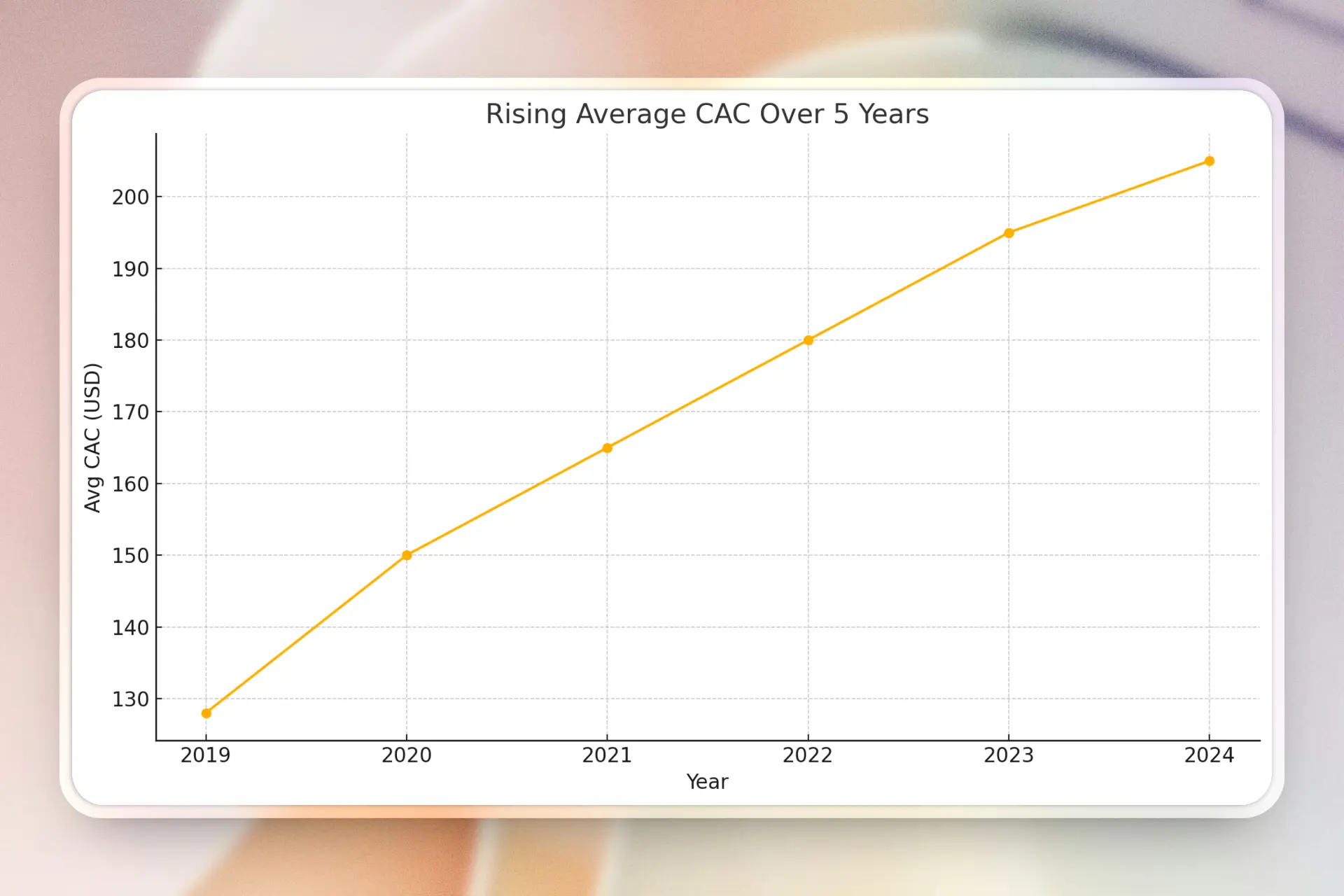
Here's the reality no one wants to talk about: Customer acquisition costs in B2B marketing have exploded 60% over five years.The average B2B SaaS marketing spend per customer now hits $205-$700+. But here's what's interesting, the smartest B2B SaaS marketers aren't panicking. They're achieving 30-50% CAC reductions through systematic funnel optimization.
What you'll discover in this guide:
- Why traditional SaaS marketing approaches are failing
- The 4 leverage points that reduce customer acquisition costs by 40%+
- A complete 90-day implementation plan with real-world examples
- Proven frameworks from top B2B SaaS marketing teams
Let's get into it.
The Rising CAC Crisis: Your B2B SaaS Marketing Wake-Up Call
The Numbers Don't Lie
If you're in B2B SaaS marketing, you've felt this pain. Here are the brutal facts:
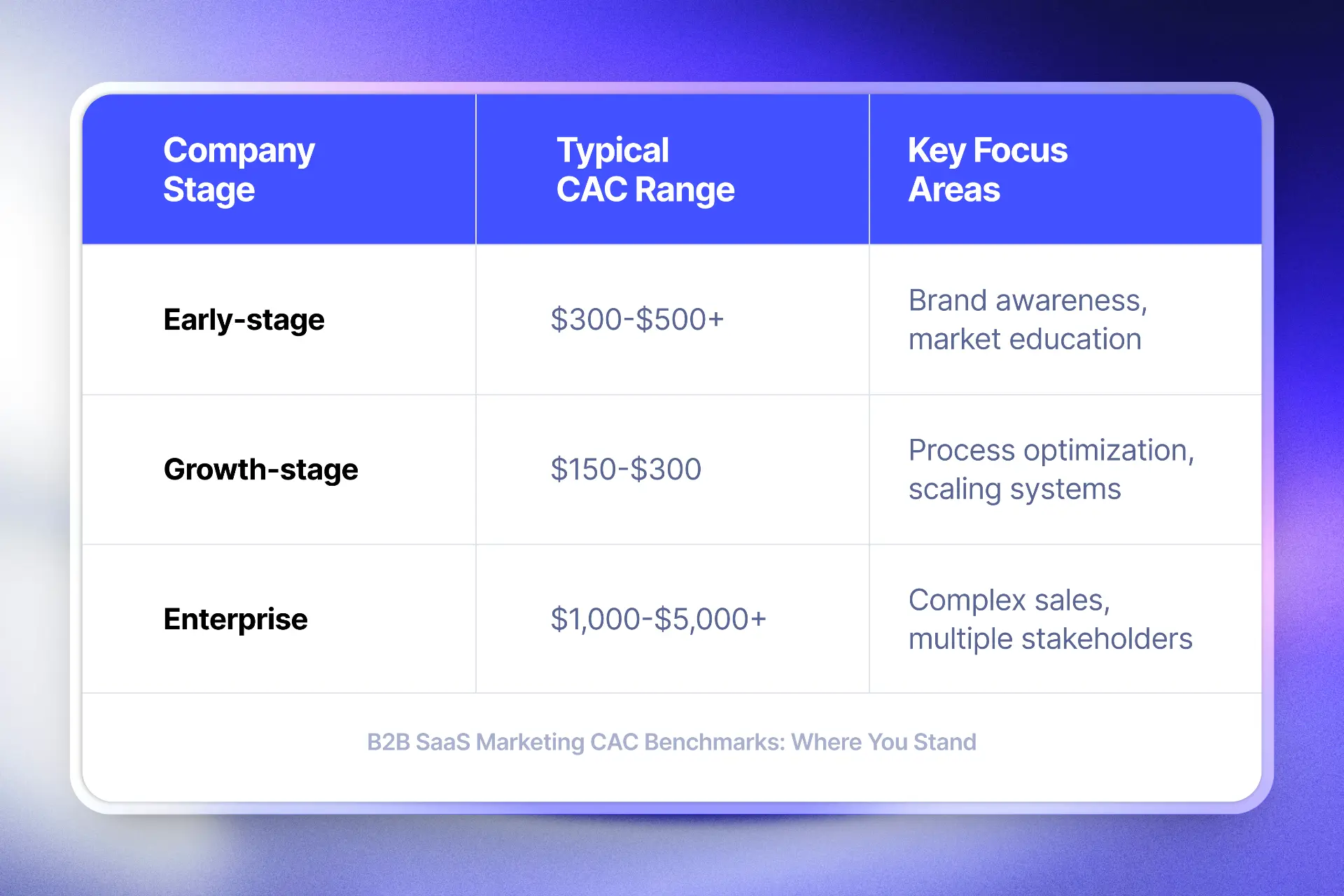
- Average B2B SaaS CAC: $205, but ranges $200-$700+ across industries
- Enterprise SaaS: Often $1,000-$5,000+ due to extended sales cycles
- 60% increase over five years signals a strategic crisis
Why Your Current B2B SaaS Marketing Strategy Isn't Working
Traditional B2B SaaS marketing tactics are hitting walls:
- Paid advertising returns have become linear and predictable
- Marketing channels are saturated with competitors fighting for attention
- Buying committees now average 6.8 decision makers (enterprise often sees 10-14)
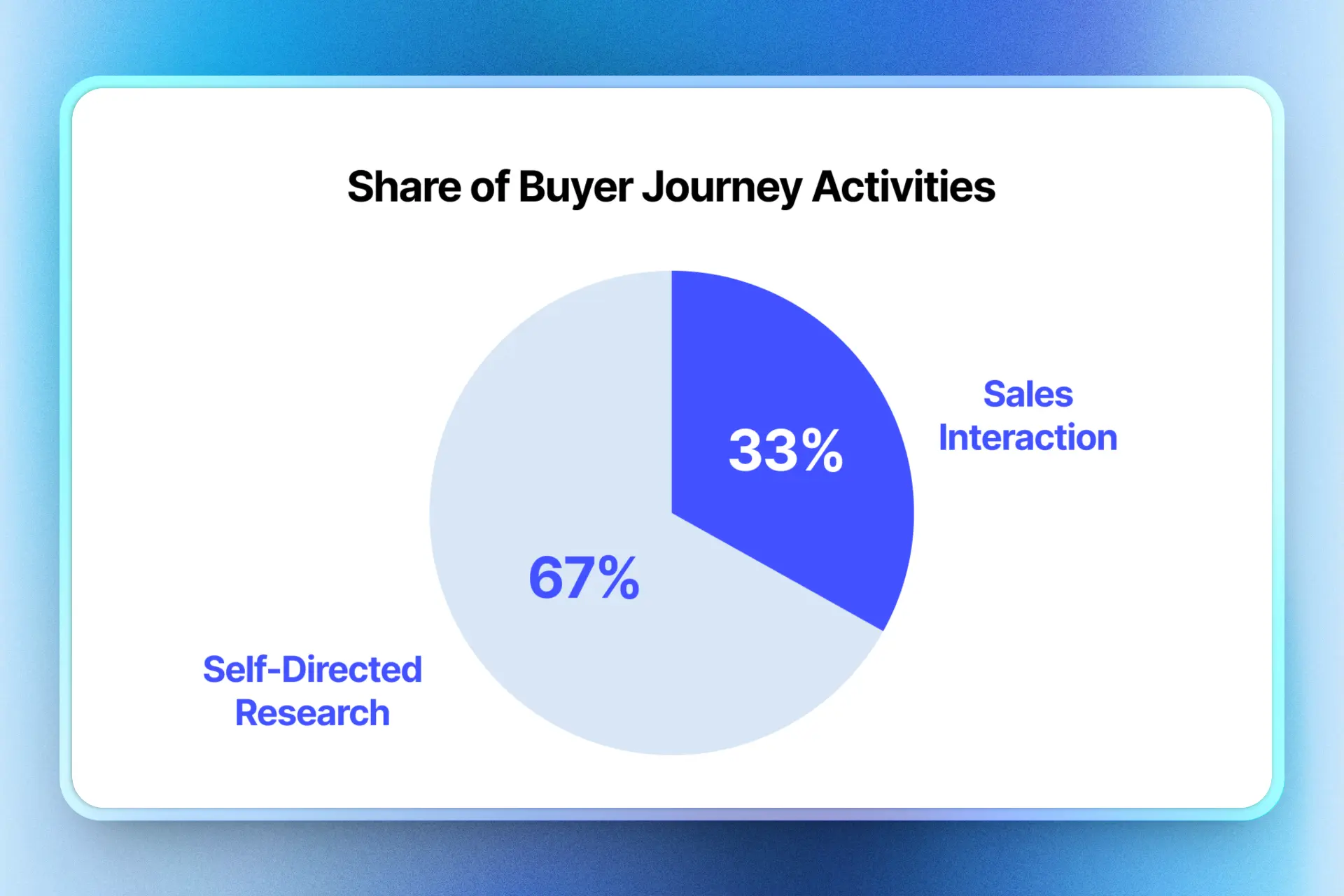
- Self-directed research dominates 67% of the buyer journey
Real-World Example:
A mid-market SaaS company we analyzed was spending $400 CAC through paid ads while their competitor achieved $120 CAC through content marketing and referrals. Same market, same customer profile, dramatically different results.
Key Insight:
The companies winning at reduced SaaS marketing CAC aren't just optimizing individual channels. They're rebuilding their entire approach from the ground up.
Section Takeaway:
Rising CAC isn't just a budget problem. It's a strategic crisis requiring systematic solutions across your entire B2B marketing funnel.
CAC: The North Star Metric for B2B SaaS Marketing Success
Understanding Customer Acquisition Cost (The Right Way)
Let's get crystal clear on what CAC actually means for your B2B SaaS marketing efforts.
Customer Acquisition Cost = Total investment to acquire each new customer through all your marketing and sales activities.
The Complete B2B SaaS Marketing CAC Formula
Overall CAC = (Sales Spend + Marketing Spend) ÷ New Customers Acquired
Marketing CAC = Marketing Spend ÷ New Customers Acquired
What Smart B2B SaaS Marketing Teams Include:
- All paid advertising costs
- Sales team salaries and commissions
- Marketing tools and software subscriptions
- Content creation and SEO investments
- Event costs and partnership expenses
- Customer onboarding and support costs
B2B SaaS Marketing CAC Benchmarks: Where You Stand
The Critical Distinction Every B2B SaaS Marketing Leader Must Know
Blended CAC vs. Paid CAC and why it matters:
Blended CAC: All channels combined (organic + paid)
- Shows your true optimize B2B SaaS sales funnel efficiency
- Essential for board reporting and strategic planning
- Often 30–50% lower than paid-only CAC when organic and referral channels are significant
Paid CAC: Paid channels only
- Typically 2-3x higher than blended CAC
- Shows specific campaign ROI
- Helps optimize individual channel performance
Mini Case Study:
A Series B SaaS company had $400 paid Marketing CAC but only $150 blended CAC. Their secret? 60% of customers came through content marketing and referrals, dramatically lowering overall acquisition costs.
Section Takeaway:
Track both blended and Marketing CAC to understand your true acquisition efficiency and identify the best opportunities to reduce SaaS marketing CAC.
The 4 Funnel-Wide Levers: How to Cut CAC by 40%+
Here's where the magic happens. These are systematic levers that compound to create dramatic CAC reductions.
Lever #1: Conversion Rate Optimization (The Multiplier Effect)
The math that's revolutionizing B2B SaaS marketing:
- 10% conversion increase at each stage = 46% more customers
- Same marketing spend, nearly 50% more customers
- Reduces CAC by one-third across all channels
Quick Win Tactics That Work:
- Simplify lead capture forms (8 fields → 3 fields = 40% conversion boost)
- Add social proof (customer logos increase conversions 15-25%)
- Optimize for mobile (60% of B2B SaaS research happens on mobile)
- Use behavioral triggers (immediate follow-up increases conversion 300%)
Real Example: A marketing automation SaaS reduced their form from 12 fields to 4, added customer logos, and saw their conversion rate jump from 2.1% to 3.4%—a 62% improvement that reportedly cut their CAC from $380 to $235 (results will vary by company).
Lever #2: Sales Cycle Compression (Accelerate ROI)
The impact on your B2B SaaS marketing ROI:
- 25% cycle reduction = 30% faster CAC payback
- Faster cash flow means more reinvestment capacity
- Reduces deal slippage by 15-20%
Proven Acceleration Strategies:
- Implement lead scoring using engagement and firmographic data
- Automate nurture sequences triggered by specific behaviors
- Create sales enablement content (battle cards, ROI calculators)
- Align marketing-sales handoffs with automated workflows
Success Story:
A project management SaaS compressed their average sales cycle from 120 days to 85 days by implementing automated lead scoring and personalized nurture sequences. Result: CAC payback improved from 14 months to 9 months.
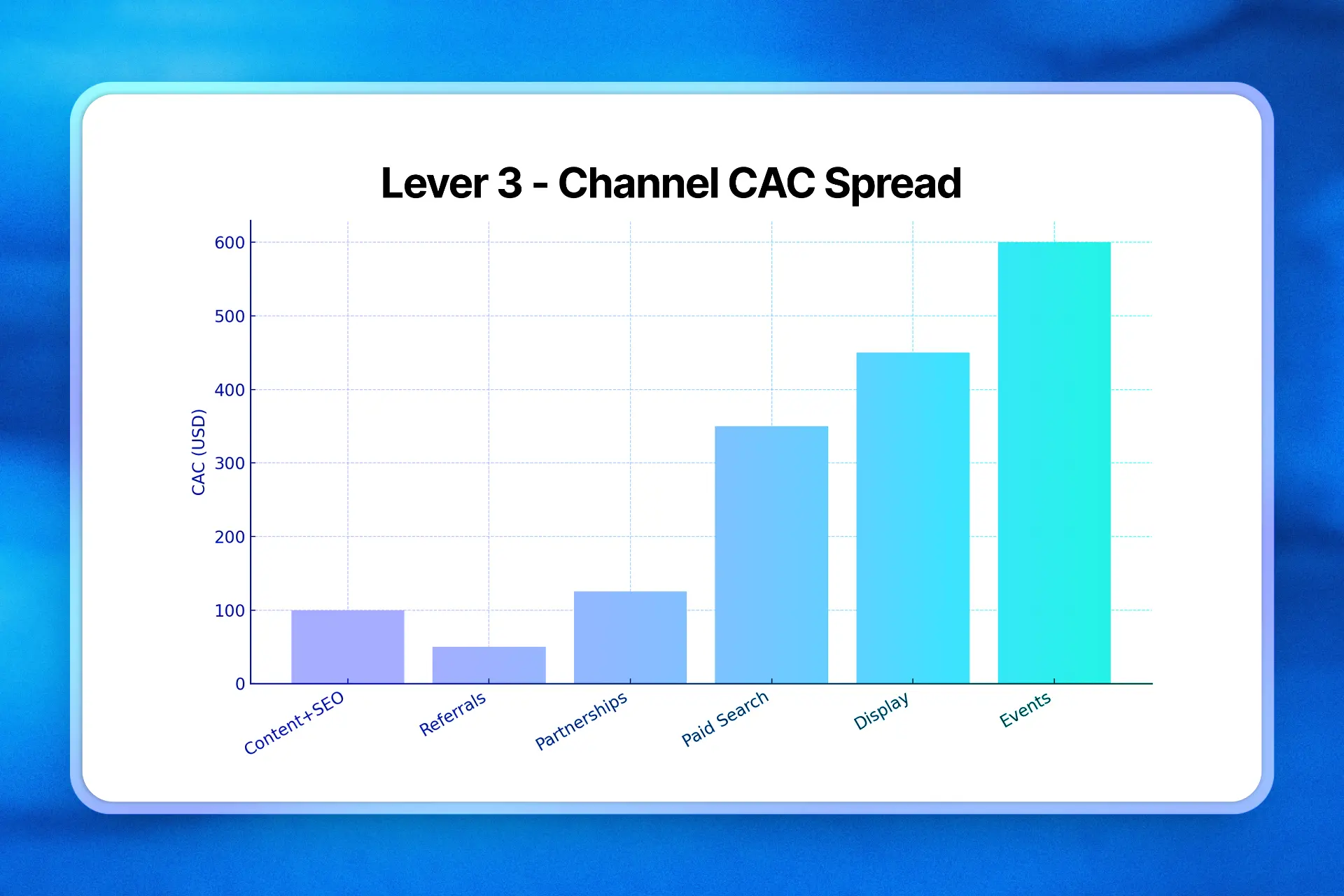
Lever #3: Channel Mix Optimization (Work Smarter, Not Harder)
Here's a truth many B2B SaaS marketing agencies don't want to admit: paid advertising returns are linear. Once optimized, exponential improvements become nearly impossible.
The Strategic Reallocation Opportunity:
Lower-Cost Channels (Long-term compound effect):
- Content marketing + SEO: $50-150 CAC
- Referral programs: $25-75 CAC
- Partnership marketing: $75-200 CAC
Higher-Cost Channels (Immediate but expensive):
- Paid search: $200-500 CAC
- Display advertising: $300-600 CAC
- Event marketing: $400-800 CAC
Channel Performance Framework:
- Analyze current CAC by channel monthly
- Gradually shift budget from high-CAC to low-CAC sources
- Invest in compound channels (content, SEO, referrals)
- Test emerging channels with small budgets before scaling
Case Study:
A CRM company shifted 30% of their budget from paid ads to content marketing over 18 months. Their blended CAC dropped from $320 to $180, while lead volume actually increased 25%.
Lever #4: Retention Impact (The Hidden CAC Reducer)
This is the leverage point most B2B SaaS marketing teams miss entirely.
The Compound Effect:
- 5% retention improvement = 25-95% less acquisition pressure
- Higher Customer Lifetime Value improves CAC-to-LTV ratios
- Customer referrals become a scalable, low-cost acquisition channel
Retention-Driven Strategies:
- Optimize onboarding for value realization within 30 days
- Implement predictive churn models for proactive intervention
- Create customer advocacy programs with referral incentives
- Develop expansion revenue streams through upselling and cross-selling
Real Impact:
A HR software company improved their 90-day retention from 85% to 92%. This reduced their need for new customer acquisition by 35%, effectively cutting their CAC by the same percentage.
Section Takeaway:
These four levers work together synergistically. Companies implementing all four typically see 40-60% CAC reductions within 12-18 months.
The Modern B2B SaaS Marketing Funnel: Beyond Linear Models
The Reality of Modern B2B SaaS Marketing
Forget the old linear funnel model. Today's B2B SaaS marketing reality is messier and more opportunity-rich.
Key Stats That Change Everything:
- Research suggests around 60–70% of buyers research independently before talking to sales.
- 6.8 average decision makers per B2B SaaS purchase
- 8-12 touchpoints across 90-180 days before purchase
- Multiple devices and channels throughout the journey
Modern B2B SaaS Marketing Journey:
Aware → Consider → Evaluate → Purchase → Onboard → Expand → Advocate
The Multi-Stakeholder Challenge
Every B2B SaaS sale involves these key players:
Economic Buyer (Holds the budget)
- Needs: ROI calculators, business cases, cost justifications
- Content Focus: Financial impact and risk mitigation
Technical Evaluator (Assesses the solution)
- Needs: Integration guides, security docs, technical specifications
- Content Focus: Product capabilities and technical fit
End User (Will use the product daily)
- Needs: User demos, training resources, peer testimonials
- Content Focus: Usability and day-to-day experience
Champion (Your internal advocate)
- Needs: Presentation templates, competitive comparisons, success metrics
- Content Focus: Internal selling tools and proof points
Practical Application:
Create content libraries organized by stakeholder role. A cybersecurity SaaS we analyzed saw 45% faster deal progression by providing role-specific resource centers.
Section Takeaway:
Success in modern B2B SaaS marketing requires orchestrating multiple touchpoints across various stakeholders, not just moving leads through a linear funnel.
Top-of-Funnel B2B SaaS Marketing: Demand Creation That Actually Converts
Setting the Right Objectives
Your top-of-funnel B2B SaaS marketing goal isn't just traffic, it's qualified awareness among prospects who can actually buy.
Essential Success Metrics:
- Many high-performing B2B SaaS teams aim for a cost per MQL near or below $50, though this varies by industry and deal size
- Content engagement rates by target account segment
- Brand awareness lift in your total addressable market
- Pipeline influence from early-stage activities
High-Performance B2B SaaS Marketing Channels
Content-Driven Excellence
Thought Leadership That Works:
- Executive content in industry publications
- Original research providing market insights
- Trend analysis positioning your brand as an authority
- Problem-focused content addressing buyer challenges before pitching solutions
Example:
A sales enablement SaaS published quarterly sales productivity research. This single content series generated 40% of their annual MQLs at a CAC of just $35 per lead.
SEO Strategy for B2B SaaS Marketing:
- Problem-space keywords (not just solution keywords)
- Buyer journey mapping to content topics
- Industry-specific content for vertical targeting
- Comparison content helping prospects evaluate options
Targeted B2B SaaS Marketing Advertising
Account-Based Marketing (ABM) Excellence:
- Named account targeting with personalized messaging
- Intent data activation reaching active researchers
- Multi-channel orchestration across LinkedIn, display, and email
- Account-level tracking and attribution
Success Metrics:
A marketing automation platform used ABM to target 500 enterprise accounts. They achieved 8x higher conversion rates and 60% lower CAC compared to broad targeting.
Content Formats That Drive B2B SaaS Pipeline
Top-of-Funnel Content:
- Industry research reports highlighting market trends and challenges
- Best practice guides for solving business problems
- Assessment tools helping prospects benchmark their current state
- Webinar series featuring industry experts and customers
Middle-of-Funnel Content:
- ROI calculators and business case builders
- Comparison guides evaluating different solution approaches
- Implementation frameworks showing your methodology
- Case study libraries organized by industry and use case
Bottom-of-Funnel Content:
- Product demos tailored to specific use cases
- Free trial experiences with guided onboarding
- Customer testimonials with specific success metrics
- Security and compliance documentation
Optimization Insight:
A project management SaaS found that prospects who engaged with their ROI calculator were 5x more likely to request a demo and had a 40% higher close rate.
Section Takeaway:
Effective top-of-funnel B2B SaaS marketing focuses on education and value delivery, building trust before introducing your solution.
Middle-of-Funnel B2B SaaS Marketing: Nurture & Qualification Excellence
Advanced Lead Scoring for Better B2B SaaS Marketing ROI
Stop treating all leads equally. Smart lead scoring helps you optimize B2B SaaS sales funnel efficiency.
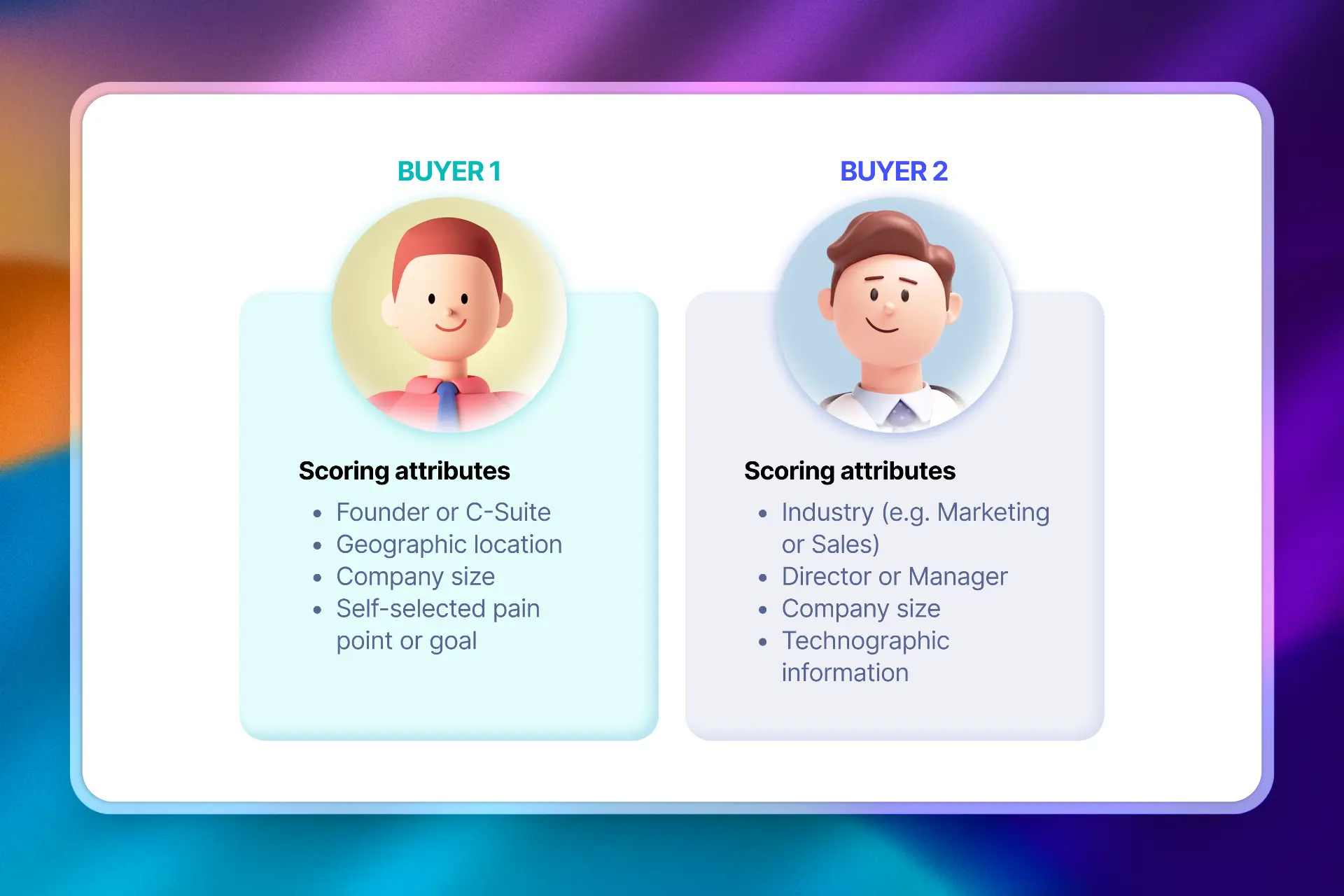
Multi-Dimensional Scoring Framework
Marketing Qualified Leads (MQL):
- Demographic fit: Company size, industry, role alignment
- Engagement signals: Content downloads, email opens, website behavior
- Intent indicators: Pricing page visits, competitor research, demo requests
Sales Qualified Leads (SQL):
- BANT criteria: Budget, Authority, Need, Timeline confirmed
- Stakeholder access: Can connect you with decision makers
- Technical fit: Your solution matches their requirements
Product Qualified Leads (PQL) (For PLG Models):
- Usage patterns: Feature adoption, frequency, depth of engagement
- Value realization: Achieved key milestones or outcomes
- Expansion signals: Approaching usage limits or requesting advanced features
Implementation Example:
A CRM company implemented predictive lead scoring using 15 behavioral and firmographic signals. This improved their sales team's efficiency by 35% and reduced time-to-close by 20%.
Multi-Channel Nurture Excellence
Email Marketing Automation
High-Converting Sequence Types:
- Welcome series (5-7 emails over 14 days) with educational content
- Behavioral triggers based on specific actions (downloaded whitepaper, visited pricing)
- Account-based sequences for high-value prospects with personalized content
- Re-engagement campaigns for dormant leads with special offers or new content
Optimization Tip:
Segment by job role for higher engagement. Technical buyers prefer detailed feature comparisons, while executives want business outcomes and ROI data.
B2B SaaS Marketing Retargeting Strategy
Effective Retargeting Approaches:
- Content progression: Show next-step content based on previous engagement
- Abandonment recovery: Re-engage visitors who left key pages without converting
- Event follow-up: Nurture webinar or conference attendees with relevant resources
- Competitive comparison: Target visitors researching competitors with differentiation content
Success Story:
A marketing automation platform used behavioral retargeting to show personalized demos to visitors who spent time on feature pages. This increased their demo request rate by 180%.
Intent Data and Trigger-Based Automation
First-Party Intent Signals:
- Website behavior: Page visits, time on site, content downloads
- Email engagement: Opens, clicks, forwards, reply patterns
- Product interaction: Trial usage, feature adoption, support requests
Third-Party Intent Data:
- Research activity: G2 reviews, comparison site visits, industry publication engagement
- Social signals: LinkedIn engagement, Twitter discussions, industry group participation
- Technographic changes: New platform adoptions, integration needs
Automated Trigger Examples:
- Pricing page visit → Send ROI calculator within 1 hour
- Competitor research → Deliver comparison guide with differentiation points
- Multiple stakeholder engagement → Alert sales for account-based outreach
- Trial usage milestone → Trigger upsell sequence or sales outreach
Section Takeaway:
Effective middle-funnel B2B SaaS marketing combines intelligent scoring, multi-channel nurturing, and behavioral triggers to move qualified prospects toward sales conversations.
Bottom-of-Funnel B2B SaaS Marketing: Closing Velocity Excellence
Demo Experience Optimization
Your demo is often the make-or-break moment in B2B SaaS marketing. Here's how to nail it.
Self-Guided Product Tours
Best Practices:
- Environment customization with relevant data and workflows
- Role-specific pathways for different user types
- Progress tracking and completion incentives
- Immediate follow-up with personalized next steps
Example: A customer success platform created interactive demos for different industries (SaaS, e-commerce, professional services). Industry-specific demos increased trial-to-paid conversion by 35%.
Live Demo Excellence
Discovery-First Approach:
- Pre-demo qualification: "What's your biggest challenge with [current process]?"
- Stakeholder mapping: "Who else would be involved in evaluating this?"
- Success criteria: "What would need to happen for this to be a must-have?"
- Timeline understanding: "What's driving the urgency for a solution?"
Demonstration Strategy:
- Custom setup reflecting their specific use case
- Relevant examples using similar company data
- Integration focus showing connections to their tech stack
- Outcome emphasis quantifying potential impact
Pricing Strategy That Converts
Strategic Transparency Balance
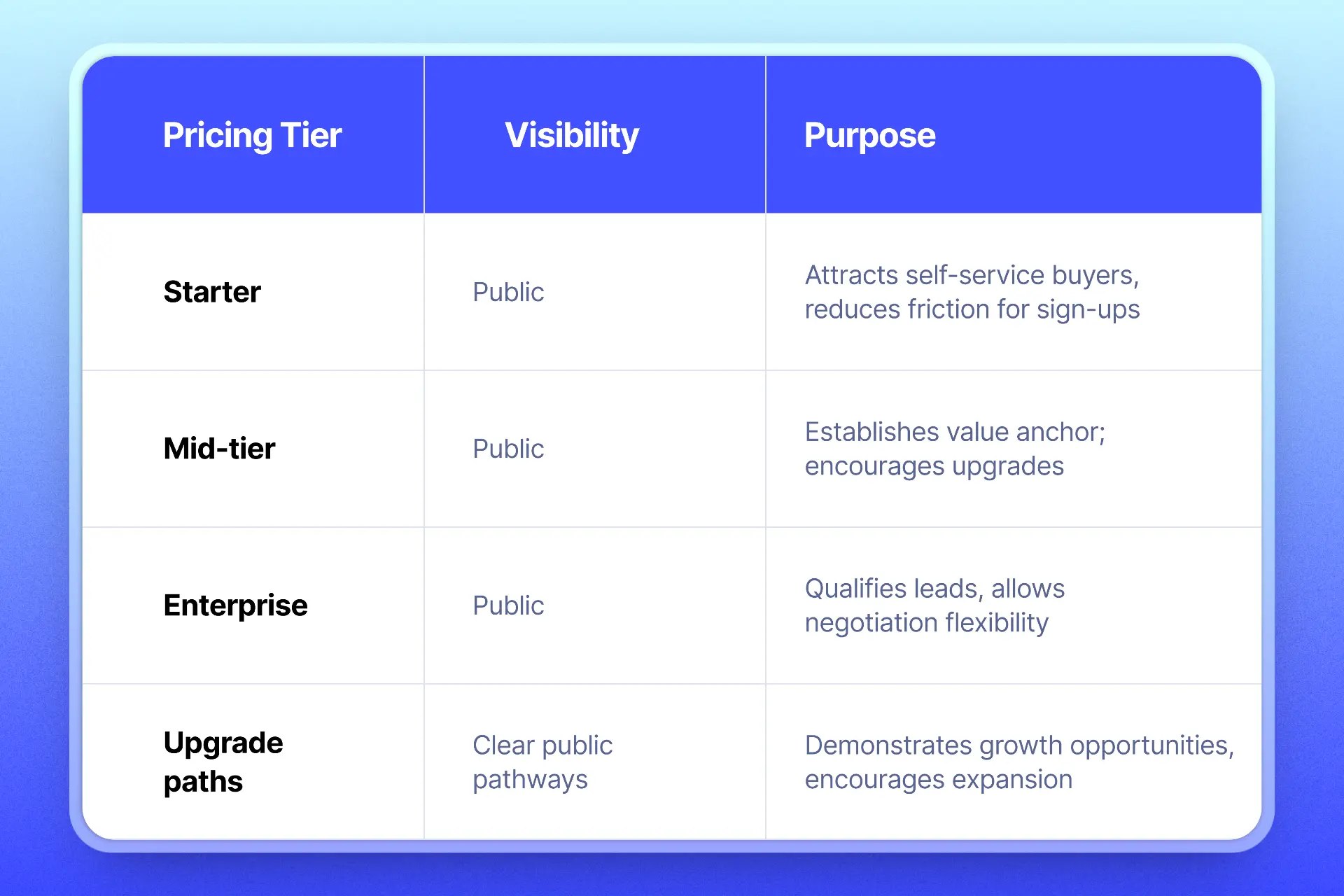
What to Show vs. Gate:
- Starter pricing public to attract self-service buyers
- Mid-tier pricing visible to establish value anchoring
- Enterprise pricing gated for qualification and negotiation flexibility
- Clear upgrade paths showing growth opportunities
Psychological Pricing Techniques:
- Anchoring effect: Position highest tier to make middle tier attractive
- Social proof integration: "Most popular" badges and customer counts
- Annual payment incentives: 15-20% savings for longer commitments
- Feature differentiation: Premium capabilities clearly highlighted
Case Study: A project management SaaS restructured their pricing page to show three tiers instead of five, added "most popular" badges, and included customer logos by tier. Conversion rate increased 28% while average deal size grew 15%.
Sales Enablement Excellence
Competitive Intelligence Resources
Battle Card Elements:
- Feature comparisons showing your advantages
- Common objections with proven response frameworks
- Win/loss insights from recent deals
- Positioning statements for different competitive scenarios
Example: A cybersecurity company created real-time battle cards that updated automatically when competitors changed features or pricing. Sales win rate against key competitors improved from 35% to 55%.
Financial Justification Tools
ROI Calculator Best Practices:
- Industry-specific metrics and benchmarks
- Conservative assumptions to build credibility
- Scenario modeling (conservative, realistic, optimistic)
- Implementation timeline showing payback periods
Business Case Templates:
- Executive summary with key financial metrics
- Problem quantification showing cost of status quo
- Solution benefits with specific outcome projections
- Risk mitigation addressing common concerns
Section Takeaway:
Bottom-funnel success depends on removing friction, building confidence, and making it easy for prospects to say yes.
Advanced Strategies to Reduce SaaS Marketing CAC
Channel-Specific Optimization
Content Marketing ROI Maximization
Compound Content Strategy:
- Evergreen content creation generating leads for 12+ months
- Topic cluster development around buyer journey keywords
- Content repurposing systems maximizing asset value
- Gated content progression from free to premium resources
SEO for B2B SaaS Marketing:
- Keyword research focusing on buyer intent, not just volume
- Content gap analysis identifying competitor weaknesses
- Technical SEO optimization for better search performance
- Local SEO for geographic targeting (if relevant)
Results Example: A HR software company's content marketing program generated 65% of their leads at an average CAC of $85, compared to $340 for paid advertising.
Paid Media Efficiency
Performance Marketing Excellence:
- Audience segmentation based on ideal customer profiles
- Creative testing with systematic rotation schedules
- Landing page optimization ensuring message-match
- Negative keyword management preventing irrelevant traffic
Channel Mix Strategy:
- LinkedIn Ads for B2B targeting and account-based marketing
- Google Ads for high-intent keyword capture
- Retargeting campaigns for engagement and conversion
- Programmatic display for brand awareness and reach
Partnership-Driven Growth
Integration Partnerships:
- Mutual referral programs with complementary solutions
- Co-marketing initiatives sharing audiences and costs
- Joint content creation leveraging combined expertise
- Technology marketplace listings and optimization
Customer Advocacy Programs:
- Referral incentives with meaningful rewards
- Case study development showcasing customer success
- Review generation on G2, Capterra, and other platforms
- Speaking opportunities at industry events
Success Metric: A marketing automation platform's partner channel generated 40% of new customers at 60% lower CAC than direct marketing efforts.
Attribution and Analytics Excellence
Multi-Touch Attribution
Implementation Framework:
- First-touch attribution for brand awareness measurement
- Last-touch attribution for direct response optimization
- Multi-touch modeling for complex B2B SaaS journeys
- Custom attribution based on your specific sales process
Account-Level Tracking:
- Stakeholder journey mapping across multiple contacts
- Channel interaction analysis understanding assist vs. direct conversions
- Revenue attribution connecting marketing activities to closed deals
- Influence scoring for early-stage touchpoints
Predictive Analytics
CAC Forecasting Models:
- Seasonal adjustments for budget cycles and market patterns
- Channel saturation analysis predicting diminishing returns
- Competitive impact modeling showing market dynamics effects
- Growth scenario planning with resource requirement projections
Section Takeaway:
Advanced CAC optimization combines channel diversification, sophisticated attribution, and predictive analytics to create sustainable competitive advantages.
90-Day Implementation Plan: Your Roadmap to Lower CAC
Ready to put this into action? Here's your step-by-step blueprint.
Phase 1: Foundation & Quick Wins (Days 1-30)
Week 1-2: Assessment & Baseline
Critical Audit Tasks:
- CAC calculation across all channels and segments
- Funnel analysis identifying biggest conversion drops
- Competitive benchmarking against 3-5 direct competitors
- Attribution setup for accurate performance tracking
Deliverables:
- Current CAC by channel spreadsheet
- Conversion rate analysis by funnel stage
- Competitive positioning assessment
- Baseline metrics dashboard
Week 3-4: Quick Win Implementation
High-Impact, Low-Effort Optimizations:
Landing Page Optimization:
- Reduce form fields from current number to maximum 4
- Add social proof elements (logos, testimonials, stats)
- Optimize page speed targeting under 3 seconds load time
- Mobile responsiveness check and improvements
Email Automation:
- Welcome series setup (5 emails over 10 days)
- Abandoned form recovery sequence
- Content download follow-up automation
- Lead scoring basic implementation
Expected Results: 15-25% improvement in conversion rates, 10-15% reduction in CAC within 30 days.
Phase 2: Systematic Optimization (Days 31-60)
Week 5-6: Conversion Rate Focus
A/B Testing Implementation:
- Headlines and value propositions on key landing pages
- Call-to-action buttons (text, color, placement)
- Social proof variations (customer count vs. logos vs. testimonials)
- Form design (single vs. multi-step, field order)
Content Optimization:
- Case study refresh with quantified outcomes
- Product demo videos tailored to key use cases
- FAQ section addressing common objections
- Comparison pages vs. key competitors
Week 7-8: Channel Rebalancing
Budget Reallocation Strategy:
- Channel ROI analysis with 90-day lookback
- Content marketing investment increase by 25-30%
- SEO initiative launch targeting buyer-intent keywords
- Partnership program development with 3-5 complementary vendors
New Channel Testing:
- LinkedIn organic content strategy
- Community building in relevant industry groups
- Podcast guesting program launch
- Referral program beta with top customers
Expected Results: 20-30% improvement in blended CAC, 25-35% increase in lead quality scores.
Phase 3: Advanced Optimization (Days 61-90)
Week 9-10: Personalization at Scale
Dynamic Content Implementation:
- Industry-specific landing pages for top 3 verticals
- Role-based email sequences for different buyer personas
- Account-based campaigns for top 50 target accounts
- Behavioral triggers based on website and email engagement
Advanced Automation:
- Lead scoring refinement with 15+ data points
- Sales alert system for high-intent activities
- Churn prevention workflows for trial users
- Upsell sequences for existing customers
Week 11-12: Sales Process Enhancement
Demo Optimization:
- Discovery call framework with consistent qualification process
- Demo customization templates for different industries/roles
- Follow-up automation with personalized next steps
- Stakeholder engagement strategies for complex deals
Sales Enablement:
- Battle cards for top 3 competitors
- ROI calculator tool development
- Case study library organized by industry and use case
- Objection handling guide with proven responses
Expected Results: 10-20% sales cycle compression, 15-25% improvement in win rates, 30-50% overall CAC reduction.
Success Metrics & Tracking
Weekly Metrics:
- Conversion rates by traffic source and funnel stage
- Cost per lead and cost per MQL by channel
- Sales velocity metrics (cycle length, win rate)
- Pipeline quality scores and progression rates
Monthly Reviews:
- Blended CAC trends and channel attribution
- Customer acquisition volume and quality analysis
- ROI analysis by channel and campaign
- Competitive positioning assessment
Section Takeaway:
Systematic implementation over 90 days typically yields 30-50% CAC improvements while maintaining or increasing lead volume and quality.
Common Pitfalls (And How to Avoid Them)
Learn from others' mistakes to accelerate your success.
Optimization Mistakes That Backfire
The Over-Optimization Trap
The Problem: Focusing on individual metrics without considering overall impact.
What It Looks Like:
- Optimizing email open rates while click-through rates decline
- Reducing CAC but attracting lower-quality leads
- Improving conversion rates on poor-traffic sources
The Solution:
- Holistic analysis considering entire funnel impact
- Customer lifetime value integration in all decisions
- Quality vs. quantity balance in lead generation
Real Example: A SaaS company reduced their CAC from $200 to $120 by targeting cheaper keywords, but customer LTV dropped from $2,400 to $1,200, making their unit economics worse despite lower acquisition costs.
Attribution Blindness
The Problem: Misattributing success to the wrong channels or tactics.
Common Scenarios:
- Last-click attribution ignoring early-stage touchpoints
- Single-channel analysis missing cross-channel effects
- Short-term measurement missing long-term content impact
The Solution:
- Multi-touch attribution modeling for complex B2B SaaS journeys
- View-through tracking for brand awareness activities
- Incrementality testing to measure true channel lift
Implementation Challenges
Resource Allocation Errors
Common Mistakes:
- Spreading efforts too thin across multiple optimization areas
- Underestimating complexity of attribution and measurement
- Insufficient team alignment between marketing, sales, and customer success
Best Practices:
- 80/20 focus on highest-impact opportunities first
- Phased rollout with clear success criteria
- Cross-functional project management with regular check-ins
Technology and Data Issues
Frequent Problems:
- Tracking gaps across different platforms and touchpoints
- Data quality issues leading to incorrect insights
- Integration challenges between marketing and sales systems
Solutions:
- Technology audit before implementation
- Data governance framework with clear definitions
- Regular data validation and quality checks
Section Takeaway:
Avoid common pitfalls by taking a systematic approach, maintaining data quality, and focusing on holistic optimization rather than individual metrics.
The Future of B2B SaaS Marketing CAC Optimization
Stay ahead of the curve with emerging trends and technologies.
Emerging Technologies
AI and Machine Learning Impact
Current Applications:
- Predictive lead scoring using behavioral and firmographic data
- Dynamic content personalization adapting in real-time
- Automated bid optimization for paid advertising campaigns
- Conversation intelligence analyzing sales calls for insights
Near-Term Developments:
- Attribution modeling using machine learning for complex B2B SaaS journeys
- Content generation AI for personalized outreach at scale
- Predictive analytics for customer lifetime value and churn risk
- Voice and chat optimization for emerging interaction channels
Privacy-First Marketing Evolution
Key Changes:
- First-party data strategies becoming essential
- Contextual targeting replacing behavioral tracking
- Server-side tracking for more reliable attribution
- Consent management optimization for data collection
Preparation Strategies:
- Email list building and subscriber engagement
- Content gating strategies for data collection
- Survey and feedback programs for preference data
- Community building for direct customer relationships
Building Sustainable Competitive Advantages
Long-Term CAC Moats
Brand Authority Development:
- Content marketing dominance in your category
- Thought leadership positioning key executives
- Industry recognition through awards and speaking
- Customer advocacy programs building referral networks
Operational Excellence:
- Process optimization for superior conversion rates
- Team specialization in high-performing channels
- Technology integration for competitive efficiency
- Data insights driving continuous improvement
Network Effects:
- Customer referrals as a scalable channel
- Partner ecosystems for mutual growth
- Community building around your product or industry
- Content syndication expanding reach without proportional costs
Section Takeaway:
Future success requires balancing emerging technology adoption with fundamental relationship-building and process excellence.
Your Next Steps: Transform Your B2B SaaS Marketing Results
The Systematic Approach to CAC Excellence
Here's the truth: Reducing customer acquisition costs isn't about finding quick hacks or silver bullets. It's about building integrated systems that create compound improvements across your entire B2B SaaS marketing operation.
What Separates Winners from Losers:
Winning B2B SaaS Marketing Teams:
- Optimize systematically across every customer touchpoint
- Compress sales cycles through better qualification and enablement
- Balance channel mix toward sustainable, scalable acquisition sources
- Focus on retention to reduce overall acquisition pressure
Losing B2B SaaS Marketing Teams:
- Chase individual tactics without strategic integration
- Optimize for vanity metrics instead of business outcomes
- Rely too heavily on paid channels without building owned assets
- Ignore post-acquisition experience and its impact on referrals
Your Implementation Priority Framework
Start with your biggest leverage points:
If your conversion rates are below industry benchmarks (2-3% for B2B SaaS), focus optimization efforts there before increasing advertising spend.
If your sales cycles exceed category averages (typically 3-6 months for mid-market), prioritize velocity improvements through better qualification and nurturing.
Quick Win Priority List:
- Landing page optimization (fastest conversion impact—usually 15-30% improvement in 30 days)
- Email automation (immediate nurture improvements with high ROI)
- Channel budget reallocation (move 20% from high-CAC to low-CAC sources)
- Lead capture optimization (eliminate unnecessary form fields and friction)
The Measurement Imperative
CAC optimization requires ongoing discipline:
- Weekly performance reviews with actionable insights
- Monthly channel analysis and budget optimization
- Quarterly strategic assessments with goal adjustments
- Annual competitive benchmarking and strategy refresh
Key Metrics to Track:
- Blended CAC trends by month and quarter
- Channel performance with full attribution modeling
- Conversion rates at each funnel stage
- Customer lifetime value and payback periods
- Sales velocity metrics (cycle time, win rates)
Making It Happen: Your Three Critical First Steps
Step 1: Establish Your Baseline (Week 1)
- Calculate current CAC across all channels
- Map your funnel conversion rates at each stage
- Benchmark against industry standards
- Identify your top 3 optimization opportunities
Step 2: Implement Quick Wins (Weeks 2-4)
- Optimize your highest-traffic landing pages
- Set up basic email automation sequences
- Reduce form friction and add social proof
- Launch retargeting for website visitors
Step 3: Build Your Systematic Approach (Months 2-3)
- Implement comprehensive attribution tracking
- Launch content marketing initiatives
- Develop partnership and referral programs
- Create advanced nurturing and qualification processes
What Results to Expect
Companies following this systematic approach typically achieve:
- 30-50% CAC payback period reduction through cycle compression and conversion optimization
- 20-35% win rate increases via better qualification and sales enablement
- 25-40% overall acquisition efficiency improvements across all marketing channels
- 15-25% increase in customer lifetime value through better qualification and onboarding
Timeline Expectations:
- 30 days: Quick wins showing 15-25% conversion improvements
- 90 days: Systematic changes delivering 25-35% CAC reduction
- 6 months: Compound effects achieving 40-50% overall improvement
- 12 months: Sustainable competitive advantage with optimized full funnel
The Choice Is Yours
The question for B2B SaaS marketing leaders isn't whether you can afford to optimize your customer acquisition costs.
It's whether you can afford not to.
Your competitors are implementing these strategies right now. Every day you delay is market share you're giving away and revenue growth you're leaving on the table.
Your future growth trajectory, profit margins, and competitive market position depend entirely on the efficiency of your customer acquisition engine.
Start today. Start systematically. Start with the confidence that these strategies work because thousands of B2B SaaS marketing teams have proven them in the real world.