Unlocking Event Success: How Paid Media Strategies Drive High-Impact Outcomes for SaaS Event Marketing

In the competitive SaaS event marketing space, leveraging paid media strategies is essential. As economic pressures and technological advancements reshape the industry, adopting innovative approaches helps maximize ROI and stand out.Paid media has emerged as one of the most effective B2B SaaS marketing strategies, offering tools to amplify brand visibility, reach decision-makers, and deliver measurable results. By implementing demand generation best practices, businesses can navigate complex sales cycles, improve lead quality, and reduce customer acquisition costs.This article explores how to leverage paid media effectively to tackle SaaS-specific challenges, drawing on insights from customer interviews, market research, and strategic frameworks tailored for high-growth industries.
Understanding the Challenges Facing SaaS Events
Economic Sensitivity
For SaaS companies navigating tight budgets, event marketing campaigns must justify every dollar spent. This calls for measurable marketing outcomes that focus on reducing customer acquisition costs while driving higher ROI.By employing data-driven growth marketing, SaaS businesses can allocate resources effectively, prioritizing efforts that yield the best ROI. Revenue engine consulting can guide organizations in creating frameworks to track and maximize results.
Budget Constraints and ROI Focus
To remain competitive in event marketing, incorporating ROI optimization for SaaS campaigns is essential. According to a report by SaaStock, 41% of marketers feel pressured to prove the value of their marketing efforts amid budget constraints, making it essential to justify expenditures on events.
Measuring Event ROI
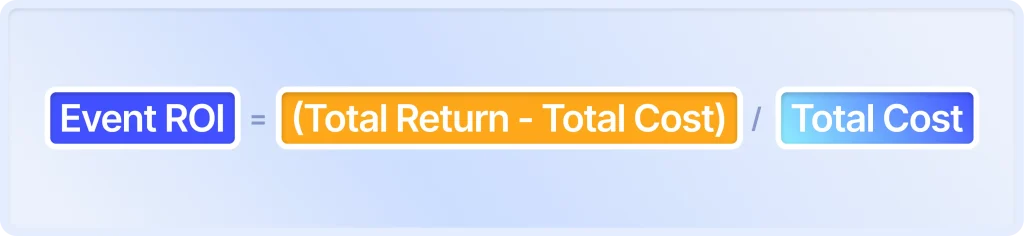
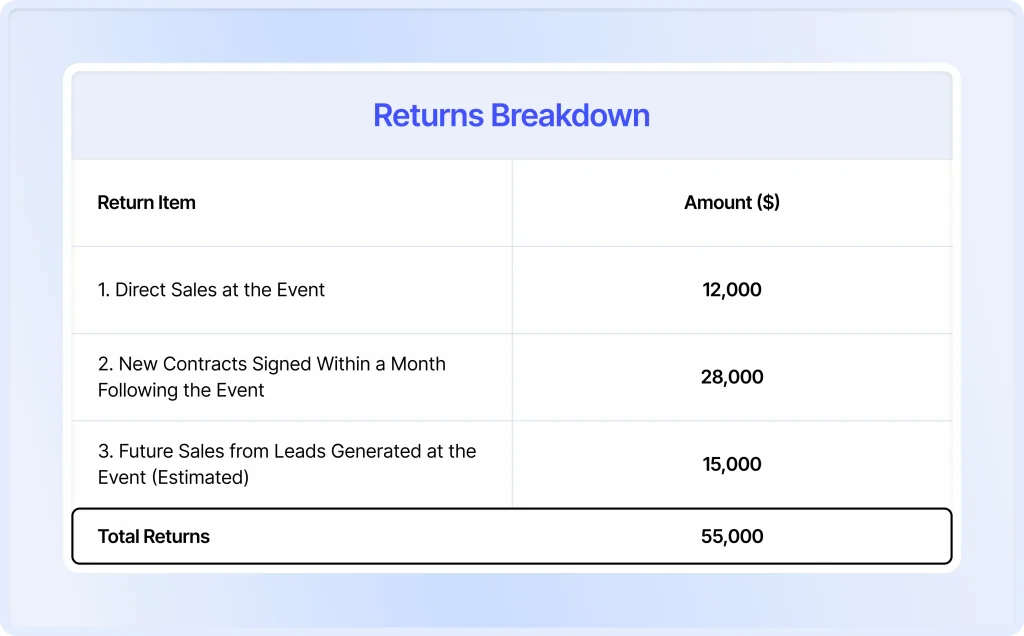
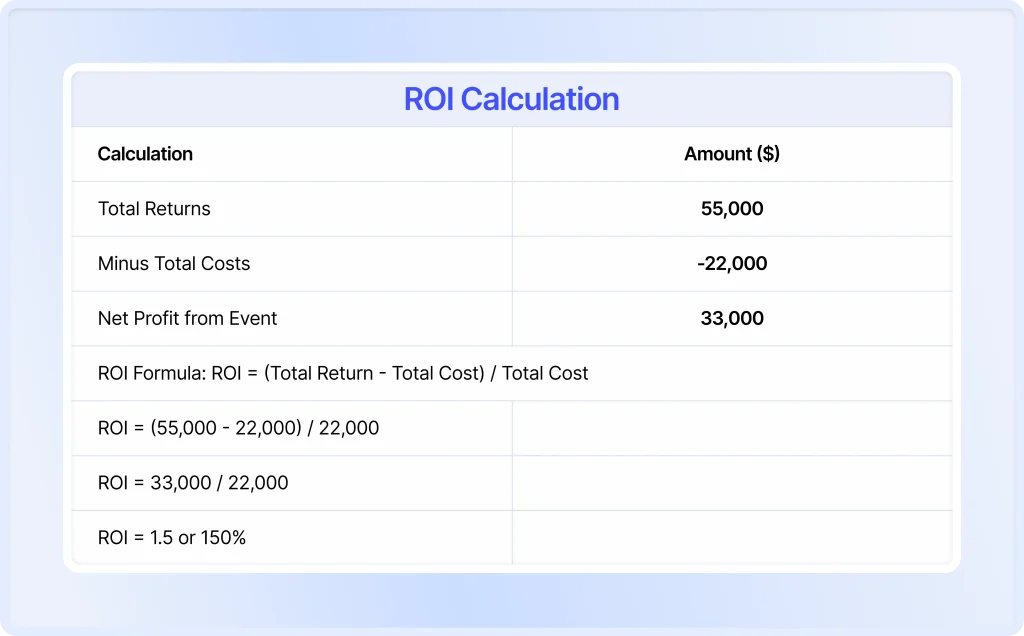
Calculate ROI by subtracting event costs from the net profit generated, then dividing by total costs. This will help you understand the financial impact of your event, making it easier to refine future strategies based on data-driven insights.Let's say your SaaS company hosts a networking event designed to connect with potential clients, showcase your latest software solutions, and strengthen relationships within the industry.
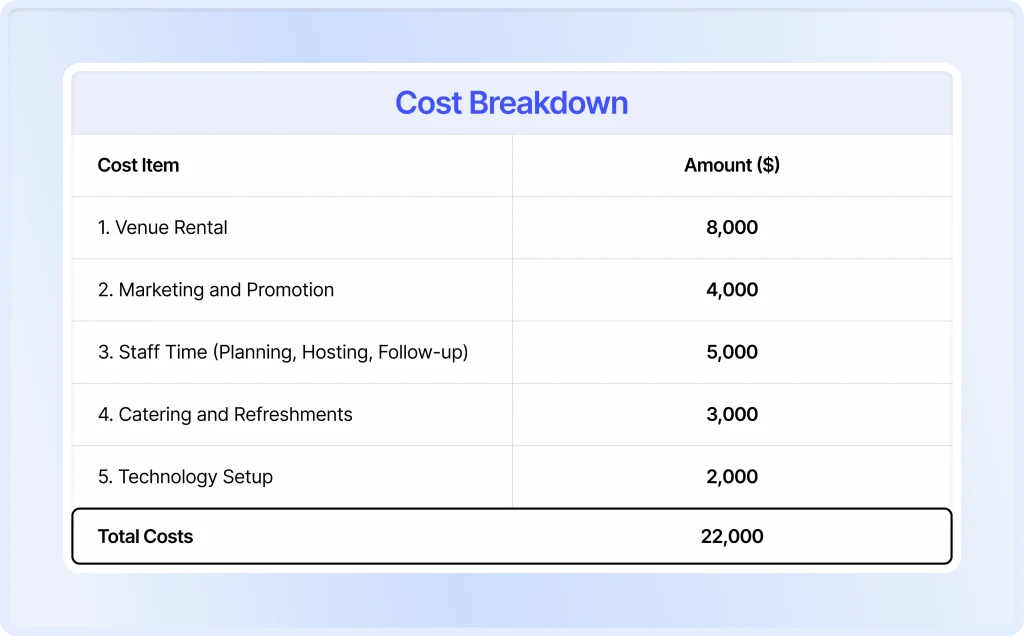
Importance of Data Capture
Collect data on attendee engagement, registrations generated, and satisfaction levels. Assessing both hard metrics (like sales) and soft metrics (like feedback) refines event strategies and improves outcomes.
Long Sales Cycles
The nature of SaaS B2B sales, with multiple decision-makers and extended timelines, adds complexity to measuring event success. Mapping the customer journey and integrating conversion tracking enables clearer connections between event participation and revenue growth.Deploying lead optimization techniques ensures that touchpoints from event engagement align with decision-makers' needs, driving conversions and shortening the path to sales.To help you navigate the murky waters, leverage tracking mechanisms to monitor how leads generated at events progress through the sales funnel.
Strategies for Improvement
Want to enhance your SaaS event’s marketing despite economic sensitivity? Then you should consider:
- Targeted Marketing: Ensuring that events attract the right audience can significantly improve conversion rates.
- Engaging Content: Providing valuable and engaging content during events increases attendee satisfaction and retention.
- Follow-Up Engagement: Post-event communication is crucial for maintaining interest and converting event registrations into customers.
We’ll get into the specifics later on, but in a nutshell: by implementing post-event engagement strategies for SaaS, you can optimize event marketing efforts while navigating budget constraints.
AI Saturation and Differentiation
The rise of AI has accelerated content creation, creating an oversaturated digital space. To stand out in AI-saturated SaaS marketing, leveraging interactive experiences tailored for B2B SaaS marketing strategies can help differentiate your brand. Through effective demand generation best practices and paid media strategies, businesses can cut through the noise, offering personalized, high-value content that aligns with customer expectations.
The Rise of AI in Content Creation
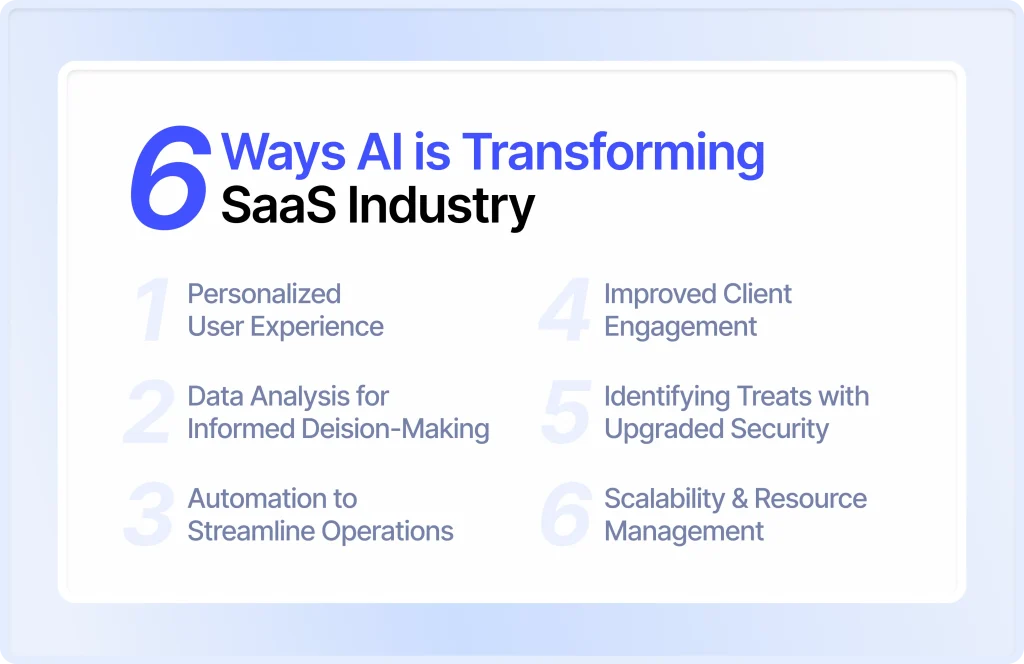
As noted in Acropolium's report, 67% of SaaS businesses are utilizing AI to enhance their offerings, which contributes to a competitive environment where standing out is increasingly difficult. This saturation demands adopting science-based frameworks for revenue growth and data-driven growth marketing to differentiate event marketing strategies. These approaches allow companies to connect meaningfully with their target audiences and maximize their ROI.
Necessity for Unique Value Propositions
In a market overwhelmed with information, differentiation is not optional. Insivia emphasizes that SaaS companies must present unique value propositions to capture audience attention effectively. This can involve leveraging content strategies for demand generation, such as interactive formats like calculators, polls, or quizzes, which engage users more dynamically than traditional text-based approaches.The demand for innovative strategies is growing as text-heavy content increasingly struggles to maintain user engagement. Incorporating performance-based marketing frameworks ensures that the value of your messaging resonates with potential customers while driving measurable outcomes.
Personalized, High-Value Content
To break through the clutter, SaaS companies must focus on delivering personalized and high-value content that aligns with customer expectations. Leveraging lead optimization techniques and analytics systems for marketing, marketers can analyze user behavior and preferences to create tailored experiences. This personalized approach enhances engagement and significantly increases the likelihood of conversion during events.
Leveraging Interactive Experiences
Interactive experiences are essential for SaaS event marketing. By moving beyond static content, businesses can provide personalized insights and recommendations using tools like interactive calculators or custom quizzes. These methods not only offer immediate value but also foster deeper connections with potential customers.Interactive experiences align with systematic demand generation methods, helping companies create sustainable demand generation strategies that build long-term customer loyalty.As AI continues to saturate the digital landscape, SaaS companies face significant challenges in differentiating their event marketing efforts. By integrating thought leadership in SaaS marketing and focusing on scalable demand generation efforts, businesses can effectively engage audiences and stand out in crowded markets.
Complex Customer Journeys
Modern B2B buyers demand B2C-like experiences and seamless journeys across touchpoints. Paid media campaigns tailored using data-driven growth marketing techniques can streamline these experiences by delivering precise, personalized messaging at every funnel stage.
Demand for B2C-like Experiences
As highlighted by Ortto, the SaaS market is more competitive than ever, making it essential to align solutions with evolving customer expectations. This alignment requires focusing on customer acquisition strategies for SaaS to create smooth customer experiences that drive retention and satisfaction throughout the lifecycle. Incorporating tools for conversion tracking setups for B2B ensures that every touchpoint delivers measurable value and enhances engagement.
Importance of Customer Journey Mapping
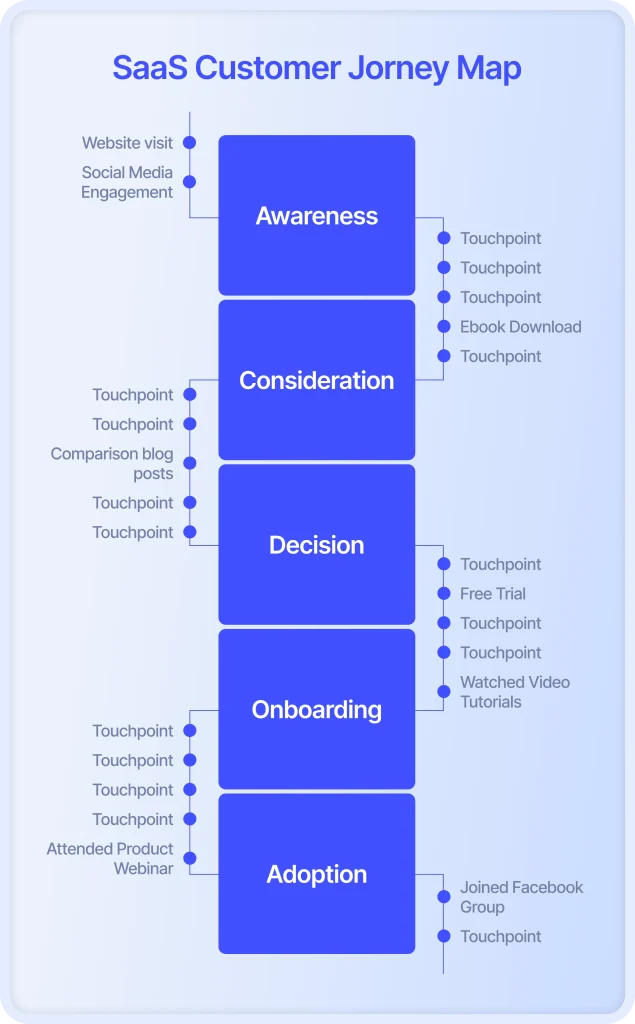
Mapping SaaS customer journeys is crucial for understanding interactions from awareness to advocacy. Employing personalized SaaS marketing strategies at each touchpoint enhances user engagement. UXPressia emphasizes that a well-structured customer journey map helps visualize these stages, allowing businesses to refine interactions and improve user engagement. By identifying key touchpoints, companies can ensure that each interaction is meaningful and contributes positively to the overall experience.
Tailored Messaging Across Touchpoints
Paid media strategies play a critical role in streamlining customer journeys by delivering tailored messaging at every stage of the funnel. According to Twilio Segment, effective journey mapping involves identifying all critical touchpoints between users and the company, enabling B2B SaaS marketing strategies that resonate with audience needs.This personalization addresses specific pain points, enhances engagement, and drives measurable outcomes, particularly in competitive markets where customers have countless options. Integrating conversion tracking setups for B2B ensures each touchpoint aligns with broader business goals and measurable success.
Navigating Longer Sales Cycles
The B2B SaaS customer journey often features longer sales cycles due to multiple decision-makers and complex procurement processes. As noted by UXPressia, understanding these unique characteristics is crucial for creating actionable journey maps that align with your business goals.Consistent engagement through demand generation services for SaaS and content strategy for demand generation ensures that potential attendees receive relevant information at each stage. This approach fosters trust and keeps prospects warm, even over lengthy sales cycles.
Challenges in Personalization
While personalization is crucial to modern marketing, gathering valuable data to inform tailored interactions poses challenges. Twilio emphasizes that businesses should prioritize collecting first-party data to design lead optimization techniques and systematic demand generation methods that create meaningful, personalized experiences.With third-party cookies becoming less reliable, SaaS marketers must implement analytics systems for marketing to understand customer needs better and develop content that meets these evolving preferences.Navigating complex customer journeys in SaaS events requires deep insight into buyer expectations for seamless, B2C-like experiences. By employing effective customer journey mapping and leveraging sustainable demand generation methods through paid media, SaaS companies can enhance engagement and drive more conversions.
Resource Constraints
SaaS teams often juggle limited resources. By prioritizing high-impact paid media campaigns, marketing teams can achieve more with less, automating where possible to optimize resources.
Limited Resources in SaaS Teams
SaaS marketing teams often operate under significant resource constraints, which can include limitations in budget, time, and personnel. Sound familiar? Well, according to Roadmunk, these constraints have prompted teams to conduct thorough planning and prioritization to deliver high-quality results despite limited resources. This is particularly relevant for event marketing, where maximizing impact with minimal investment is crucial.
Prioritizing High-Impact Campaigns
To achieve more with fewer resources, SaaS teams must focus on high-impact paid media campaigns that align with business objectives. Utilizing performance-based marketing frameworks ensures these efforts yield measurable outcomes.
Birdview underscores the importance of creating a decision-making framework to allocate resources strategically to the most crucial initiatives. This prioritization aligns with provable results in marketing, ensuring ROI on key projects without overextending budgets.
Automation to Optimize Resources
Automation plays a vital role in optimizing resource usage. Tools that automate scheduling and resource allocation can help SaaS teams manage their limited resources more efficiently. For example, Birdview mentions that automated scheduling tools can dynamically adjust project timelines based on resource availability, reducing manual intervention and allowing teams to focus on strategic tasks rather than administrative ones.
Strategies for Managing Resource Constraints
To effectively manage resource constraints in SaaS event marketing, your team can adopt several strategies:
Develop Contingency Plans
Preparing for potential resource shortages is vital. Having backup plans ensures your team can respond proactively to unforeseen challenges.
Monitor Resource Utilization
Continuous tracking of resource use helps identify bottlenecks and areas for improvement. This oversight enables optimal utilization and alignment with revenue engine consulting frameworks.
Implement Robust Project Selection
Prioritizing projects based on alignment with organizational goals ensures resources focus on initiatives with the greatest impact. This strategy supports repeatable processes for growth and avoids resource waste on less critical endeavors.
By prioritizing high-impact campaigns, utilizing automation, and employing strategic planning, SaaS teams can optimize limited resources effectively. Leveraging systematic revenue growth methods and continuous monitoring ensures successful events, even in resource-constrained environments.
How Paid Media Solves SaaS Event Challenges
Targeting the Right Audience
Paid media platforms, such as LinkedIn and Google Ads, provide unmatched precision for targeting the right audience. These paid media strategies for SaaS events ensure your marketing efforts focus on high-intent prospects.
Custom Audiences
Paid media platforms like LinkedIn and Google Ads allow event organizers to upload contact lists to retarget previous attendees. This capability reminds past participants of upcoming events, fostering loyalty and enhancing engagement rates. Lead optimization services can further improve the quality of audience targeting, ensuring your campaigns maximize impact.
Persona-Based Targeting
Using job titles, industries, and locations, paid media enables precise targeting of ideal buyers. For instance, LinkedIn’s advertising options allow marketers to engage decision-makers directly by making use of LinkedIn Ads precision targeting via specific demographics. This targeted approach not only enhances attendee quality but also aligns with science-based frameworks for revenue growth.
Geographic Focus
For hybrid and in-person events, targeting attendees in specific regions is crucial. Paid media campaigns can be tailored to focus on geographic areas where potential attendees are located, maximizing the relevance of the marketing efforts. This is especially important for local events where attendance may significantly drop if not marketed effectively within the community.
Building Credibility Through Content
SaaS buyers depend on expert-led content when making purchasing decisions. Using case studies to boost SaaS event registrations helps build trust and credibility.
Ungated Educational Resources
SaaS buyers depend on thought leadership in SaaS marketing to guide purchasing decisions. By promoting ungated educational resources tailored to industry pain points, businesses position themselves as valuable and trustworthy. This approach aligns with performance-based marketing frameworks to attract and convert attendees effectively.
Case Studies and Testimonials
Paid media can effectively showcase how a product has driven measurable outcomes for similar Ideal Customer Profiles (ICPs). By highlighting case studies and testimonials in ads, you can demonstrate real-world success stories that resonate with your potential attendees, thereby enhancing credibility and encouraging registrations.
Shortening Sales Cycles
Leverage high-intent paid media campaigns to accelerate decision-making:
Remarketing Ads
High-intent campaigns like remarketing ads re-engage prospects who previously interacted with your content. By keeping your event top-of-mind, these strategies align with conversion tracking setups for B2B, accelerating decision-making and driving attendance.
ROI-Focused Messaging
Communicating the value of attending your event with ROI-focused messaging can prompt quicker decision-making. Incorporating analytics systems for marketing ensures measurable outcomes, increasing urgency in registrations.Paid media provides significant advantages for addressing common challenges faced by SaaS events. By leveraging targeted audience strategies, building credibility through valuable content, and employing tactics to shorten sales cycles, you can enhance your event marketing efforts and drive greater engagement and attendance. These strategies not only optimize marketing budgets but also ensure that resources are utilized effectively to achieve desired outcomes.
Crafting a Paid Media Strategy for SaaS Events
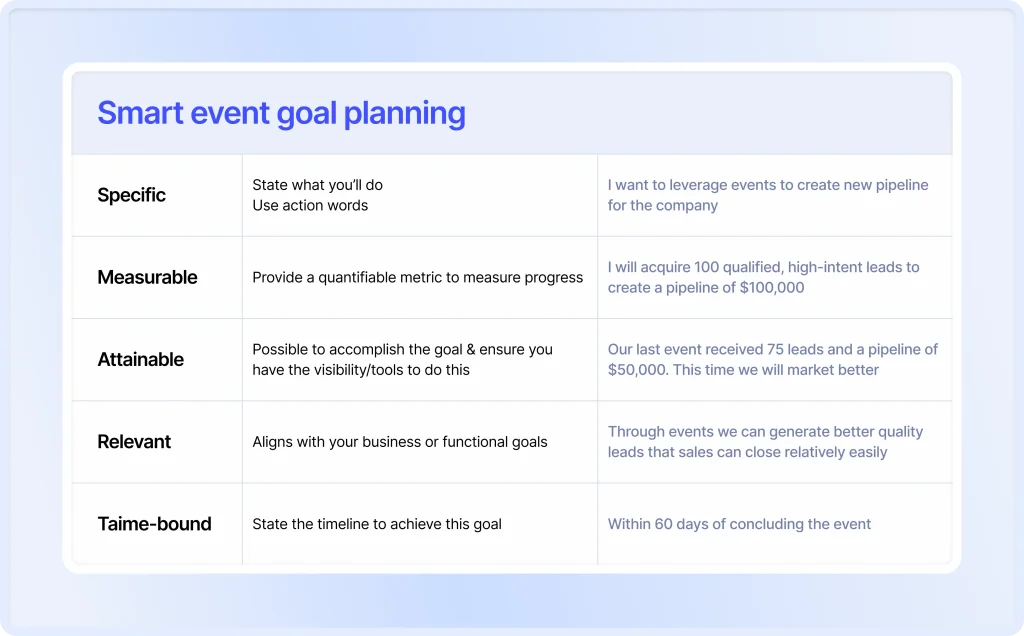
Step 1: Define Clear Objectives
Setting specific, measurable goals is crucial for any SaaS event marketing strategy. This aligns with the S.M.A.R.T framework, which emphasizes that objectives should be Specific, Measurable, Achievable, Relevant, and Time-bound.
Increase Registration by 20% for the Next Event
This goal is specific and quantifiable. According to Airmeet, setting clear objectives like increasing ticket sales or registrations helps focus marketing efforts and measure success effectively.
For example, if last year’s event attracted 100 attendees, setting a target for 120 attendees this year aligns with goals like increasing SaaS event registrations. Leveraging a strong SaaS marketing plan, such as targeted PPC campaigns for SaaS, ensures these objectives are met effectively.
Drive 30% More Engagement on Gated Content Tied to Event Promotion
This objective is also measurable and aligns with broader business goals of increasing lead generation and nurturing prospects. By tracking engagement metrics (like downloads or interactions with gated content), you can assess the effectiveness of your promotional strategies.
Step 2: Segment and Target Your Audience
Effective audience segmentation is critical for maximizing engagement and conversion rates.
High-Priority Segments
Focusing on enterprise-level buyers and decision-makers is essential as they are more likely to convert into high-value clients. Tailoring marketing efforts to these segments can significantly improve ROI. Eventcombo suggests that understanding your audience's demographics and interests allows for more targeted messaging that resonates with potential attendees.
AI-Specific Messaging
Crafting campaigns that speak directly to audiences interested in tech trends such as automation or compliance solutions can enhance relevance. This approach not only attracts more registrations, but also positions your brand as a leader in SaaS marketing for B2B companies.
Step 3: Select the Right Ad Formats
Choosing the appropriate ad formats can enhance visibility and engagement for your event.
LinkedIn Conversation Ads
These ads allow for personalized messages directly in attendees’ inboxes, making them feel more engaged. This format is particularly effective in B2B marketing, where direct communication can lead to higher conversion rates .
Thought Leader Ads
Promoting event-related posts from team members enhances authenticity. When potential attendees see industry experts discussing the event or its topics, it builds trust and credibility around the event.
Video Ads
Utilizing engaging visuals through video ads can effectively communicate key takeaways attendees will gain from participating in the event. Video content has been shown to increase engagement on social media platforms significantly, making it a powerful tool for event promotion.
Step 4: Monitor and Optimize Campaigns
Continuous monitoring and optimization are vital for maximizing campaign performance.
Track KPIs
Monitoring key performance indicators (KPIs) such as click-through rates (CTR), conversion rates, and cost-per-lead (CPL) allows you to gauge campaign effectiveness. As highlighted by Hypergrowth Marketer, setting clear objectives tied to measurable outcomes helps in evaluating success. Use these insights to refine strategies and ensure alignment with goals like improving SaaS marketing ROI.
Adjust Bids and Creatives in Real Time
The ability to make real-time adjustments based on performance data ensures that campaigns remain effective throughout their duration. This agility allows you to capitalize on successful strategies while quickly addressing underperforming elements.Each step in planning SaaS event marketing, from defining clear objectives to monitoring campaign performance, plays a critical role in achieving desired outcomes. By leveraging targeted audience segmentation, selecting appropriate ad formats, and continuously optimizing campaigns based on performance metrics, SaaS companies can enhance their event marketing strategies effectively. These practices not only improve registration rates but also foster greater engagement and conversion among potential attendees.
Creative Campaign Ideas to Maximize Event ROI
Go Beyond Standard Event Ads
Memorable, Experiential Campaigns
Hosting pre-event workshops, such as virtual SaaS product demos, fosters anticipation and engagement. According to EventBookings, experiential marketing strategies leave lasting impressions, making attendees more likely to convert.
Interactive Ads
Developing interactive ads, such as quizzes or polls, can effectively highlight your SaaS solution's unique benefits. These engaging formats encourage participation and can provide valuable insights into your audience's preferences and pain points. EngageBay suggests that interactive content not only improves engagement but also enhances brand recall, making it more likely that attendees will remember your event.
Leverage Thought Leadership
Collaborate with Subject-Matter Experts
Working with internal subject-matter experts to create authentic content can enhance credibility and attract interest. Promoting behind-the-scenes content about event preparation offers transparency and builds anticipation among potential attendees. Sharing insights into industry trends discussed at the event positions your brand as a thought leader, which is critical in the competitive SaaS landscape.
Offer High-Value Incentives
Exclusive Access
Encouraging registrations by offering exclusive access to whitepapers or tools provides tangible value to potential attendees. This strategy not only incentivizes sign-ups but also positions your brand as a valuable resource in the industry. EngageBay notes that high-value incentives can significantly increase registration rates by appealing to attendees' desire for actionable insights.
Post-Event Recordings
Providing post-event recordings for premium sessions is another effective way to maximize ROI. This allows attendees who may have missed live sessions to access valuable content later, extending the lifecycle of your event marketing efforts. According to Marketopia, this approach not only enhances attendee satisfaction but also creates additional opportunities for engagement after the event concludes.By implementing these creative campaign ideas you can significantly enhance your event ROI. These strategies focus on creating memorable experiences, establishing credibility, and providing tangible benefits to potential attendees, ultimately leading to increased engagement and conversions.
Post-Event Retargeting to Nurture Registrations into Product Leads
After the event, ensure no lead goes cold:
Re-engage Attendees with Tailored Offers
After an event, using retargeting ads is an effective strategy to re-engage attendees. These ads can feature tailored offers such as free demos or extended trials of your SaaS product. According to Boost Brands, immediate follow-up actions, such as personalized thank-you notes and targeted ads, help keep the event fresh in attendees' minds and encourage further engagement. By reminding attendees of the value they experienced at the event, companies can entice them back into the sales funnel.
Funnel Prospects into Your Marketing Ecosystem
Providing useful, ungated resources post-event can help funnel prospects into your marketing ecosystem. This approach allows potential product leads to access valuable content without barriers, increasing the likelihood of engagement. Eventcombo highlights that sharing exclusive digital content after an event, such as recordings of sessions or additional resources, can maintain interest and provide ongoing value to attendees. This strategy not only nurtures event registrations, but also positions your brand as a valuable resource in the industry.
Additional Strategies for Post-Event Engagement
Post-Event Webinars
Hosting follow-up webinars can sustain attendee engagement and provide deeper insights into topics covered during the event. These sessions allow for interaction and questions, reinforcing connections made during the event and offering additional value. Boost Brands emphasizes that these webinars can serve as a platform for attendees to explore new ideas and gain further insights from industry experts.
Exclusive Access to Content
Offering exclusive access to digital libraries or behind-the-scenes content can enhance attendee loyalty. This strategy creates a sense of exclusivity and encourages continued engagement with your brand. According to Boost Brands, providing access to materials like keynote recordings or extended Q&A sessions can deepen connections with attendees and keep them engaged long after the event.
Remarketing Website Visitors
Retargeting website visitors who engaged with your content during the event is crucial for nurturing registrations into product leads. As highlighted by Crunch Marketing, setting up tracking pixels allows you to retarget users based on their interactions with specific pages or content on your site. This targeted approach ensures that your ads reach individuals who have already shown interest in your offerings.By employing tailored retargeting ads, providing evergreen content, and utilizing follow-up strategies like webinars and exclusive access to resources, companies can effectively engage attendees and convert them into loyal customers. These strategies not only enhance the overall event experience but also foster long-term relationships with potential clients.
Key Takeaways
- SaaS event marketing faces challenges from tight budgets, prolonged sales cycles, and economic pressures, requiring ROI-driven strategies.
- AI saturation has made differentiation crucial, necessitating high-value, personalized, and interactive content to stand out.Paid media enables precise audience targeting through custom lists, persona-based filters, and geographic focus to attract the right attendees.
- Building credibility through ungated resources, case studies, and testimonials helps establish thought leadership and increase trust.
- Remarketing ads and ROI-focused messaging can shorten sales cycles by re-engaging prospects and emphasizing clear value propositions.Limited resources in SaaS teams demand prioritizing high-impact campaigns, leveraging automation, and effective project selection to optimize outcomes.
- Creative campaigns like interactive ads, virtual pre-event workshops, and exclusive post-event content boost engagement and ROI.
- Post-event retargeting, including tailored offers and follow-up webinars, nurtures event registrations and extends the lifecycle of event marketing efforts.
- Continuous monitoring and optimization of paid media campaigns, using KPIs like engagement rate, CTR and CPL, ensure better performance and resource allocation.A well-defined paid media strategy, with clear objectives and audience segmentation, is critical to achieving event success in a competitive SaaS landscape.