The B2B SaaS ROI Playbook: How CMOs Prove Impact When Budgets Are Tight

CMOs in B2B SaaS are facing a brutal paradox in 2025. Budgets are being cut, yet the pressure to prove marketing’s revenue impact is hitting all-time highs. The era of vague brand plays and "wait-and-see" campaigns is over. Every spend must now pass the boardroom test: Does this drive pipeline? Does this move revenue? Recent surveys show median marketing investment has dropped to around 8% of annual recurring revenue, while executive expectations continue to rise.This shift is forcing CMOs into a high-stakes game. They’re expected to do more with less and translate marketing’s value into boardroom language: pipeline sourced, customer lifetime value, and revenue contribution. There’s little room for guesswork and even less for failure.This article is structured around that reality. Inside, you’ll find actionable frameworks, performance metrics, and tactical strategies that help B2B SaaS CMOs stretch every dollar and prove marketing's true ROI. If you're navigating tighter budgets and higher expectations, this is your read for smarter growth.
Section 1: The Growing Pressure to Prove ROI in B2B SaaS
Why ROI Is Now the CMO’s Hardest Mandate
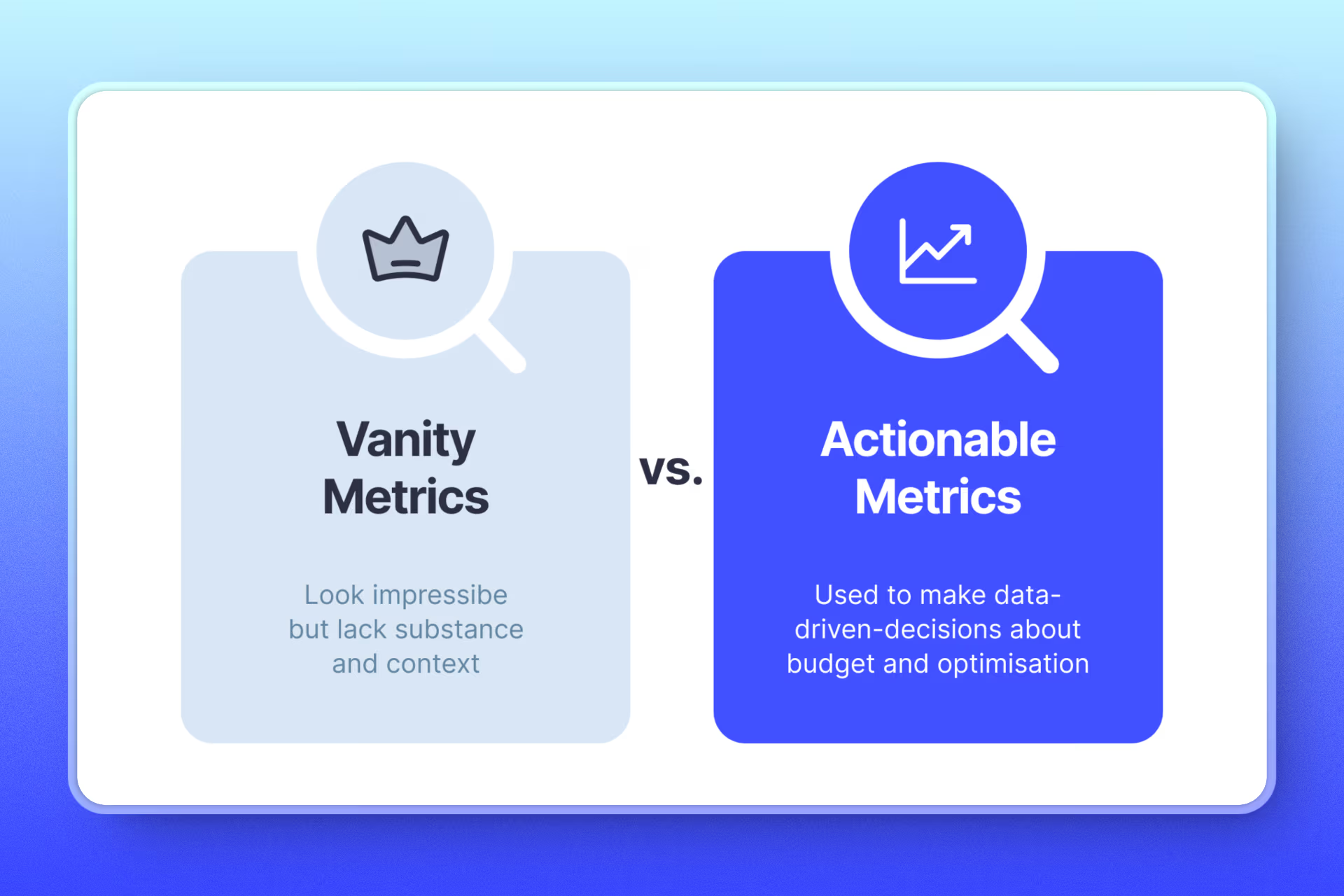
Budgets are under pressure, buying cycles are stretching, and competition is intensifying. CMOs are being pushed to deliver more than brand visibility. They must now show a direct, measurable connection between marketing spend and bottom-line outcomes like pipeline velocity and revenue contribution.Board expectations have shifted. Vanity metrics and top-of-funnel reports are no longer enough. Executives want proof that marketing investments drive results that matter to the business.
Inside the Budget Crunch: Post-2024 SaaS Economics
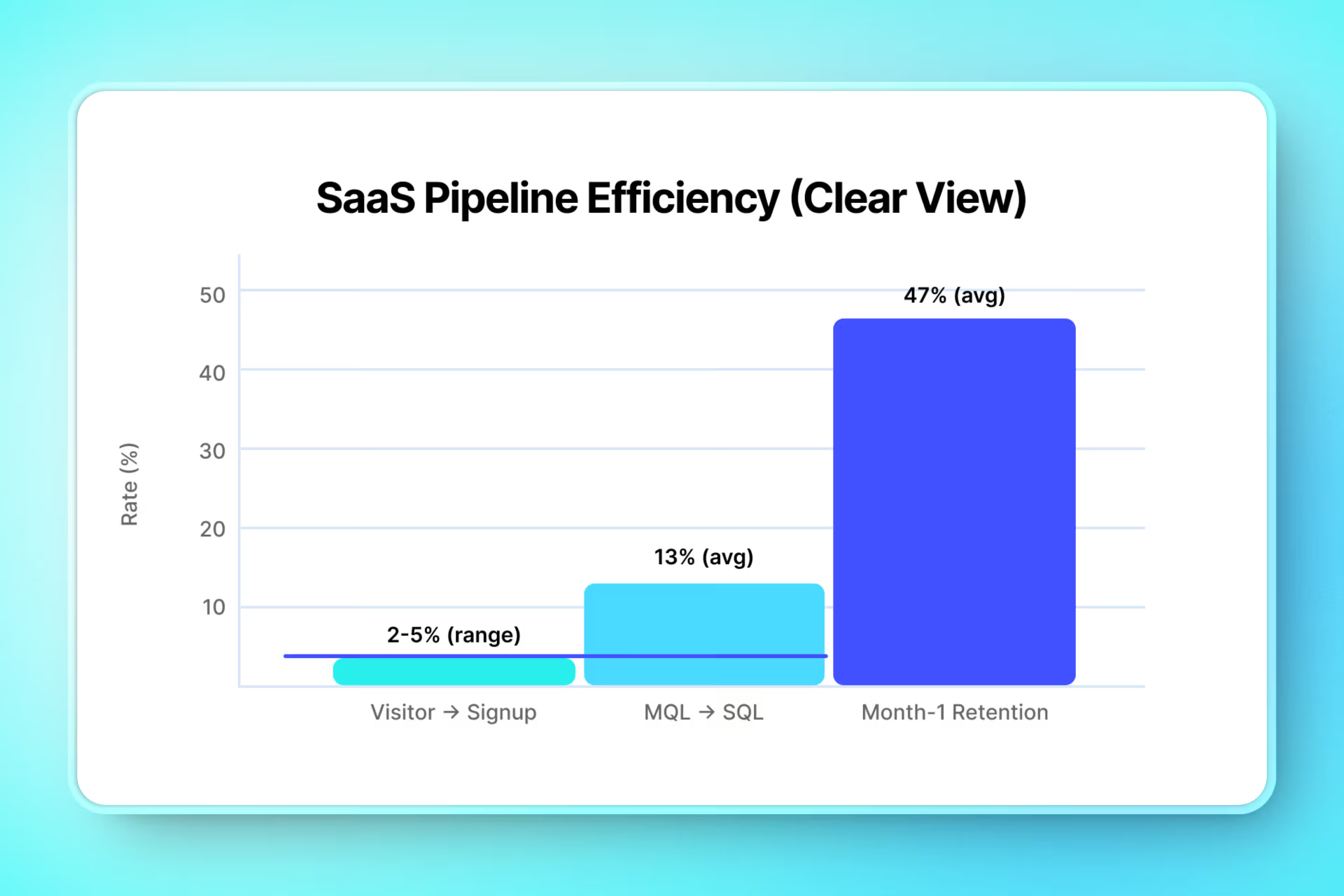
Key performance indicators tell a clear story. Customer Acquisition Cost (CAC) payback windows that were once considered healthy at 12 months are now extending to 18 to 24 months for many enterprise players. Some less efficient teams are reporting averages of 20 to 30 months. While top-tier SaaS companies still manage to keep CAC payback below 12 months, they are now the outliers, not the standard.At the same time, digital ad costs continue to climb faster than overall inflation. Reports show ad pricing increasing by 10 to 16 percent year over year. Meanwhile, software inflation is tracking nearly five times higher than market averages. The cost to maintain existing pipeline volume is rising, forcing marketers to fight harder just to stay even.The strain is also visible in pipeline efficiency metrics. Leading SaaS companies convert just 2 to 5 percent of website visitors into free account signups. Marketing-qualified leads convert to sales-qualified leads at around 13 percent. And early-stage retention is a growing concern, with month-one retention averaging just under 47 percent.
Why the ROI Conversation Can’t Wait
All of this underscores the central tension: marketing is expected to deliver more while working with less. Every campaign, every channel, and every tactic must prove its worth. In this environment, CMOs can no longer afford to rely on assumptions or outdated playbooks. ROI clarity is not just a reporting function, it’s now the defining factor in whether marketing is seen as a cost center or a growth engine.
Section 2: Turning Marketing Metrics into Business Proof
ROI measurement in SaaS fails when it starts with the wrong question.
Too often, marketers ask “How many leads did we generate?” instead of “How much revenue did we influence?” In today’s boardroom climate, the latter is the only question that matters. Building a focused ROI framework means connecting marketing activity to pipeline movement, deal acceleration, and long-term customer value.
Redefine ROI with Revenue-First Metrics
Lead volume alone can create a false sense of progress. To prove real impact, modern SaaS CMOs track metrics that show how marketing contributes to revenue growth and efficiency.
- Cost per OpportunityThis measures the true cost of generating a qualified sales opportunity, not just capturing attention. Reducing this cost while keeping pipeline quality high is a direct signal of marketing efficiency.
- Pipeline VelocityThis metric shows how fast your pipeline converts into revenue. Use this formula:
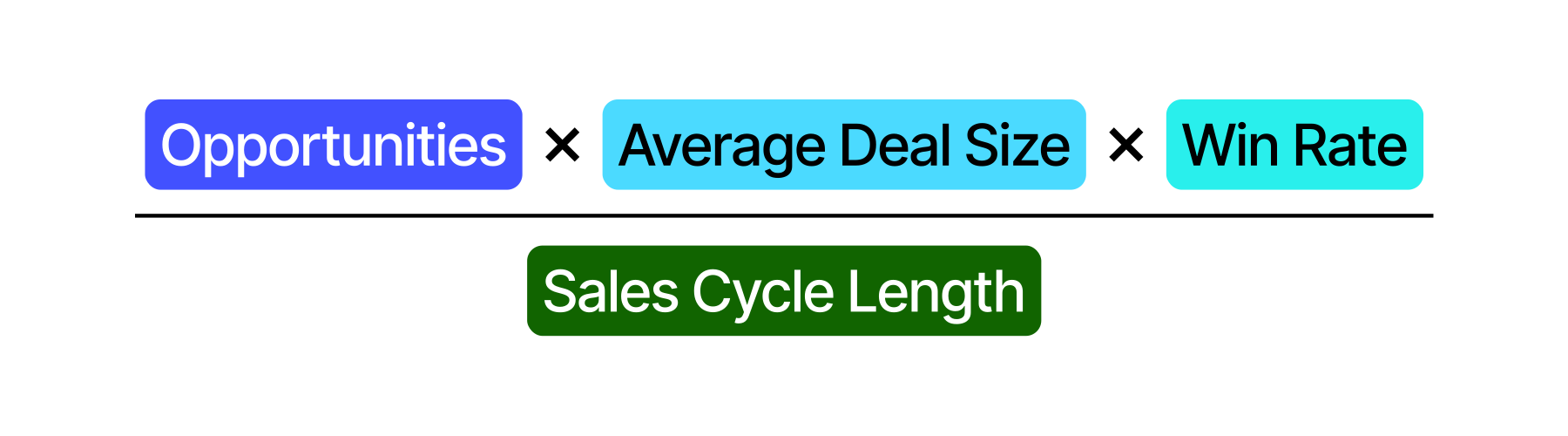
- It helps identify whether your marketing is generating not just volume, but momentum.
- LTV to CAC RatioThis ratio compares the long-term value of a customer to what it cost to acquire them. A ratio above 3 to 1 is generally considered healthy, but top performers aim higher.
- Marketing-Originated ARRTracks how much recurring revenue can be attributed to marketing-sourced accounts or campaigns. This ties marketing activity directly to company growth.
Takeaway: Include metrics like Net Revenue Retention (NRR), ARPU, and Customer Lifespan to capture the full picture of value beyond acquisition.
Attribution for the Real World of SaaS
Attribution is the crux of ROI measurement, especially in SaaS where buying cycles involve multiple stakeholders, long timelines, and fragmented journeys.
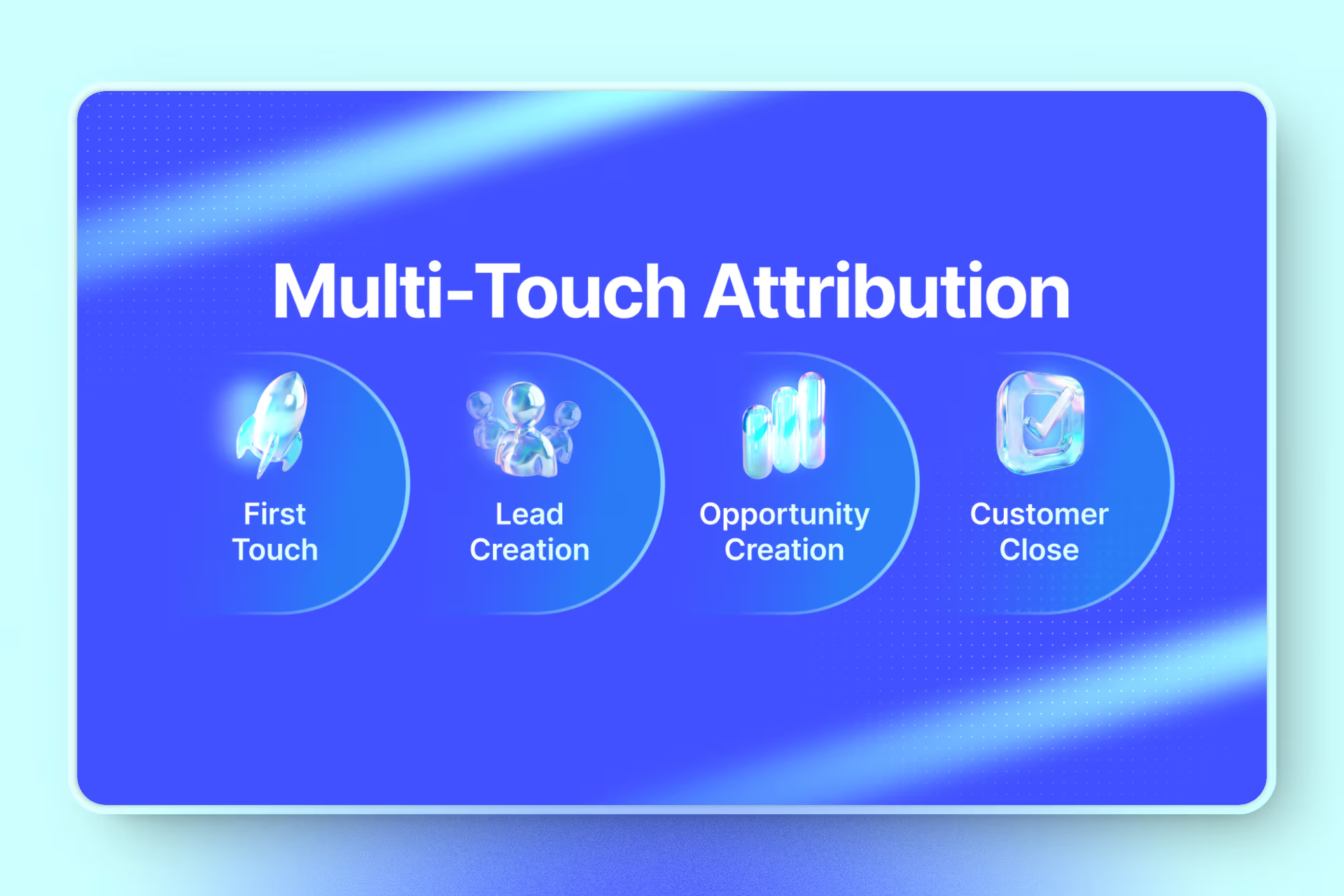
- Single-Touch AttributionAssigning all credit to either the first or last touch is simple, but rarely accurate in B2B. It misses the cumulative effect of marketing over time.
- Multi-Touch AttributionDistributes credit across multiple interactions. This gives you a clearer view of how various campaigns, assets, and channels contribute to pipeline. In an era of privacy regulation and buyer independence, this is no longer optional.
- Custom ModelsSome companies go further with machine learning or rule-based models that reflect their actual buyer journey.
Takeaway: When multi-touch attribution is in place, SaaS companies often uncover hidden ROI in mid-funnel assets. Webinars, for example, frequently show 300 percent to 400 percent returns once properly credited.
Align Sales and Marketing Around Shared ROI
No ROI model can succeed if marketing is the only team invested in it. The most effective SaaS companies embed ROI measurement into joint sales and marketing workflows.
- Opportunity-to-Win RateMeasures how many marketing-sourced deals actually close. This helps both teams focus on pipeline quality, not just quantity.
- Pipeline ContributionTracks what percentage of qualified pipeline originates from marketing efforts. Clear visibility here prevents finger-pointing and reveals performance gaps early.
- Win/Loss AnalysisCollaborative reviews of wins and losses help refine targeting, messaging, and handoff timing. It’s a feedback loop that improves both sourcing and conversion.
Shared dashboards and unified KPIs bring both teams into alignment, eliminate blind spots, and ensure that ROI conversations are based on facts, not opinions.
The Framework Is the Message
In a high-scrutiny environment, how you measure ROI sends a message. A shallow model implies that marketing is still chasing leads. A clear, revenue-connected framework signals that marketing is driving the business forward.The right metrics, attribution, and alignment are not just reporting tools. They are how you build trust, secure budget, and prove marketing’s role as a revenue engine.
Section 3: Maximizing ROI with Less Spend
With tighter budgets and rising acquisition costs, efficiency has become the defining trait of high-performing marketing teams. The goal is no longer just growth. It’s sustainable, revenue-driving growth achieved with fewer resources and clearer visibility into what works.
Rethink Your Channel Mix for Performance, Not Presence
Benchmark data from 2025 shows that leading B2B SaaS companies allocate around 40 percent of their marketing budget to paid channels, including digital ads and retargeting. Another 25 to 30 percent typically goes to content marketing and SEO, with the rest spread across events, partnerships, and experimental plays.Channel efficiency now takes priority over volume. LinkedIn retargeting, for example, often delivers stronger pipeline performance than broader search campaigns, despite a higher cost per opportunity. Long-form content and SEO still provide the best long-term ROI, compounding over time to generate inbound leads at a lower cost.As SaaS companies mature, their spend shifts. Startups often lean on bottom-of-funnel content and organic growth. Established firms expand paid acquisition while refining channel mix through performance reviews and cohort data.
Takeaway: LinkedIn ads attract higher intent leads but come at a premium. Content marketing scales gradually, but its cost per conversion typically declines over time.
Extend the Life of Every Content Asset
Maximize the value of what you've already built by repurposing high-performing content into new formats:
- Turn top-performing blog posts into LinkedIn carousels, short-form videos, or email nurtures
- Convert gated content like ebooks or webinars into email series or drip campaigns
- Refresh bottom-of-funnel assets every quarter to keep them relevant for new prospects
Prioritize assets that answer late-stage buyer questions. These are the most valuable for influencing pipeline and can be reused with minimal investment.

Automate Smartly and Personalize at Scale
Efficiency at scale comes from automation, but not at the cost of relevance. Integrating marketing automation tools like HubSpot, Marketo, or Zoho with your CRM allows for:
- Intelligent segmentation and lead scoring
- Triggered nurture flows based on behavior
- Timely handoffs to sales for better conversion
AI-powered platforms further improve targeting, messaging, and creative testing. These help small teams do more without increasing headcount.Run automated A/B tests on headlines, CTAs, and landing page elements to continuously optimize conversion rates without manual effort.
Double Down on What Already Works
Marketing efficiency also means knowing when to stop spreading yourself thin. The best teams ruthlessly prioritize campaigns that deliver consistent, measurable ROI.
- Pause underperforming channels that do not meet ROI benchmarks
- Reinvest in tactics that deliver above a 3 to 1 return on spend
- Shift budget toward proven formats like webinars, if they consistently generate qualified pipeline at a low CAC
For example, if webinars yield high-converting leads at $125 per opportunity, scale that process rather than launching five unproven campaigns.
Takeaway: Review campaign performance quarterly. Reallocate based on results, not assumptions. This shift toward agile budget management helps teams avoid sunk-cost traps and redirect spend to where it's most effective.
Section 4: How to Communicate Impact to the Board
Knowing your numbers is essential. But knowing how to present them to the board is what separates credible CMOs from influential ones.Measuring ROI is only part of the job. The next challenge is translating those results into a clear, strategic story that resonates with executive teams and board members. This requires a shift in language, reporting style, and the way data is visualized. It's all about focusing on business outcomes, not marketing operations.
Speak in Revenue Terms, Not Marketing Metrics
Executives are not interested in channel-level stats like CTR or impressions. They care about revenue growth, profitability, and pipeline predictability. Your role as CMO is to connect marketing activity to these outcomes.Instead of leading with vanity metrics, shift the focus:
- Replace “CTR increased by 15 percent” with “Marketing campaigns influenced $2.1M in pipeline last quarter”
- Present spend as an investment, not a cost. Frame it with metrics like CAC payback period and projected lifetime value
- Minimize acronyms and jargon. Speak the language of the board: ARR, pipeline velocity, churn, and contribution margin
Use Both Leading and Lagging Indicators
Boards want both visibility into what’s coming and confirmation of what has already worked. Effective reporting includes a mix of predictive and outcome-based metrics:
- Leading indicators: MQLs, opportunity creation rate, engagement scores, and pipeline velocity. These signal future performance and support revenue forecasting
- Lagging indicators: Closed-won revenue, win rates, marketing-originated ARR, and CAC payback. These validate prior investments and show realized impact
Takeaway: Pairing both gives a more complete view of marketing’s contribution and helps align board expectations with performance cycles.
Build Integrated Dashboards That Tie Inputs to Outcomes
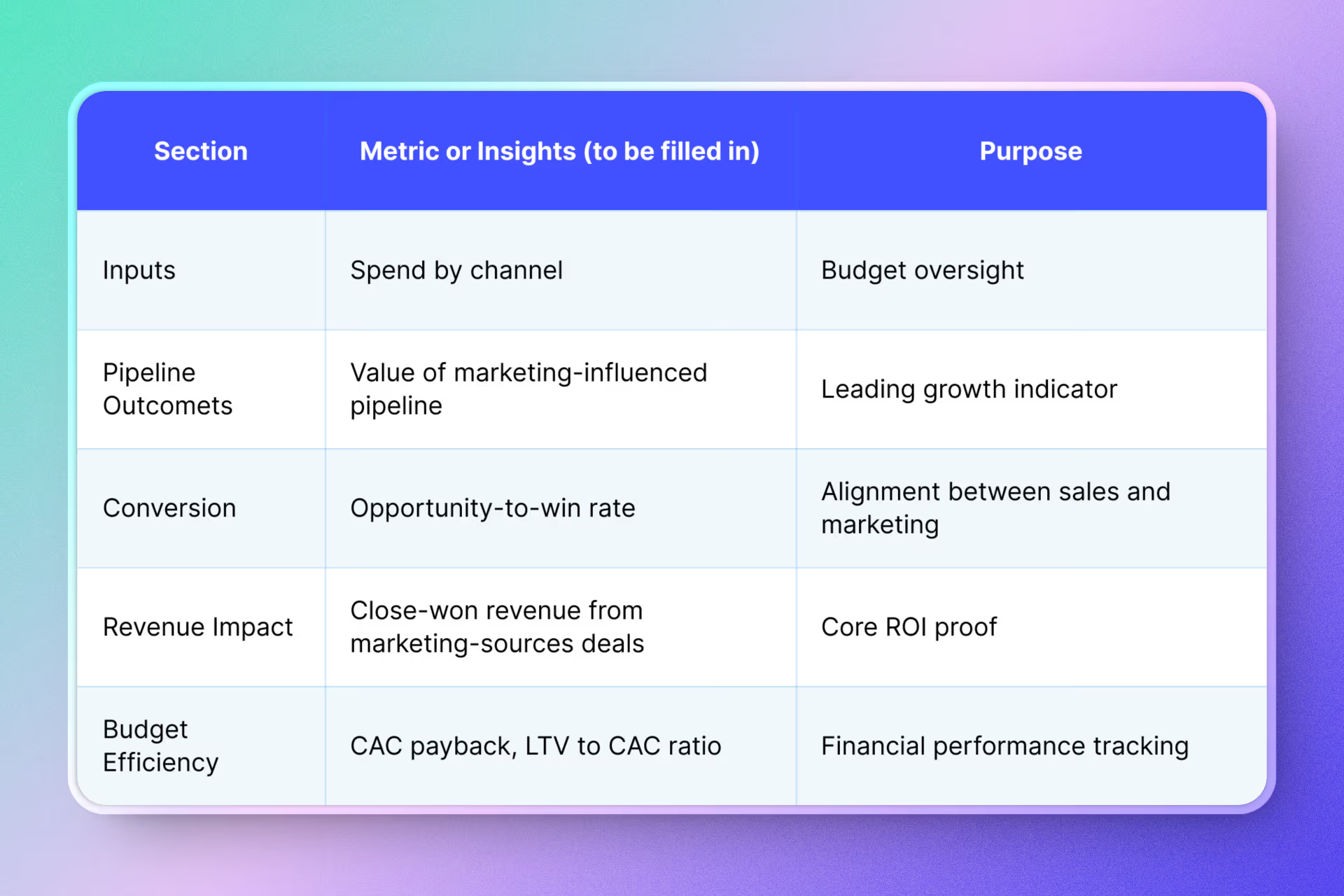
The most effective board reports are built around dashboards that clearly connect marketing activity to business results. These dashboards combine marketing and sales data to show cause and effect.The strongest dashboards include:
- Inputs: Budget by channel, campaign-level performance, and lead volume
- Pipeline Outcomes: Marketing-influenced pipeline value, opportunities created, and forecasted revenue based on CRM data
- Business Impact: Closed-won revenue, LTV to CAC ratio, CAC payback period, and marketing’s share of growth
Tools like Salesforce, Tableau, and HubSpot help automate this process. Monthly dashboards should be concise, visually clean, and updated consistently to support regular executive reviews.
Section 5: Case Study Snapshot
Rocketrip, an enterprise SaaS company with a long sales cycle, faced an increasingly common challenge: their in-house lead generation strategy was casting too wide a net, resulting in high acquisition costs and low-quality leads. With budgets under pressure and pipeline expectations rising, they partnered with T.A. Monroe to transform their digital strategy and ROI tracking.
The Challenge
Rocketrip was relying heavily on broad top-of-funnel campaigns that failed to consistently reach the right decision-makers. Cost per MQL was unsustainable, and internal teams lacked the systems needed to measure and predict ROI across the entire funnel. As pipeline targets grew, their marketing approach needed a major shift - from volume to value.
The Outcome
- +1700% increase in total lead volume
- 95% reduction in cost per MQL
- Full strategic transformation completed in just 5 months
The Strategy That Got Us There
Fix the Funnel Structure
- The team identified inefficiencies across the funnel and restructured it to align better with the buyer journey.
- Instead of focusing purely on lead generation volume, Rocketrip began optimizing conversion at every stage.
- New analytics dashboards were embedded to monitor KPIs from day one.
Capture Existing Demand
- Efforts shifted from trying to create demand to capturing the ready-to-buy prospects already in-market.
- Rocketrip refined its targeting and removed unqualified B2C segments.
- Audience alignment improved dramatically, particularly in the decision-making layers of enterprise accounts.
Fuel Demand with Strategic Content
- We helped develop tailored content that delivered ongoing value to potential buyers.
- Content was matched to funnel stages, buyer personas, and channels to build trust and maintain visibility throughout the sales cycle.
- The growth framework enabled clear content performance tracking.
Launch Full-Funnel Paid Campaigns
- Paid campaigns on LinkedIn, Google, and Facebook were optimized and rebuilt to accelerate pipeline velocity.
- The media strategy focused on segmentation, retargeting, and rapid A/B testing to reduce waste and surface high-performing creative.
Build ROI Measurement Into Every Campaign
- A scientific framework was introduced to measure performance and forecast results.
- This allowed the Rocketrip team to tie spend directly to revenue outcomes, aligning marketing execution with board-level KPIs.
This dramatic shift in performance not only scaled qualified pipeline but also laid the foundation for predictive revenue modeling, content-led demand generation, and long-term marketing efficiency.
Tools, Tactics, and Frameworks Used
- Attribution & ROI Tracking: KPIs embedded across campaigns from day one
- Ad Campaign Optimization: Full-funnel approach across LinkedIn, Google, and Facebook
- Content Marketing Framework: Audience-specific content aligned to funnel stage and channel
- Revenue Prediction Systems: Real-time dashboards to track performance and forecast impact

Section 6: The Future of Marketing ROI in SaaS
As competition intensifies, the next era of marketing ROI will be defined by predictive insights, automation, and tighter alignment between marketing and finance.For SaaS CMOs, staying ahead means adopting advanced measurement frameworks that go beyond traditional reporting. Those who leverage AI-powered attribution, predictive modeling, and cross-functional data strategies will be best positioned to drive consistent growth and secure long-term credibility at the executive level.
The Shift to Predictive ROI and AI-Driven Attribution
Marketing measurement is evolving rapidly. Instead of relying solely on historical performance, leading teams are embracing predictive models powered by artificial intelligence and machine learning.Tools for predictive lead scoring now analyze data points from web behavior, engagement patterns, and CRM history to forecast which prospects are most likely to convert. This lets marketing teams prioritize resources based on real-time signals.Meanwhile, AI-enhanced attribution tools are replacing outdated single-touch or rule-based approaches. These systems evaluate multi-channel journeys dynamically, giving credit not only to obvious touchpoints but also to early interactions that traditionally go unnoticed.This shift enables marketing teams to:
- Allocate budgets before campaigns conclude, based on projected impact
- Make faster adjustments to messaging and channel mix
- Optimize spend continuously, rather than retroactively
SaaS companies using predictive models and intelligent attribution report significantly improved results, including up to 2.9 times better revenue performance and 30 to 40 percent gains in marketing efficiency.
Marketing–Finance Collaboration Becomes a Core Capability
Achieving sustainable ROI depends on tighter alignment between marketing and finance. The most forward-thinking SaaS organizations are building shared dashboards that merge campaign data with revenue forecasting and financial planning.This collaboration allows CFOs and CMOs to:
- Align marketing spend with revenue goals
- Evaluate success using shared financial metrics
- Make budget decisions based on data, not assumptions
Finance-oriented metrics like CAC payback period, LTV to CAC ratio, and contribution margin are now essential parts of the conversation.This integration helps elevate marketing’s role from a cost center to a performance-driven growth engine.
How CMOs Can Future-Proof ROI Measurement
To prepare for the next stage of marketing performance, CMOs should take these key steps:
- Invest in a unified tech stack that integrates CRM, marketing automation, analytics, and AI attribution. Real-time visibility across the funnel is critical for revenue-focused decision-making.
- Apply predictive modeling to campaign planning, lead scoring, and budgeting. This allows marketing to optimize outcomes before launch and continuously improve performance.
- Break down silos by aligning data across marketing, finance, sales, and customer success. A shared view of customer journeys, lifetime value, and acquisition cost ensures consistent goals and performance tracking.
- Commit to iteration by regularly auditing data quality, updating attribution models, and adapting to shifts in buyer behavior and data privacy standards.
Conclusion: Prove, Optimize, and Communicate ROI to Stay Indispensable
When every marketing dollar is under scrutiny and growth targets keep rising, B2B SaaS CMOs face a clear mandate: show exactly how marketing drives revenue, not just awareness. That means moving beyond surface-level metrics and building a system that ties actions to outcomes, from first touch to closed-won.The strategy is clear:
- Prove impact using metrics that reflect pipeline movement and long-term value
- Optimize spend by doubling down on high-performing channels and assets
- Communicate results in financial terms that resonate with the board and executive team
If you’re navigating budget pressure and high expectations, it’s time to rethink how you build, track, and present your marketing engine.
Inside, you'll find tactics for building brand equity, triggering product-led growth, and activating community channels, all in one focused blueprint.
FAQs
What are the most important metrics for proving marketing ROI in B2B SaaS?
Four revenue-first metrics:
- Cost per Opportunity – True cost of qualified sales opportunities
- Pipeline Velocity – (Opportunities × Average Deal Size × Win Rate) ÷ Sales Cycle Length
- LTV to CAC Ratio – Target above 3:1
- Marketing-Originated ARR – Revenue directly from marketing
How much are B2B SaaS companies spending on marketing?
B2B SaaS companies typically spend about 8% of their annual recurring revenue on marketing. Of that budget, around 15-25% goes to paid advertising, 5-15% to content and SEO, and the rest to events, experiments, and other marketing activities.
What's the difference between single-touch and multi-touch attribution?
Single-touch credits only first or last interaction. Multi-touch spreads credit across the entire journey. Webinars show 300-400% returns with proper multi-touch attribution.
How to maximize ROI with less spend?
Repurpose everything. Blog posts become LinkedIn carousels and videos. Webinars become email series. Refresh bottom-funnel assets quarterly. Kill underperforming channels. Only fund tactics with 3:1+ returns.
What are current CAC payback periods?
Used to be 12 months. Now 18-24 months for enterprise. Poor performers hit 20-30 months. Top companies are still under 12 months but they’re rare.
How should CMOs communicate with the board?
Ditch marketing jargon. Say “Marketing influenced £2.1M in pipeline” not “CTR increased 15%.” Show both leading indicators (pipeline created) and lagging ones (revenue closed). Build dashboards that connect spend to revenue.
What metrics align sales and marketing?
Three shared metrics:
- Opportunity-to-Win Rate
- Pipeline Contribution %
- Win/Loss Analysis
What tools are essential for ROI tracking?
Hubspot for CRM. Marketo, Zoho, or even HubSpot for automation. Tableau for dashboards. AI tools for attribution. They must integrate for real-time visibility.
What results did Rocketrip achieve?
Campaign outcomes:
- 1700% increase in lead volume
- 95% reduction in cost per MQL
- 5-month transformation
What's the future of marketing ROI?
AI predicts which leads convert. Machine learning tracks multi-channel journeys. Marketing and Finance share dashboards. Results: 2.9x better revenue, 30-40% efficiency gains.
What are typical conversion benchmarks?
The stats we look at:
- Website → Signup: 2-5%
- MQL → SQL: 13%
- Month-one retention: 47%
How fast are marketing costs rising?
Ad costs up 10-16% yearly. Software inflation 5x market average. Pipeline costs are rising fast.
How often should teams review performance?
Quarterly budget reviews. Monthly dashboard updates. Continuous A/B testing.
What's wrong with vanity metrics?
Boards don’t care about lead volume. They want pipeline velocity and revenue contribution.
What should content teams prioritize?
Bottom-of-funnel assets that answer late-stage buyer questions. These influence pipeline the most and can be reused with minimal investment.