Services

Our Services

Paid Media

Drive qualified demand with paid campaigns

Paid Search

Capture high-intent buyers through search

Paid Social

Turn social ads into pipeline growth

Reddit Advertising

Reddit Advertising for B2B SaaS

SaaS Marketing

Scale B2B SaaS growth with full-funnel strategy

Creative & Content

Craft visuals and content that convert

Web Design & CRO

Design optimize to drive revenue

All Services Overview
Success StoriesPricing
About
About Us

Who we are and how we work

Our Team

The people behind the work

Careers

Join the T.A. Monroe team

FAQ

Common questions answered

Contact Us

No pressure, commitment free

Resources
Resource Hub

All resources in one place

Podcast

The Revenue Engine Podcast

Free Resources

Free growth hacks

Contact Us
Book a Call
Book a Call
All resources
Podcast
14
min read

How Should B2B SaaS Split Brand and Performance Budget? With Mike Braund

July 18, 2025

Table of Contents

>
Heading
>
Heading
>
Heading
>
Heading
>
Heading

Former Iterable marketing ops lead, Mike Braund, on splitting the budget when both halves are under pressure, and why the famous 60/40 rule is the wrong number for B2B.

Updated October 2026. Budget figures reviewed against the Gartner 2026 CMO Spend Survey. Split ratios from Binet and Field’s IPA and LinkedIn B2B Institute research, most recently refined for B2B in 2019. Next review September 2027.

How should B2B SaaS split brand and performance budget?

For B2B, roughly 46% brand and 54% activation. That is Binet and Field’s B2B refinement of their own 60/40 rule, which was drawn predominantly from consumer cases and is the number most B2B teams wrongly copy. Brand returns are observed over 6 to 36 months and activation within 90 days, so the split is really a decision about how far ahead you are willing to buy.

What You Will Take Away

“The rigor around technology expenses has just gotten so much tighter.”

The B2B number is 46/54, not 60/40. Binet and Field’s original 60/40 split came from 996 IPA case studies across 700 brands in 83 sectors, predominantly consumer. Their 2019 B2B work with the LinkedIn B2B Institute refined it to roughly 46% brand and 54% activation. Most B2B budget arguments are conducted using the wrong benchmark.

The two halves pay back on completely different clocks. Activation returns within 0 to 90 days. Brand returns over 6 to 36 months. Comparing them in the same quarterly review is how brand loses every time, regardless of what the ratio says.

About 95% of your buyers are not in the market right now. The 95-5 rule, from the LinkedIn B2B Institute and Professor John Dawes at Ehrenberg-Bass. Activation reaches the 5%. Brand is the only thing that reaches the rest, which is who you will be selling to next year.

A flat budget just acquired a new claimant. Marketing budgets sit at 7.8% of revenue in 2026, effectively flat year on year, while 15.3% of that budget is now committed to AI and only 30% report mature AI readiness. The AI line is being funded from something, and brand is usually what gets cut.

The split is a starting point, not a target. Mike Braund’s argument on this episode is that allocation follows validated hypotheses rather than a fixed ratio. Use 46/54 to open the conversation with your CFO, then let your own payback data move it.

Listen on SpotifyListen On Apple PodcastsListen on Amazon MusicListen on TuneInListen on PandoraListen on Deezer

What This Episode Covers

Timestamp Topic
1:09 What Iterable does, and what marketing ops owns inside it
4:06 Choosing a company by whether its mission matches your own
5:07 Where the hypothesis comes from, and where the data comes in
7:13 Why constraints produce better marketing than budget does
9:41 Running paid media and marketing ops as one function
19:46 Brand investment against budget constraints: the 2025 squeeze

What the Evidence Says About the Brand and Performance Split

There is one widely quoted number, and it is the wrong one for B2B. Here is where 60/40 came from, what replaced it for business buyers, and what each half of the split actually buys you.

The ratios

Split Brand Activation Where it comes from
Consumer, the famous one 60% 40% Binet and Field, The Long and the Short of It, IPA 2013. 996 IPA Effectiveness Awards case studies across 700 brands and 83 sectors, over 30 years of measurement
B2B, the one that applies to you 46% 54% Binet and Field with the LinkedIn B2B Institute, 2019. Their own refinement of the above for business buyers

What each half does

Brand Activation
Payback window 6 to 36 months 0 to 90 days
Who it reaches The roughly 95% of buyers not currently in market The roughly 5% who are
What it buys Being thought of when the need appears Being chosen once the need exists
How it fails Unmeasurable in the quarter it is spent, so it gets cut Reaches only people already looking, so it hits a ceiling
What happens if you stop Nothing, for two or three quarters. Then the activation numbers decay Pipeline falls within weeks

The budget it sits inside

Benchmark 2025 2026
Marketing budget as a share of company revenue 7.7% 7.8%
Share of marketing budget allocated to AI n/a 15.3%
Marketing leaders who say they can scale AI n/a 30%

Where these figures come from

The 60/40 and 46/54 splits are from Binet and Field’s work for the IPA and, for the B2B refinement, the LinkedIn B2B Institute. The B2B figure dates from 2019 and remains the most authoritative published split for business buyers; nothing of comparable scale has replaced it. The 95-5 rule comes from the LinkedIn B2B Institute, drawing on Professor John Dawes at the Ehrenberg-Bass Institute. Budget percentages are from the Gartner 2026 CMO Spend Survey, 401 marketing leaders across North America, the UK and Europe, surveyed January to March 2026, the vast majority at companies above $1 billion in revenue, so read them as large-company patterns. These are observed patterns across many companies, not a target for one.

The size of the budget this split divides up: How much should a B2B SaaS company spend on marketing in total

A Worked Example: Setting Your Own Split

This is a practical example, not research. Start at 46/54, then move it using your own situation. Each row shifts the ratio a few points in one direction; the point is not the arithmetic, it is having a reason for the number you take into the meeting.

If this is true Move toward
You are in a category buyers do not know exists Brand. Activation cannot capture demand for a category nobody is searching for
Your branded search volume is flat or falling Brand. Branded search is the cheapest activation you have, and brand is what feeds it
Sales cycles are long, and committees are large Brand. More people to convince, most of them never touch an ad
You need pipeline this quarter to survive Activation, and be honest that it is a survival decision rather than an allocation one
Your activation channels are hitting a cost ceiling Brand. Rising cost per acquisition with flat volume usually means you have exhausted the in-market 5%
You have just cut brand, and nothing happened Nothing yet. Wait two more quarters. The decay shows up late, which is exactly why the cut felt free

The row people argue with is the last one, and it is the one with the most evidence behind it. A brand cut that produces no immediate effect is not proof the spend was wasted. It is the payback window doing what the payback window does.

How To Apply This

  1. Balance data and gut instincts in campaign planning: Using intuition to form hypotheses and data to validate them leads to faster, smarter decisions.
  2. Embrace constraints to drive creativity: Limited resources can spark innovative ideas that improve efficiency and boost campaign impact.
  3. Unify paid media and operations teams: Integrating these functions streamlines execution, improves data flow, and enhances marketing performance.
  4. Engage cross-functional teams early in planning: Involving stakeholders in ideation increases buy-in, satisfaction, and the quality of go-to-market strategies.
  5. Align brand and performance marketing efforts: Coordinating awareness and conversion strategies strengthens your funnel and maximizes long-term ROI.
  6. Put the two payback windows on the same page before the budget meeting, not during it: Most brand lines are cut because they are reviewed on a quarterly cycle against something that pays back in weeks. Agree in advance what a brand investment is allowed to be judged on, and when.

Got the split. Now what does it fund?

Free resource

7 Essential Steps for an Effective Go-to-Market Strategy

A ratio is only useful once it is attached to a plan. Our go-to-market guide covers the seven steps the brand half and the activation half both have to serve, so the budget conversation stops being a negotiation between two teams.
Download Now

In this episode…

Standing out in B2B SaaS marketing requires mastering more than just performance metrics and automation tools.

According to Mike Braund, a seasoned marketing leader with a deep background in operations and analytics, achieving that balance starts by connecting data with gut instincts. He highlights the importance of testing hypotheses quickly through iterative campaigns, using data to validate direction without stalling creative momentum. This blend ensures marketing efforts perform and resonate. Creative constraints can unlock innovation, especially when teams are empowered to move fast with limited resources.

In this episode of the Revenue Engine Podcast, host Alex Gluz sits down with Mike Braund, then Senior Director of Marketing Operations and Digital Marketing at Iterable, to discuss how to align brand and performance marketing in B2B SaaS. They dive into the role of data-informed creativity, how team structure can enable efficiency, and the importance of full-funnel thinking. Mike also shares lessons from leading paid media and operations under one unified strategy.

Quotable Moments

  • “Gut feeling for me is often where the hypothesis comes from.”
  • “Constraints are key to sparking innovation.”
  • “People want to be part of the ideation process of what’s going to be in market versus just executing.”
Episode transcript

Introduction and Mike Braund’s path into marketing operations

Alex Gluz: Hey, Mike, nice to have you here.

Mike Braund: Hello. Thanks for having me, Alex.

Alex Gluz: Can you do a brief intro of who you are and what you do?

Mike Braund: Absolutely. I lead our marketing operations and paid media team at Iterable. For people who aren’t familiar with Iterable, it’s an AI-powered multichannel communication platform.

Mike Braund: Kind of a mouthful, but it’s basically your modern marketing platform. It taps into all the channels that you want to use to get your message out to your customers.

Alex Gluz: How did you get started? What did you go to school for?

Mike Braund: I went to school for finance. I graduated in 2007. Those familiar with that time period, it was a bumpy time in terms of the economy, especially if you’re trying to get in the finance area.

Mike Braund: My first job was actually working at the front desk of a hotel. That’s the only job I could get. But I had a very ambitious and dedicated mindset and found, I think it was seven or eight contract jobs until I got my first FTE job in tech.

Mike Braund: I bounced around in all kinds of analytics and reporting jobs, from banks to Disney, digital startups that only lasted for a few months. All kinds of stuff, all data-related, all reporting-related. That’s where my focus was.

Mike Braund: Never actually officially got into the finance space, but that’s how I got going. Eventually I found myself a contract role at a company at that time called Isilon. It was my first marketing operations role, which is where my background comes from, doing email marketing for a field marketing team.

Mike Braund: That was a contract job and turned into an FTE role after, I think it was nine months.

Mike Braund: The conflict that I ran into at that specific point was a buddy of mine who I had worked with at one of those startups then introduced me to somebody at Tableau, which is where I spent nine years of my career really developing all the skills and interests that I have today.

Mike Braund: But it was a hard decision to figure out at that point, after all that hard work of getting into an FTE role and then being put face to face with a decision to immediately go somewhere else.

Alex Gluz: It’s quite a transition. But finance, it’s all about the data and the numbers, and marketing ops. I can definitely relate to that.

Alex Gluz: I also have a degree in finance, economics. I’m a numbers guy. I like numbers. Anything with numbers and being able to translate this, it’s exciting for me. Might seem boring for some other people. For us it’s exciting. I totally get it.

Alex Gluz: What brought you to Iterable? Why did you like it?

Mike Braund: There’s a handful of things. One, I was in a spot to find a new opportunity. Two, Adri, who’s our CMO here, I’d worked with at Tableau. I had a personal connection here.

Mike Braund: Iterable’s mission and vision is essentially how you would articulate a mission and vision of a marketing operations team. It was exciting for me to go work for a company that was connected to what I value and believe in, and be in a product and space that I understand well.

Mike Braund: Contribute to it in more than just what our team is doing, but also the thought leadership side and how we want to market and message. What is the buyer of tools like this actually thinking about, caring about and doing when they’re doing their evaluations?

Balancing data with creativity and experimentation

Alex Gluz: With marketing operations teams increasingly obsessed with data unification, how do you balance the cold precision of data with the human element to drive marketing creativity?

Mike Braund: Good question. Complex question. What I want to do with that, Alex, is separate the idea of data unification from what I think you’re actually asking, which is how do we balance the data side with the experience and common-sense portion of marketing?

Mike Braund: Things are always a balance. It’s never one or the other. We’ve got to find a way to balance both of those things.

Mike Braund: Gut feeling for me is often where the hypothesis comes from. You’re thinking about, “If we run a program like this, we think we’re going to get this result.” You’ve got some idea of an outcome you’re going to go after. That’s a lot of where the idea comes from.

Mike Braund: Then the data, the measurement, validates that hypothesis one way or the other once you get something to market.

Mike Braund: We do a lot of iterative releases, trying to fight that idea of needing to be perfect before you get things out, so you can get stuff in market and get quick learnings back and test and learn that way.

Mike Braund: A good example for us is that last year we tested into the CTV, connected TV, channel. We got some creative out there in the market just to get some initial results back, which was not creative that would be ideal to be on TV necessarily.

Mike Braund: But we polished it up best we could to get some initial results. We saw enough encouraging results back to then, this year, invest in the creative side. Just an example of how we do that.

Mike Braund: But I think we can always do better at whatever you want to call it, the user experience audit of things before they come out.

Mike Braund: Data unification is key and core to a lot of things that we do. But I see it as a little bit of a different idea, more like the foundational data work for activation and analysis.

How constraints shape creative work and brand investment

Alex Gluz: As you focus on creative investments for paid media, have you ever found that constraints led to more innovative creative solutions? Can you share a time when limitations sparked creativity?

Mike Braund: Totally. Constraints are key to sparking innovation. I’ll give you two examples, one micro example and one larger example.

Mike Braund: A smaller example is a program that we just started this year that was really grassroots, not part of our initial priorities. The pain point that we identified was, in a B2B enterprise sale, how difficult it can be to just get into a demo and see a product.

Mike Braund: You’ve got to go through a lot of sales qualification and getting resources internally because you want the demo to be suited for the person’s use cases and what they’re going to value. It takes a lot of work to get there.

Mike Braund: But it’s important to see the product, and a product like Iterable can sell itself very easily when you just see the basics of how it works and functions.

Mike Braund: We’ve started to lean into different livestreaming channels, YouTube and LinkedIn, to get our experts, our solutions consultants, on those livestreams to do core functionality demos that aren’t custom to a specific company’s request, but just the basics of how the product works, and getting that off the ground. That’s one example.

Mike Braund: The larger example is basically our whole annual strategy for this year, which is really around a rebalancing of investment for creative, brand and messaging to help with the performance side of marketing.

Mike Braund: Sometimes you feel like you’re doing things on your own or your company’s unique, but I’m seeing that be a common struggle and focus for a lot of B2B companies. Seeing it pop up in newsletters and that type of thing.

Mike Braund: How do you balance brand and performance, and the importance of brand and creative on the awareness part of the funnel to help with the performance side of marketing?

Bringing marketing operations and paid media together

Alex Gluz: That makes total sense, and we fully believe in full funnel, and all of it needs to work properly.

Alex Gluz: How did you end up overseeing paid media? Because marketing ops is a separate discipline. I talk to quite a few marketing ops folks, and it’s a different kind of a mindset, I would say. Paid media is usually also a different kind of a mindset.

Alex Gluz: How did you find yourself overseeing both?

Mike Braund: I’ll tell you how exactly, and then I’ll share a couple of thoughts on that that might contradict some of what you’re feeling there in terms of the distinction between the two.

Mike Braund: It was pretty unique in terms of an opportunity at Iterable specifically, where a management position opened up, and I had the desire to raise my hand to combine a couple teams together. Not much more complex than that. It ended up working out. We brought those two teams together.

Mike Braund: But part of the reason why the rationale worked is because I don’t think they’re that separated in the actual way you want to think about executing the work. Very data-driven. A lot of systems management to get the work done. Very analytical.

Mike Braund: You’re developing optimization points. You’re using a lot of data tech to automate data streams into these Google Ads platforms so that they have suppression lists, conversion points that they can rapidly automate from.

Mike Braund: If you’re just thinking about the execution flow, marketing operations and the data side of things are almost always a part of that process to get something into market.

Mike Braund: It actually works really well to have this group tied together, and it also includes the website. We have almost all channels in this one team outside of SEO and your organic social side of things.

Mike Braund: The last thing I’ll share there is that idea was present because, when I left Tableau, our marketing operations team looked just like this.

Mike Braund: It had web, had analytics, had paid media and then the email channel all in it. I had seen that version of a marketing operations team before.

Adapting internal processes and working with sales

Alex Gluz: I don’t think it’s a right or wrong way to do this. There are different variations. If it’s a good fit and you can bring everything together, that’s a big win.

Alex Gluz: When you work on frameworks and systems, how do you ensure that they’re flexible enough to adapt to the unpredictable nature of the market?

Mike Braund: Are you talking more about internal frameworks and systems?

Alex Gluz: I would say internal. When you’re working on putting together different frameworks or different pieces of the puzzle, so to say, how do you make sure that you iterate and stay flexible?

Mike Braund: On the internal side of things, right-sizing is important. I’ve definitely overdesigned and overengineered before, so I’m not innocent of that.

Mike Braund: But we’ve done a good job here of designing to the team’s size and needs. Recently we’ve actually started to put a little bit more rigor and documented process around how we get our biggest programs into market, really based off of pain points, stuff like job satisfaction.

Mike Braund: People want to be part of the ideation process of what’s going to be in market versus just executing. To allow that to happen successfully, you’ve got to find the right place to engage people to get their ideas and contributions upstream and in the development process.

Mike Braund: On the go-to-market side of things, a lot of them are concepts. Externally, you’re putting together concepts that you think are going to work, and to your point, you’re adapting and iterating based off of what you see.

Mike Braund: Either anecdotally, feedback from your customers, from the field is a key thing, and then from the data points that you’re looking at and monitoring.

Mike Braund: We do that pretty regularly in terms of looking at how we design and measure our lifecycle and the conversion points in between it. There’s not a ton of shift in the frameworks, more around the criteria and rules of how you use it.

Alex Gluz: Definitely. But we also see a lot of changes in the markets in the last few years. You definitely have to be able to adapt and shift when you need to slow down and go fast forward.

Alex Gluz: How do you work with your sales team? It sounds like you have a great understanding of the go-to-market team on the marketing side. But how do you tie this all together with your sales folks and maybe even customer success?

Mike Braund: Both very important. We spend most of our time on the new business side right now in how we’re focused and trying to drive results.

Mike Braund: But customer service, customer success, retention and adoption programs are definitely part of the things that we help execute.

Mike Braund: We’ve got a very regular and consistent connection with sales. The last month, I’d say we’ve gone through a very healthy process of taking in feedback from our BDR team on things that are and aren’t working in some of the process that we’ve designed.

Mike Braund: That’s an example of where, on the internal side, having to adapt rules, criteria for what accounts we want them to focus on. If things aren’t working, trying to rapidly change some of those things.

Mike Braund: I feel like the two organizations communicate on a really frequent basis. Every two weeks we’re getting together in a formal way to evaluate how pipeline development is going and trying to identify the things that are and aren’t working.

Mike Braund: That’s a good example: “We’re being asked to prioritize these types of accounts. We’re seeing a problem in that. Help us go fix that on the operations side of it.”

Mike Braund: On the operations side, really connected there. Same with the program side: “These programs might not be producing the right people or the right accounts that fit our ICP.”

Mike Braund: That’s definitely part of the day-to-day on the program side, continuing to make sure that the quality of who’s coming in and getting engaged fits who we want to target.

Alex Gluz: That’s a great example of classic marketing and sales alignment and constantly communicating and pushing back and forth, because that does happen too. But that’s necessary. It’s much better.

Mike Braund: It never goes away. You’ve read and heard and said the same thing for years and years, but that’s part of the game, and it’s expected.

Mike Braund: That’s what you want to happen. You want that dialogue. You want to be getting feedback from the field about what you should do differently or what you can do differently to help them out.

Using predictive models to prioritize leads and accounts

Alex Gluz: You mentioned before predictive modeling for leads and accounts, which is very interesting. Can you talk a little bit through this, Mike?

Mike Braund: Sure. Our primary use case to date is on the new business side, prospecting. But we use predictive analytics to, one, assess the profile of accounts and people.

Mike Braund: An ICP score, essentially. Does this account fit our ICP based off of the data points that we have available? Does this person fit the profile of people that are in our buying groups on opportunities?

Mike Braund: Then you have operationalized the buyer intent side of things, both at the person and account level, which allow us to identify signals of an individual. Alex, if you’re coming and asking for a demo, it’s a very easy signal to pass along.

Mike Braund: But the more interesting ones sometimes end up being where there are lower engagement signals, but there’s a higher volume of them, and being able to tie all of that back to an account.

Mike Braund: Say, “Maybe on the person side we didn’t have an engagement that was deep enough to prioritize it. But when you look at the whole landscape, we just had 10 people do content downloads and event registrations, et cetera.”

Mike Braund: That can highlight, on the buying intent side, things that we want to pass over to our sales teams to go pay attention to.

Alex Gluz: This would be very interesting to see the whole loop right from the beginning. How do you do the predictions? Once the sales team gets it, how accurate are the predictions? That’s an interesting exercise.

Mike Braund: The next evolution of lead scoring. That was the classic marketing automation idea.

Mike Braund: A lot of lead-scoring models I saw early on were an A1, B2 type of matrix, where you’re taking profile and engagement and mapping them together.

Mike Braund: Similar idea, but you’ve got tools out there that help you really scale that and use statistical models in the background versus you going and saying, “That’s worth five points. That’s worth 10 points,” arbitrarily.

Alex Gluz: It would be very interesting, and not only take it through the whole sales cycle, also look at retention and revenue generated. That’s going to show the true picture to really how accurate this is, because there are a lot of signals, there’s a lot of noise. It could be tricky.

Alex Gluz: But still, it’s definitely great to have and builds a foundation, as we just spoke before, continuing the conversation with the sales team.

Alex Gluz: Saying, “This is working,” or maybe some things are not working and not accurate. Maybe that’s not the best fit at this time. Maybe some other criteria don’t fit.

Alex Gluz: Even though signals are great, it might not work for the sales cycle or something like that.

Mike Braund: Totally. You’ve got to be ready to listen. A lot of those tools will give you performance metrics themselves, but it’s important to also measure it with your data because sometimes the picture looks different. We’ve found that from time to time.

Balancing brand, performance and limited resources

Alex Gluz: That’s great. Mike, what do you think are the biggest pain points for B2B SaaS marketing leaders in 2025, and what is your approach to solving them?

Mike Braund: A couple of these will be repeats. I downloaded a white paper for the first time in months yesterday, and it was because the headline caught my eye, which is almost exactly verbatim the question you just asked.

Mike Braund: It was talking about the pain points and challenges that B2B marketers have today. A lot of them are related to the priority that I talked about earlier, which is balancing brand and performance marketing, and the necessity that B2B companies are identifying in creative and brand messaging to establish their brand but also influence the performance side of marketing.

Mike Braund: That’s one. Then coordinating the multichannel approach there, because that does then require more than just the traditional demand gen function.

Mike Braund: There’s that tighter connection with the brand side, the more organic channels, podcasts they might be doing, events that we’re going to that aren’t necessarily pipeline-focused, but just trying to get your brand in front of people.

Mike Braund: That’s been healthy for our department, but also a new thing to think about and for us to coordinate.

Mike Braund: The second thing is resources, and that means a couple things. Teams are leaner today. I’m finding we’re operating much more lean than teams that you would see six to 10 years ago, where you have three to four people doing marketing automation work.

Mike Braund: You now have a person, and maybe you have some agency support supplementing and augmenting there. Things aren’t always moving at the clip that you might have experienced in past years.

Mike Braund: Then the obvious side is the budget available to be able to go fund these things. Doing paid activities is getting more and more expensive. You’re looking at all the cost-per metrics. That becomes difficult to manage.

Mike Braund: If you don’t have the internal resources and you want to build quality creative or go out and get quality creative help, video production is expensive. Creative is expensive. All these things cost money. That’s another big challenge there.

Alex Gluz: You’re definitely hitting the nail in the head. This is along the awareness part of it, right? The awareness, with so much noise, so much content, it’s difficult to stand out.

Alex Gluz: Also, the buyer journey is longer because people take a longer time to decide. A lot of it because of budgetary constraints. People are very careful when they want to make a decision on budgets and things like that. It’s a longer sales cycle.

Alex Gluz: Because of all of that, the customer acquisition cost is going up, because everything is going up. Nothing went down. What went down? Nothing.

Mike Braund: Right.

Alex Gluz: Everything is going up, and we’re supposed to hit higher numbers with less. Even though the budget might be the same, you can buy less because everything is going up.

Alex Gluz: It definitely gives you opportunity to be creative and do more with less, and really build a great team who’s going to support you internally and externally as well, with great partners and great client support. That gives you an opportunity.

Mike Braund: In B2B, you’re sitting on both sides of this too, where you’re trying to sell B2B software to somebody. Then in my world of marketing operations, we’re also the buyers and managers of this budget.

Mike Braund: The rigor around technology expenses has just gotten so much tighter, where you’re constantly looking at whatever metric’s going to be the success metric, utilization, impact, all those types of things that drive up the cost, where just banking on renewals doesn’t happen anymore.

Mike Braund: A lot of time there’s reduction to right-size contracts. You’re also facing that type of thing.

Mentors, leadership lessons and closing remarks

Alex Gluz: It’s been great talking to you, Mike. I have one last question for you. Who are your mentors and the best advice they gave you?

Mike Braund: I’d call out a couple, both at my time at Tableau. First was my first manager there. His name is Wade Tibke.

Mike Braund: Neither of these I would say are specific sayings or pieces of advice, but more the skill sets and values that each of these people I’ll name instilled.

Mike Braund: Wade was heavy on rigor, monitoring, that type of thing, making sure that what you were doing or the thing you’re designing is actually outputting that thing, which is critical.

Mike Braund: It’s a lot more common practice to think about monitoring today and building views or dashboards or whatever it is to make sure that your outcome’s being hit on the other end. But that was absolutely one that I have deeply ingrained in me still today and that I coach my teams up on.

Mike Braund: The second person was the manager that was managing me, Bryan Law, when I left Tableau. A couple things that I valued and really looked up to around the way he did things was stakeholder management and communications.

Mike Braund: Very calm and measured and specific communicator. He did a good job pushing back tactically when he had to, communicating and articulating the value of what we were doing and representing his team.

Mike Braund: A lot of people have helped me and supported me along the way. Adri, our CMO here, went out there to help support me coming to a great company like Iterable.

Mike Braund: But Wade and Bryan are two people specifically in my space that directly managed me, really influenced me. I think about a lot of the conversations that we’ve had all those years back still.

Alex Gluz: Great. We’ve been talking to Mike Braund, senior director, marketing operations and digital marketing. Mike, where can people learn more about you?

Mike Braund: About me? I don’t have a podcast. I don’t have a blog or anything, Alex, but you can find me on LinkedIn. Mike Braund, if you want to connect, learn more. I love to talk shop.

Mike Braund: If you want to learn more about Iterable, you can go to iterable.com. It’s an amazing platform. It can do a lot. That’s about it.

Alex Gluz: Great. For our listeners, if you’d like to learn more about how we can help you build marketing revenue engines that empower growth, visit tamonroe.com or contact me on LinkedIn as well.

Alex Gluz: All right, Mike, thanks so much.

Mike Braund: Thanks.
Metrics Mentioned

  • Initial results from a connected TV test: enough encouraging signal last year to fund the creative investment this year
  • ICP scores on accounts and on people: does the account fit, and does the person match the profile of his buying groups
  • Buyer intent at person and account level: his more interesting case is many low-engagement signals aggregated to one account, not one strong signal
  • Pipeline development reviewed formally every two weeks with sales, to name what is and is not working
  • Team size then against now: three to four people on marketing automation six to ten years ago, one person plus agency support today
  • Utilization and impact as renewal metrics: what technology spend is now judged on, where banking on renewals no longer happens
  • Cost-per metrics across paid activity: the figures he says are getting harder to manage as paid gets more expensive

Tools and Channels Discussed

  • Iterable: the multichannel customer communications platform he ran marketing operations for
  • Connected TV: the channel they tested into with rough creative before funding good creative
  • YouTube and LinkedIn livestreams: solutions consultants running core functionality demos, so buyers can see the product without a sales qualification cycle
  • Google Ads: fed by automated data streams for suppression lists and conversion points
  • Predictive analytics and lead scoring tools: statistical models in place of hand-assigned point values
  • Web, email and analytics: all inside his one team, alongside paid media
  • Tableau: nine years, and where he first saw marketing operations built this way

About the Guest

At the time of recording, Mike Braund was Senior Director of Marketing Operations and Digital Marketing at Iterable, a multi-channel customer communications platform. He ran marketing operations and paid media as a single function, covering martech, email, web, and analytics. This unusual combination is the reason his view on the brand and performance split is worth hearing.
About the Host

Alex Gluz is the founder of T.A. Monroe Digital and host of the Revenue Engine Podcast. He has spent more than eight years building revenue engines for B2B SaaS companies and has run over 3,500 campaigns.

Resources Mentioned in this episode

  • T.A. Monroe Digital
  • Alex Gluz on LinkedIn
  • Mike Braund on LinkedIn
  • Iterable
  • Tableau
  • Adriana Gil Miner on LinkedIn
  • Wade Tibke on LinkedIn
  • Bryan Law on LinkedIn

Where we land on this

We run the activation half for a living, so take this with that in mind: the clients who get the best returns from paid media are usually the ones spending something on brand, and we can see it in the cost per acquisition before we can see it anywhere else. When branded search volume grows, every paid channel gets cheaper. When it flattens, activation costs climb, and nobody can explain why.

So our position on the split is not a ratio. It is that the two halves should be reviewed on their own clocks, and that a brand line cut in a quarterly review has been judged by a standard it was never able to meet.

We run the activation half for B2B SaaS companies. See how we work.

130% growth year on year, in a category buyers were not searching for

Katana sells manufacturing software to small businesses, a category where most buyers do not know the software exists until they go looking. We built the demand rather than only capturing it, and grew their $10 to $50 million SMB segment 130% year on year.

B2B performance marketing in practice: the Katana case study
Read the Katana Case Study

Common Questions About Brand and Performance Budget

How should B2B SaaS split brand and performance budget?

Roughly 46% brand and 54% activation, per Binet and Field’s 2019 B2B research with the LinkedIn B2B Institute. Start there and adjust: newer categories and longer sales cycles push toward brand; immediate pipeline pressure pushes toward activation.

Is the 60/40 rule right for B2B?

No. The 60/40 split came from 996 IPA case studies across 700 brands in 83 sectors, predominantly consumer. The same researchers refined it to about 46/54 for B2B, because business buyers behave differently. Applying the broader number to a B2B budget overweights brand against the evidence.

How long does brand marketing take to pay back?

Six to 36 months, against 0 to 90 days for activation. This is the practical reason brand budgets get cut: they are reviewed on a cycle shorter than their payback window, so they look like they are not working when they are simply not finished.

What is the 95-5 rule?

The finding that only about 5% of B2B buyers are in market at any given time. Activation reaches that 5%. Brand is what reaches the other 95%, who will be in market later. It comes from the LinkedIn B2B Institute, drawing on Professor John Dawes at the Ehrenberg-Bass Institute.

What is B2B performance marketing?

Marketing bought and measured against a near-term action: a demo request, a trial, a qualified lead. Paid search, paid social, and retargeting are the usual channels. It is the half of the budget that reaches buyers who are already looking, which is also its limit.

Should we cut brand to fund AI tooling?

Not before you have checked what the AI spend replaces. Cutting brand is the most common answer and the least examined one. Marketing budgets are flat at about 7.8% of revenue while 15.3% is now going to AI, so the money is coming from somewhere. Before cutting brand, check whether the AI spend is replacing labor costs you can actually remove; only 30% report mature or fully developed AI readiness.

How do you measure brand marketing?

Branded search volume, direct traffic, share of voice in your category, and win rates against named competitors. None of them is as clean as cost per acquisition, which is precisely why brand loses arguments against activation. Agree on what you will measure before you spend, not after.

Related Episodes

  • What Should a B2B SaaS Company Spend on Marketing? With Christine Royston of Wrike: the size of the budget this split divides up.
  • Building Growth Engines: Data, Compliance, and Customer Success Highlights: a highlights episode on the data and customer success side of the same engine.

Fifteen minutes on your split, with your branded search data open

Bring your branded search volume for the last eight quarters and your paid media costs over the same period. We will show you whether your brand spend is feeding your activation spend or whether the two are running independently, which is the single most useful thing the data will tell you. No pitch attached.

Book a 15-minute call

Marketing a SaaS product?

See how we plan paid campaigns around trials, demos and the customers who stay.

Explore SaaS Marketing

Share this post

Featured Posts

View
Video
October 26, 2026

Workshop: Marketing Complex Products in an AI-Driven World With Steve Keifer

Steve Keifer, CMO at Ordway, joins Alex Gluz to discuss why selling complex B2B SaaS and fintech solutions requires more than a strong product. They explore how to challenge established buying habits, create demand, and earn the trust of finance decision-makers.

View
Video
View
Podcast
October 16, 2026

Building a Data-Driven Marketing Engine for SaaS Success With Alex Schutte

Learn how to build a data-driven SaaS marketing strategy that attracts high-value customers and drives sustainable growth. Hubstaff's Alex Schutte shares insights on optimizing paid acquisition, improving lead quality, leveraging customer lifetime value, and aligning marketing with product development while balancing AI automation with human creativity.

View
Podcast
View
Articles
September 28, 2026

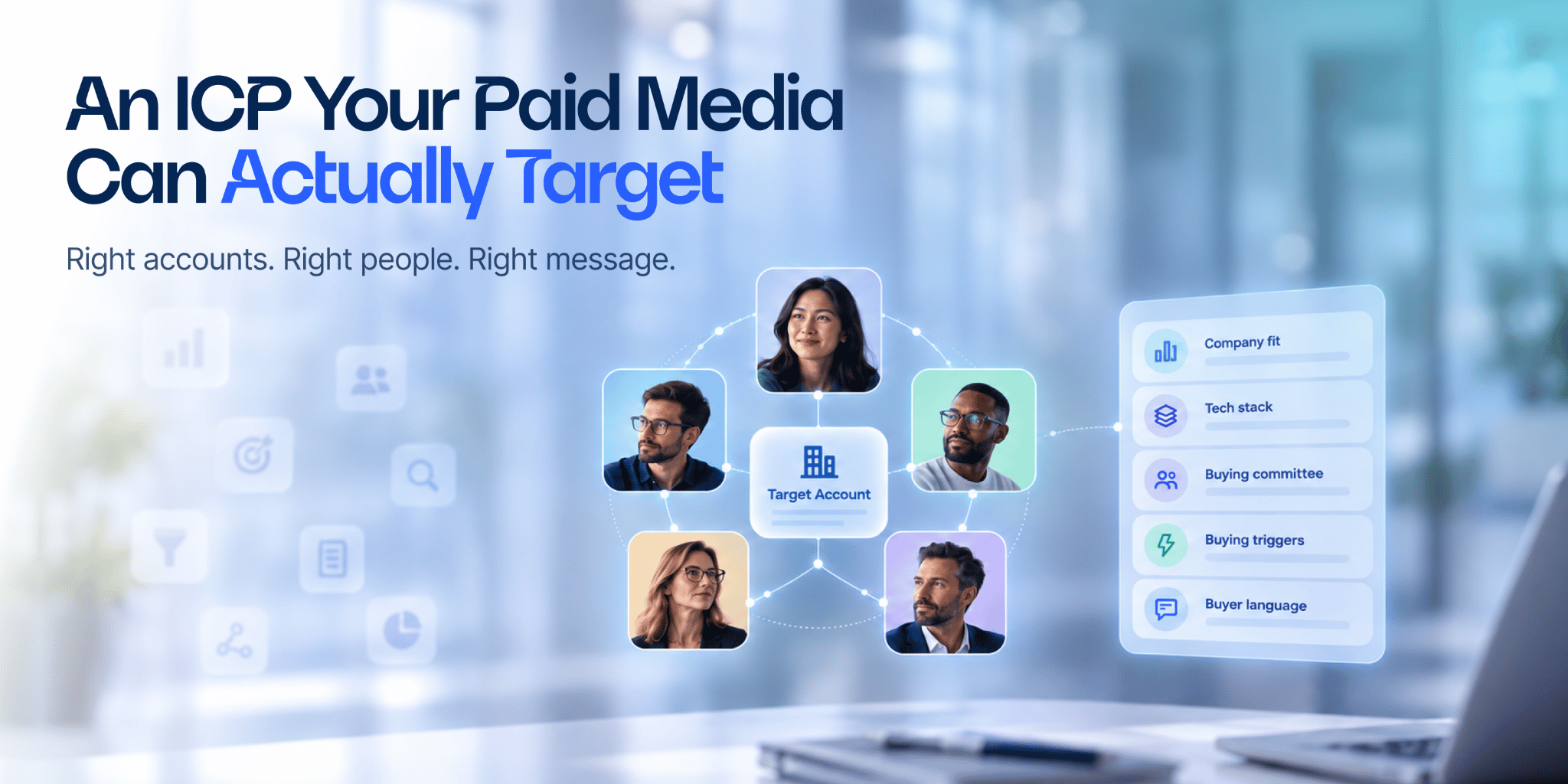
Building a B2B SaaS ICP That Paid Media Can Actually Target

A step-by-step framework for turning a vague B2B SaaS buyer persona into five targetable ICP inputs, mapped directly to LinkedIn and Google Ads targeting fields, with a fintech-specific breakdown included.

View
Articles
15-minute strategy call

Most Agencies Promise ROI. We Prove It.

Book a Call

More Posts

View
Video
October 26, 2026

Workshop: Marketing Complex Products in an AI-Driven World With Steve Keifer

Steve Keifer, CMO at Ordway, joins Alex Gluz to discuss why selling complex B2B SaaS and fintech solutions requires more than a strong product. They explore how to challenge established buying habits, create demand, and earn the trust of finance decision-makers.

View
Video
View
Podcast
October 16, 2026

Building a Data-Driven Marketing Engine for SaaS Success With Alex Schutte

Learn how to build a data-driven SaaS marketing strategy that attracts high-value customers and drives sustainable growth. Hubstaff's Alex Schutte shares insights on optimizing paid acquisition, improving lead quality, leveraging customer lifetime value, and aligning marketing with product development while balancing AI automation with human creativity.

View
Podcast
View
Video
October 12, 2026

Workshop: How AI, Buyer Signals & Relevance Are Reshaping B2B SaaS Revenue With Eric Quanstrom

Eric Quanstrom, VP of GTM Engineering at Apollo.io, joins Alex Gluz to explore why easier outbound has made buyer attention harder to win. The takeaway: signal-based selling and relevance beat volume, and AI should tee up more human sales conversations rather than replace them.

View
Video
View
Podcast
October 2, 2026

Sales Efficiency in the AI Era With Eric Quanstrom

In this episode of the Revenue Engine Podcast, Alex Gluz chats with Noah Fitzgerald, Chief Revenue Officer at Qredible, about leadership, growth, and building businesses that matter. Noah shares insights on founder challenges, customer-driven growth, and AI’s impact on business. He also discusses personal development, entrepreneurship, and lessons from building multiple ventures.

View
Podcast
View
Articles
September 28, 2026

Building a B2B SaaS ICP That Paid Media Can Actually Target

A step-by-step framework for turning a vague B2B SaaS buyer persona into five targetable ICP inputs, mapped directly to LinkedIn and Google Ads targeting fields, with a fintech-specific breakdown included.

View
Articles
View
Podcast
September 18, 2026

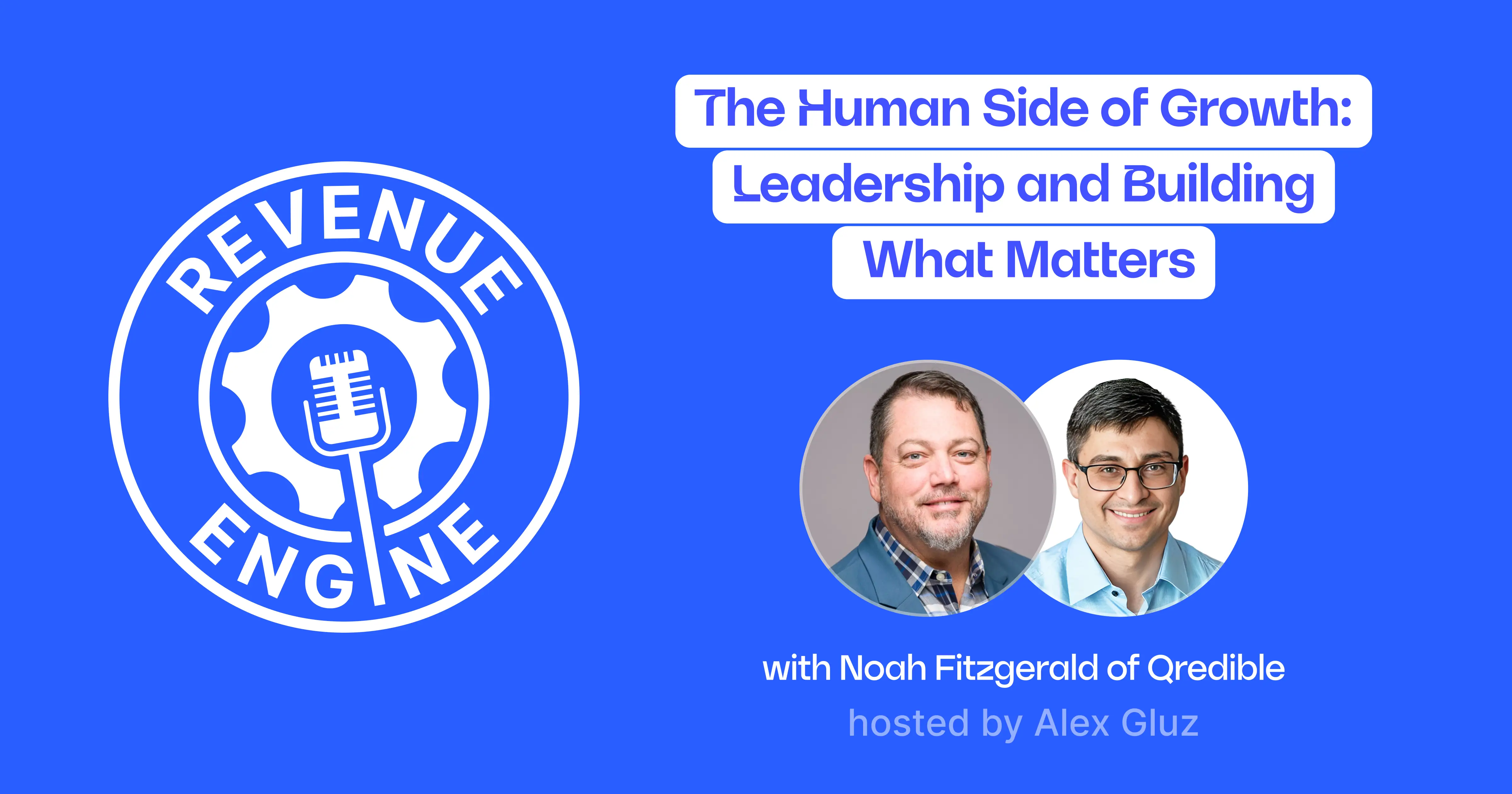
The Human Side of Growth: Leadership and Building What Matters

In this episode of the Revenue Engine Podcast, Alex Gluz chats with Noah Fitzgerald, Chief Revenue Officer at Qredible, about leadership, growth, and building businesses that matter. Noah shares insights on founder challenges, customer-driven growth, and AI’s impact on business. He also discusses personal development, entrepreneurship, and lessons from building multiple ventures.

View
Podcast
View
Articles
September 15, 2026

Google Ads vs LinkedIn Ads for B2B SaaS: Which Deserves the Next Dollar

Choosing a B2B SaaS agency or an in-house paid media hire is an 18-month cost question. See both sides of the model, with every assumption visible.

View
Articles
View
Articles
September 15, 2026

Agency vs In‑House for B2B SaaS Paid Growth: The Real 18-Month Cost Model

Choosing a B2B SaaS agency or an in-house paid media hire is an 18-month cost question. See both sides of the model, with every assumption visible.

View
Articles
View
Podcast
September 4, 2026

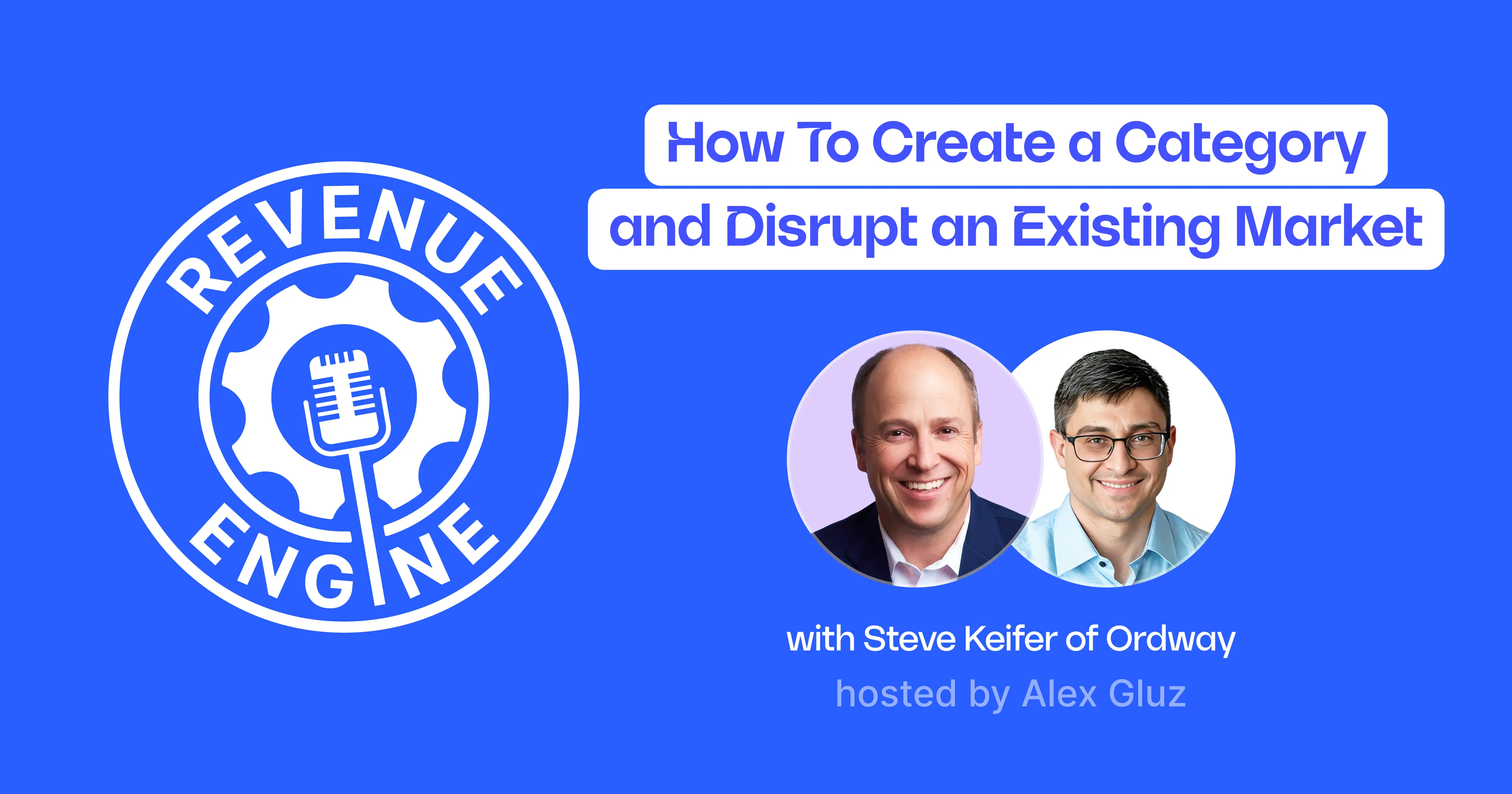
How To Create a Category and Disrupt an Existing Market With Steve Keifer

Learn how a category creation strategy builds market awareness, earns buyer trust, and helps B2B companies disrupt entrenched competitors effectively.

View
Podcast
View
Video
August 26, 2026

Workshop: How Domain Names Are Being Redefined for the Next Era of the Internet

Identity Digital CRO Matt Overman joins Alex Gluz to unpack what hundreds of millions of domain registrations reveal about digital identity and the agentic web. The takeaway: domains are becoming sovereign identity anchors for humans and AI agents, and legacy .com gravity is giving way to meaningful, purpose-built extensions.

View
Video
View
Podcast
August 21, 2026

Modern Go-to-Market Leadership in the Age of AI With Eric Gilpin

Learn how AI go-to-market strategy helps SaaS teams adapt to buyer behavior, prove ROI, grow accounts, and build stronger customer relationships.

View
Podcast
View
Podcast
August 7, 2026

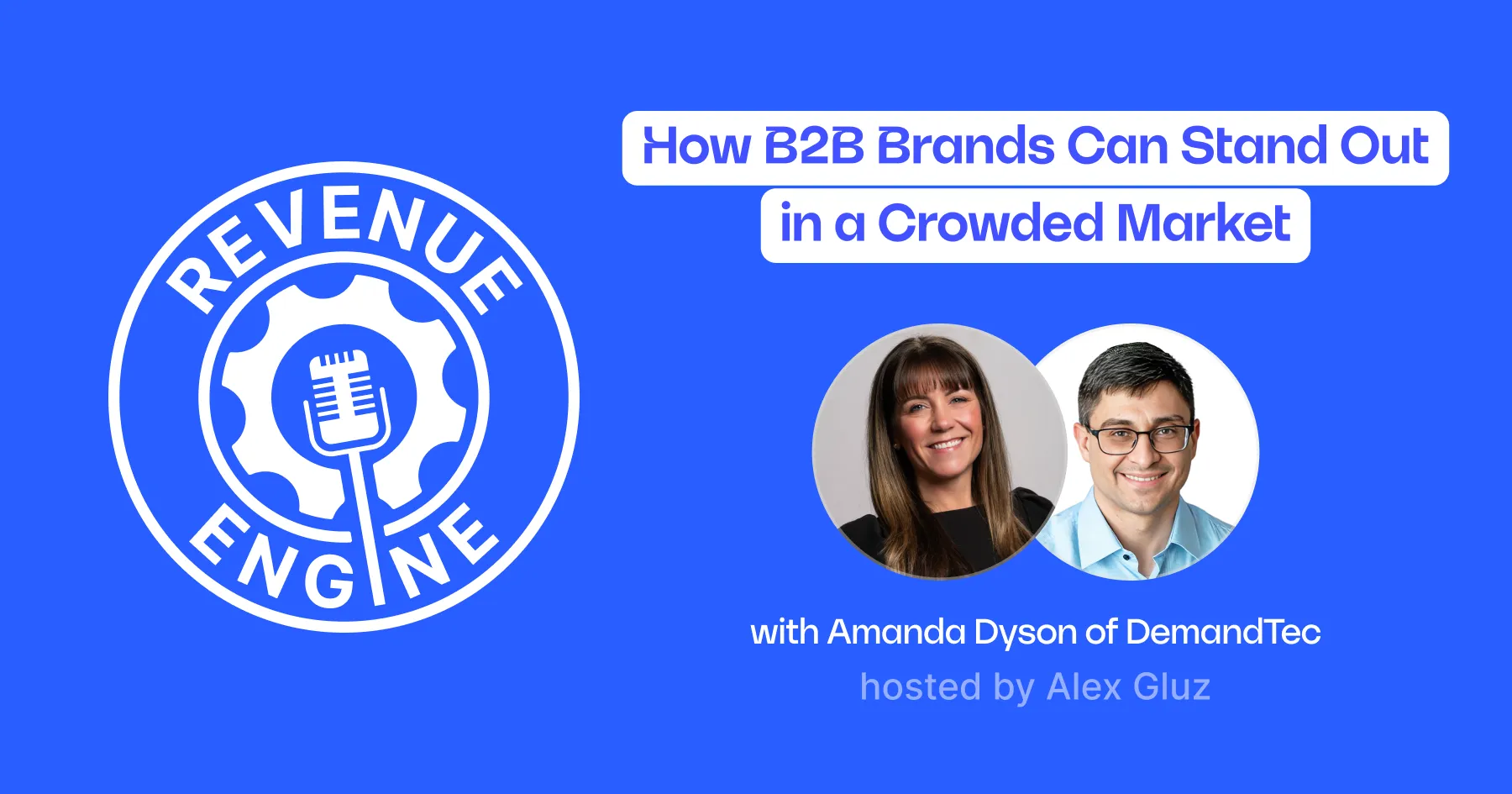
How B2B Brands Can Stand Out in a Crowded Market With Amanda Dyson

Learn how B2B brands can differentiate with a bold point of view, authentic content, strategic AI use, and marketing tied directly to pipeline.

View
Podcast
See all posts

More Resources

B2B SaaS Persona Builder

A copy-and-paste prompt for ChatGPT.

Download Now

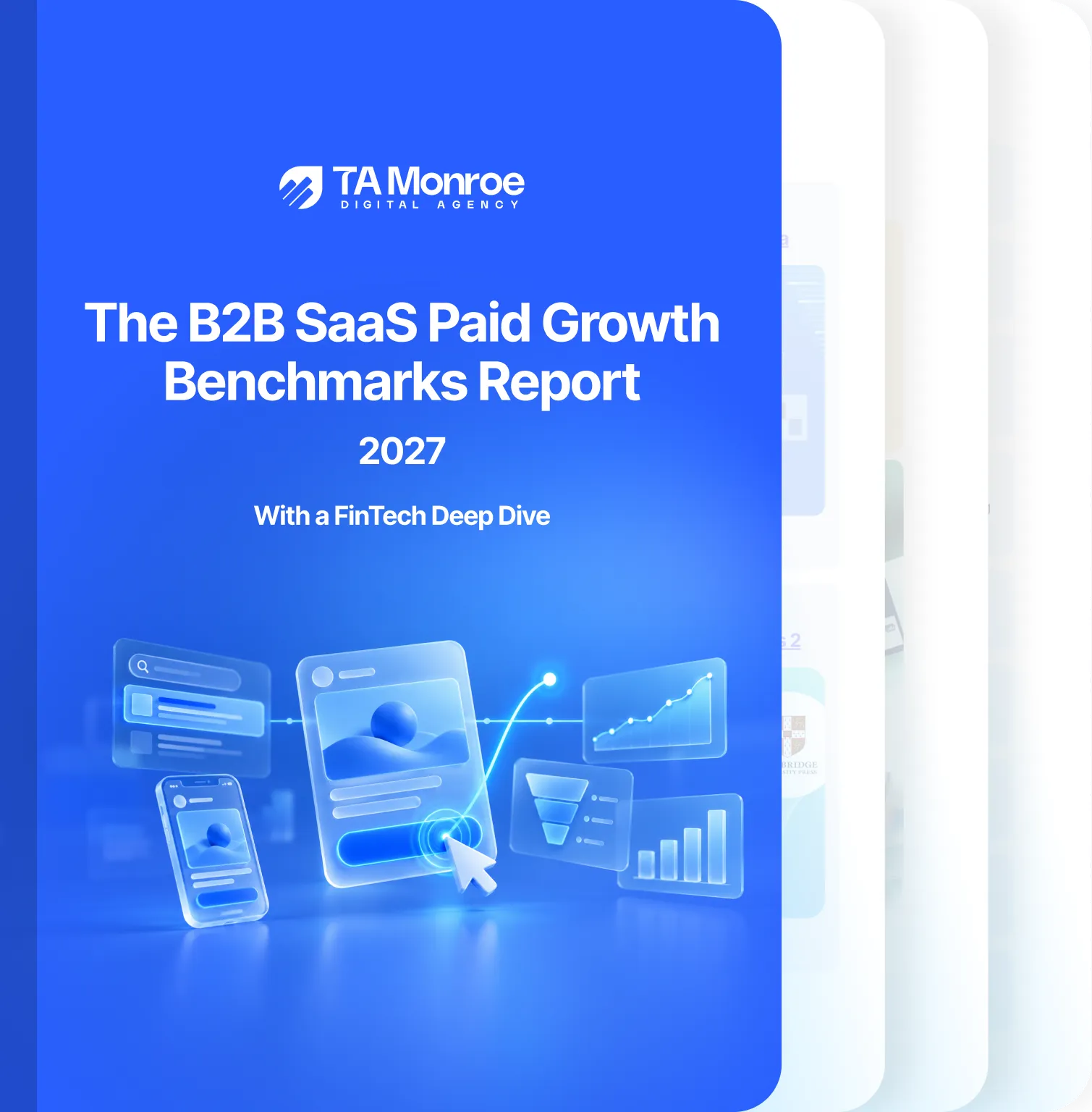
The B2B SaaS Paid Growth Benchmarks Report 2027

The benchmarks B2B SaaS leaders use to see what a dollar of paid growth actually buys. Revenue-level data across three channels, plus a FinTech deep dive.

Download Now

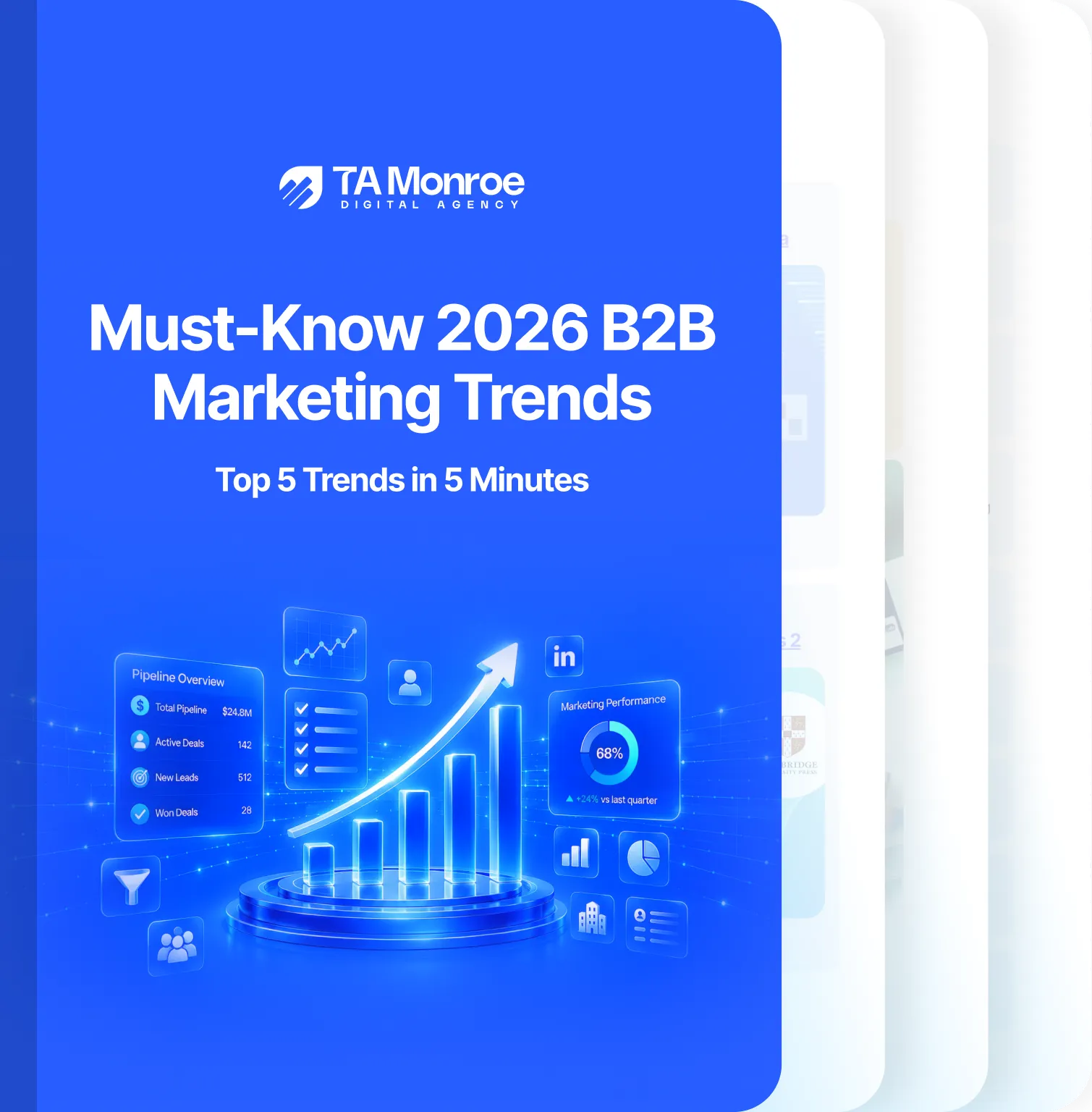
5 Must-Know 2026 B2B Marketing Trends

Five trends shaping B2B SaaS pipeline generation in 2026, and the one move to make on each. A fast way to check your current strategy against what's actually working now.

Download Now

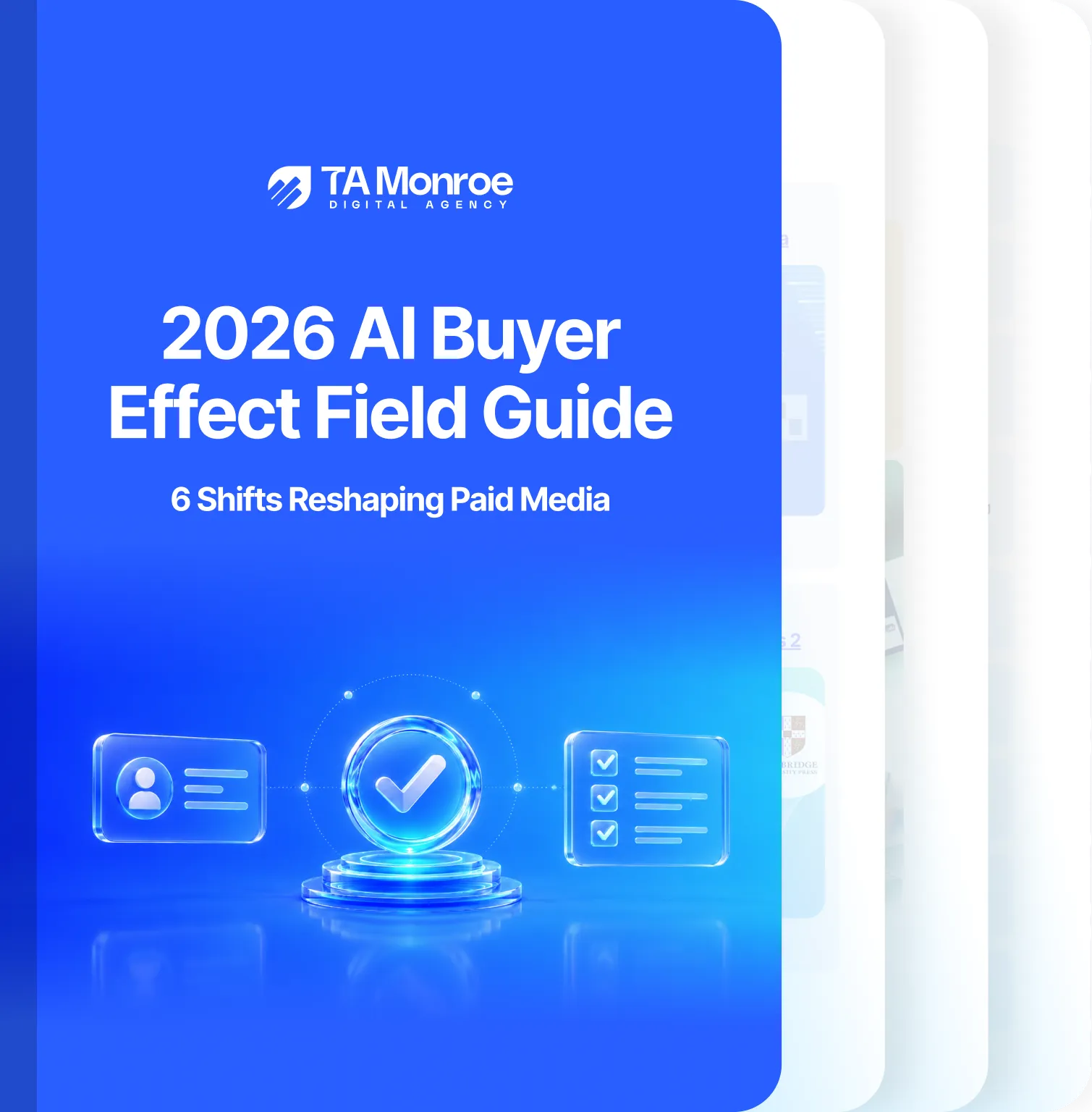
2026 AI Buyer Effect Field Guide

Buyers ask an AI tool instead of clicking through your funnel. This guide shows where that shows up first in your account, and what to do about it.

Download Now

LinkedIn Targeting Cheat Sheet

Four targeting layers, three ABM moves, and a 48-hour launch timeline. One page, actionable today.

Download Now

The Competitor Teardown Skill

Point it at any competitor URL. Get their positioning gaps, the buyers they've written off, and the one line that wins the deal.

Download Now

2026 Reddit Prelaunch Targeting Guide

No wasted spend, no setup surprises. Get your Reddit targeting right before you go live.

Download Now

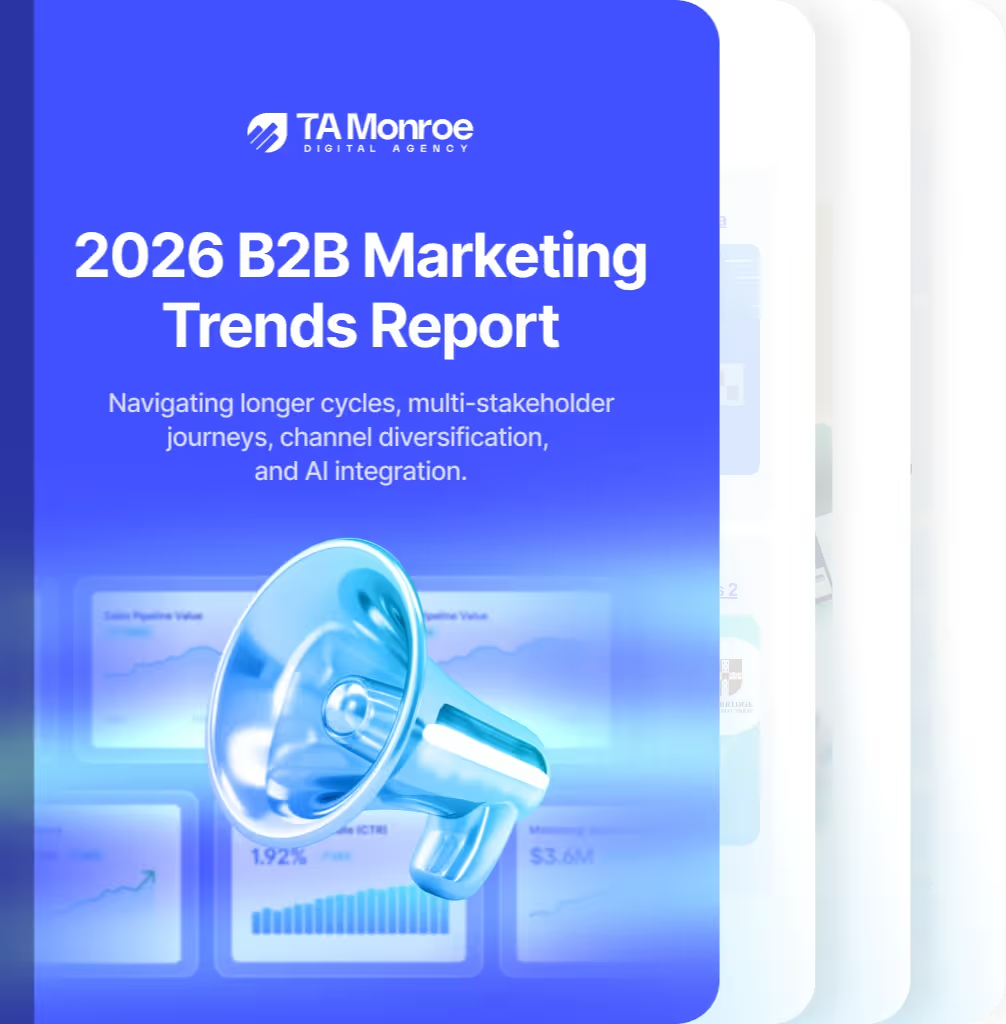
2026 B2B Marketing Trends Report

What leading B2B marketers are prioritizing in 2026. The trends, data, and tactics to sharpen your strategy.

Download Now

AI Marketing Strategies Playbook: How 5 Marketing Leaders Cracked the AI Code

How 5 Marketing Leaders Cracked the AI Code.

Download Now

Google Search Ads Benchmarks Report

Learn why your search ads cost more and convert less (and what to do about it).

Download Now

B2B SaaS LinkedIn Targeting Blueprint

How to drive qualified leads in under 7 days using LinkedIn’s targeting capabilities (including account-based marketing).

Download Now

LinkedIn Ads Benchmarks Report 2026

The 2026 LinkedIn benchmarks B2B marketing teams use to lower CPLs and protect budget. Format-level data across four formats, two regions, and three industries.

Download Now

Explore Proven Formulas for High‑Impact LinkedIn Ads

LinkedIn Ads Swipe File.

Download Now

Creating a Complete Full-Funnel Strategy for Predictable Revenue Growth

Download Now

How to Stop Overpaying for Your Branded Google Ads Keywords

The Ultimate Branded Google Ads Optimization Guide.

Download Now

The 2026 Ultimate Revenue Engine Blueprint

Your guide to standing out in crowded markets without overspending on ads. Covers branding, PLG triggers, and community tactics in one concise playbook.

Download Now

5 Tips To Find Success on Google Ads

Download Now

7 High-ROI Google Ads Optimization Tips & Strategies + Bonus Checklist

Download Now

Improve Your MQL Quality in 90 Days Cheat Sheet

In this cheat sheet, you’ll learn the top hacks to get more marketing‑qualified leads for your sales funnel.

Download Now

4 Secrets for Running Paid Social Ads That You’re Not Supposed to Know

Download Now

Discover the 7 Essential Steps for an Effective Go-to-Market Strategy

Download Now

B2B SaaS Revenue Growth Checklist

If your revenue engine falls short of expectations, this checklist will help you quickly identify and address the underlying issues.

Download Now
See all free resources
Revenue Engine Newsletter

Get B2B Marketing & Growth Insights

Our SaaS-focused frameworks help you scale qualified pipeline and accelerate revenue growth.

Thank you! Your submission has been received!
Oops! Something went wrong while submitting the form.
T.A. Monroe logo, white version
Google Premier Partner 2026
Address:
7284 West Palmetto Park Road, Suite 101, Boca Raton, Fl 33433
Contact:
+1 (646) 844-9480
support@tamonroe.com
ServicesCase StudiesAbout UsCareersContact
Resource HubPodcastArticlesVideoLibrary
Copyright © 2026 – T.A. Monroe Digital Agency
Privacy Policy