Services

Our Services

Paid Media

Drive qualified demand with paid campaigns

Paid Search

Capture high-intent buyers through search

Paid Social

Turn social ads into pipeline growth

Reddit Advertising

Reddit Advertising for B2B SaaS

SaaS Marketing

Scale B2B SaaS growth with full-funnel strategy

Creative & Content

Craft visuals and content that convert

Web Design & CRO

Design optimize to drive revenue

All Services Overview
Success StoriesPricing
About
About Us

Who we are and how we work

Our Team

The people behind the work

Careers

Join the T.A. Monroe team

FAQ

Common questions answered

Contact Us

No pressure, commitment free

Resources
Resource Hub

All resources in one place

Podcast

The Revenue Engine Podcast

Free Resources

Free growth hacks

Contact Us
Book a Call
Book a Call
All resources
Podcast
5
min read

Build vs Buy AI: What Enterprise Teams Should Build and What They Should Buy

July 3, 2026

Table of Contents

>
Heading
>
Heading
>
Heading
>
Heading
>
Heading

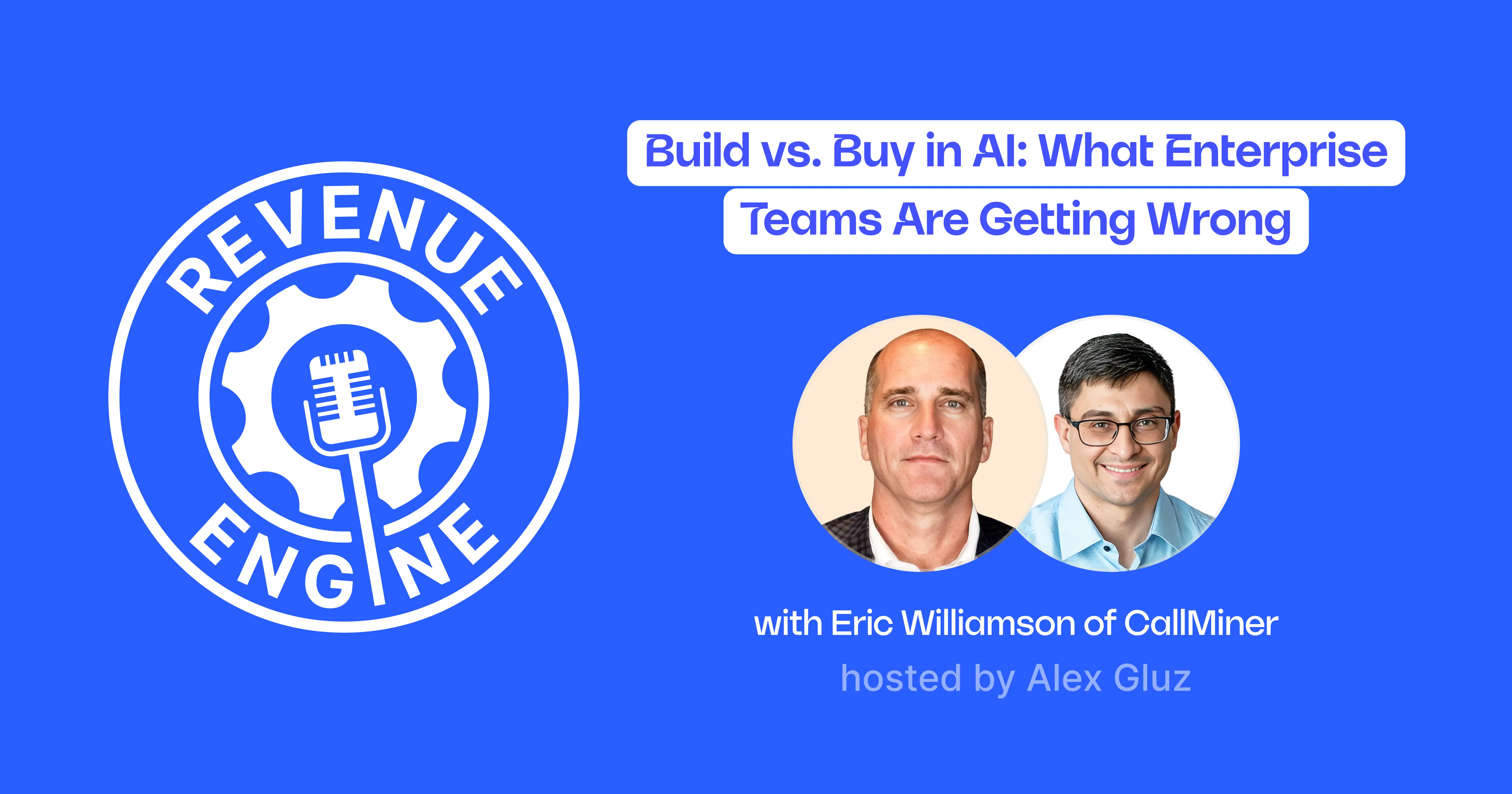
CallMiner CMO Eric Williamson joins Alex Gluz to unpack where enterprise teams should build AI, where established platforms create more value, and how the same decision logic applies to automation, marketing resourcing, and growth

Build AI internally only where the capability is a genuine source of advantage, and you can sustain the maintenance, data, and reliability for years to come. Most enterprise teams underestimate all three. Eric Williamson’s experience is that companies who set out to replace a platform return within six to twelve months needing parts of it back, so plan for a combination rather than a clean choice.

What You Will Take Away

1. Let customer intelligence decide what to automate.

Analyzing real interactions tells you which touchpoints are ready. Buying automation without an intelligence layer means guessing.

2. The build case is usually underestimated.

Total cost of ownership, capability depth, and reliability are where in-house rebuilds fall short, and teams find out six to twelve months in.

3. AI is a productivity multiplier, not a replacement for judgement.

If nobody on the team knows what good looks like, the output is volume without quality.

4. Design the AI to human handoff before you scale automation.

A customer who has to ask repeatedly for a person is a brand problem, not a support problem.

5. Brand now does work that demand generation used to do alone.

Buyers form a preference before they will speak to a rep, so awareness, LLMO visibility, review platforms, and analyst relations all feed the consideration set.

Listen to the full conversation:

Listen on SpotifyListen On Apple PodcastsListen on Amazon MusicListen on TuneInListen on PandoraListen on Deezer
‍

About the Guest

Eric Williamson, Chief Marketing Officer, CallMiner. CallMiner is an intelligent customer experience automation platform used by global enterprises. It analyses every form of customer interaction- calls, chats, and surveys- and uses those insights to drive its voice and chat automation. Eric spent the first half of his career in advertising, at the Martin Agency and Mullen Lowe, before moving client-side into B2B technology in 2016. He joined CallMiner in 2020.

About the Host

Alex Gluz, CEO, T.A. Monroe. Alex hosts the Revenue Engine Podcast and builds performance-driven growth frameworks for B2B SaaS companies, with a focus on customer acquisition, demand generation, pipeline, and measurable revenue outcomes.

In This Episode…

AI is changing the economics of customer service, but the real shift is not just replacing people with bots. Enterprise teams are being forced to rethink what they automate, what they build internally, and where outside platforms can still create value. When everyone can access powerful AI tools, how do companies decide what is worth building themselves?

As a B2B technology marketing leader with expertise in AI, automation, brand strategy, and enterprise growth, Eric Williamson explains that the answer starts with intelligence. Companies need to understand which customer interactions are best suited for automation before they deploy AI agents at scale. Eric emphasizes that many teams underestimate the long-term cost of building AI tools in-house, especially when those tools need to match the depth, reliability, and insight of established platforms. The stronger approach is to start small, identify the right use cases, create a seamless handoff between AI and humans, and use customer interaction data to guide automation decisions.

In this episode of the Revenue Engine Podcast, Alex Gluz talks with Eric Williamson, Chief Marketing Officer at CallMiner, about build-versus-buy decisions in AI and what enterprise teams often get wrong. Eric shares how AI agents are reshaping customer service, why SaaS pricing is moving toward consumption models, and what brand visibility means for B2B growth. He also touches on agency resourcing, LMO, and avoiding AI-generated content that lacks quality.

What Is Covered

Timestamp Topic
04:55 Introduction to Eric Williamson and CallMiner
06:47 Eric’s career and CallMiner’s move into automation
11:48 How conversation intelligence and AI agents are coming together
15:47 SaaS pricing and the shift to consumption models
20:55 Build versus buy and AI use within marketing
26:13 Dividing marketing work between internal teams and agencies
31:48 Agency benchmarks and human judgment in AI content
35:04 Voice agents and the handoff to human customer service
39:46 Brand, buyer research and visibility in AI search
42:36 Mentorship, brand advice and closing remarks

‍

Read the full podcast episode transcript here.

<h2 id="chapter-1">Introduction to Eric Williamson and CallMiner</h2>

<p><strong>Alex Gluz:</strong> Alex Gluz here. I'm the host of the Revenue Engine Podcast, where I talk with top leaders in business, marketing, sales, taxes and more.</p>

<p>This episode is brought to you by T.A. Monroe Digital. At T.A. Monroe, we build world-class revenue engines for B2B SaaS and tech companies. What that means is we do everything behind the scenes to generate you tons of qualified leads, opportunities and customers.</p>

<p>We build highly effective marketing systems and scale them profitably through our demand generation strategies. We think scientifically how to scale your demand and revenue. We bring decades of experience and expertise.</p>

<p>Email me at alex@tamonroe.com or visit tamonroe.com today to schedule a strategy session, or learn more about our mission.</p>

<p>We have a great guest for you today. Hey, Eric, nice to have you here.</p>

<p><strong>Eric Williamson:</strong> Nice to be here. Thanks for having me.</p>

<p><strong>Alex Gluz:</strong> Can you do a brief intro of who you are and what you do?</p>

<p><strong>Eric Williamson:</strong> Certainly. Eric Williamson. I'm the chief marketing officer for a company named CallMiner. CallMiner is an intelligent CX automation platform.</p>

<p>To articulate what that means, we work with generally enterprise-level companies across the globe. Our platform captures and analyzes 100% of all forms of customer interactions: calls, chats, surveys and so on.</p>

<p>Then it uses those insights to inform our automation products, which would be voice and chatbots, as well as triggered surveys. All of that works together in an infinite loop.</p>

<p>We've been around for a little while. Probably most well known for conversation intelligence, but our automation tools are our newest offering.</p>

<h2 id="chapter-2">Eric&#x27;s career and CallMiner&#x27;s move into automation</h2>

<p><strong>Alex Gluz:</strong> How did you get started? What did you go to school for, Eric?</p>

<p><strong>Eric Williamson:</strong> Political science was my undergrad, and I think at the time I was like, "Maybe I'll go to law school afterwards."</p>

<p>But thankfully, whether you call it serendipity or whatever, my first role out of college was a BDR, or an SDR, as sometimes they're called. Especially if you're going to work in tech, I think that is probably one of the best first jobs you can get, whether you want to be in sales or marketing or anything. I learned a lot from it.</p>

<p>After that, I ultimately ended up on the ad agency side. Pretty much the first half of my career, I worked for large ad agencies: The Martin Agency, MullenLowe here in the Boston area, working on really large consumer brands. Everybody from JetBlue to Microsoft and Royal Caribbean.</p>

<p>I had the opportunity to switch in my career into the client side, and I chose tech. I've been working on the B2B marketing side in tech since 2016.</p>

<p><strong>Alex Gluz:</strong> That's a great career journey. What brought you to CallMiner?</p>

<p><strong>Eric Williamson:</strong> Before CallMiner, I was at a company here in the Boston area named Acquia, which is in the DXP space. They primarily compete against companies like Adobe, but they're the open-source option. It's built around an open-source project called Drupal.</p>

<p>We had a good run, and then we were acquired by Vista private equity. Once we had been acquired by Vista, there were several different opportunities at the CMO level.</p>

<p>At the time, this would have been about 2020, I was looking for something that was squarely in the artificial intelligence space. Even though AI was around then, it wasn't as pervasive as we talk about it all day, every day now. But I knew that's the space I wanted to be in.</p>

<p>If you really think about it, what's the best way to understand your customers? By analyzing 100% of all the conversations you have with them, any kind of interaction.</p>

<p>The fact that's where this company was rooted was interesting to me. Then the fact that we were able to analyze that at scale for enterprise-level customers, I felt was a very good proposition.</p>

<p>I'd done my research on the space, and it is a very hot space currently. This is why you're seeing a ton of M&A in the space.</p>

<p>I joined in 2020, and since that time we've gone through an initial rebrand. Over the course of my time there, we've acquired two different companies. In 2025, we acquired a company called VOCALLS, which is where our voice and chatbot products come from.</p>

<p>We also released our own product that we built, which was a triggered survey platform. I wouldn't call it a full rebrand, but it caused us to need to do a repositioning, since our suite had evolved from being about intelligence into really more of an automation player.</p>

<p><strong>Alex Gluz:</strong> A small observation: when you say 2020, and this probably shows how old we are, we're like, "That was just recently." But that was actually six years ago.</p>

<p><strong>Eric Williamson:</strong> I know. Especially in the tech world, a CMO staying that long in one company is kind of unheard of. But we've had a really good run, and we have a really great path forward.</p>

<p>Like I said, this is a very hot space right now, both in M&A but also in the capital that is being made available to it. I think that's indicative of how hot the space is right now.</p>

<p>Obviously, anybody and everybody's talking about AI and their agents, whether you're Salesforce and Agentforce and so on. Everybody's chasing after the same thing.</p>

<p>Our use cases primarily focus on customer service, which makes us a little different than maybe a Salesforce or a Gong or something like that.</p>

<h2 id="chapter-3">How conversation intelligence and AI agents are coming together</h2>

<p><strong>Alex Gluz:</strong> To say the space is hot, specifically customer service, customer success, automation, is an understatement.</p>

<p>Just this week, we're working on a proposal for a client in this space, and they gave us a few of their biggest competitors and what they think of them. I don't want to name them, but this company's only been around for a few years and they're doing really well.</p>

<p>I understand why this space is super hot, because there's big demand for it. And then also, to serve this, it's a relatively good space for LLMs to step into. Maybe you can elaborate on this.</p>

<p><strong>Eric Williamson:</strong> You have a lot of new entrants. With the rise of OpenAI and Anthropic and all the different models that are available out there, the barrier to entry in this, especially on the intelligence side, has lowered.</p>

<p>But what I'll say is a lot of the newer entrants here, you pick whether it's Anthropic or OpenAI, really it's an LLM with a thin layering of product on top of it, as opposed to being a broad analytics platform that provides deep insights.</p>

<p>What you also have now is the convergence of intelligence companies and what I'll call AI agent companies: chatbots and voice agents as well. Typically, those have been two different categories, but now they're merging together quite quickly.</p>

<p>A lot of that is due to the M&A that I was talking about. I think what we're finding is the players that came from the automation space, most of them started out mostly as chatbots, and then they moved into voice agents.</p>

<p>There's been one or two players, and this is why we chose VOCALLS, that started with voice. They started with the harder part, the voice agents.</p>

<p>But all of these automation players, if you look at, let's say, NiCE acquired Cognigy, we acquired VOCALLS, all of the intelligence and the automation are starting to merge together. What you've got is still a lot of players that just deal with the bots and have no intelligence.</p>

<p>When we did acquire VOCALLS, it quickly required us to step back and think about our positioning. Our superpower is our intelligence, but we're an automation company.</p>

<p>It became that connection between intelligence that comes from 100% of all the conversations that are happening out there that we're analyzing. That's what informs our AI agents.</p>

<p>Most of these companies that we're playing with in this space, they don't have the intelligence. They just have the automation.</p>

<p><strong>Alex Gluz:</strong> Very interesting. We should meet in a year and chat more.</p>

<p><strong>Eric Williamson:</strong> It's changing very fast, too. But what I would say is what we're seeing on the customer side, some industries are lagging behind a little more on embracing AI agents and voice agents, chat and so on.</p>

<p>BPOs in particular, the largest ones seem to be a little bit stuck in the past, and they can't get out of the butts-in-seats type mentality.</p>

<p>But when you look at financial services, when you look at healthcare, even though those are highly regulated industries, they are leaning in big time into AI agents. We have quite a few very large healthcare and financial services customers.</p>

<h2 id="chapter-4">SaaS pricing and the shift to consumption models</h2>

<p><strong>Alex Gluz:</strong> Let's change this up a little bit. Pre-interview, you said the "SaaS is dead" headline is mostly noise. The real story is how survivors are shifting their pricing models.</p>

<p>There's a few folks I talk about this with. What's the lazy version of that shift that most companies still make?</p>

<p><strong>Eric Williamson:</strong> I think it's really good clickbait. How many times have we seen whatever insert "is dead"? I've even seen headlines around the "SaaS apocalypse."</p>

<p>It makes for a good article because it's a provocative headline. I'm sure there's a little bit of truth in it. But all in all, I would say that most of the SaaS players saw this coming, just like they saw when we moved from zero percent interest rates and growth at all costs. You could spend all you wanted. All of this was happening at the same time.</p>

<p>I think the biggest shift is you're seeing a lot of these SaaS companies that are being disrupted by LLMs. They've quickly merged that into their core product, if they didn't already have some type of AI in their product to begin with.</p>

<p>The agentic layer is at the core of their entire product, as opposed to it being a feature.</p>

<p>Then, to the pricing model. SaaS is your classic seat-based, and what we're seeing is a shift to more of a consumption pricing model in addition to that.</p>

<p>We got lucky because we already offered seat-based as well as consumption-based before the SaaS apocalypse started to happen. We were able to easily lean into our consumption model more.</p>

<p>Probably the biggest shift for us most recently is the shift from the typical annual contract or three-year contracts to more of a pay-as-you-go. You'll find pay-as-you-go, especially for the AI agent automation players, that's generally how the pricing models would work.</p>

<p>Now we're seeing that begin to become the way of the world for how our pricing model works. We'll offer it as pay-as-you-go, at the very least just to get the relationship going with a larger enterprise customer.</p>

<p>Then, of course, you can get a fairly large discount from the pay-as-you-go levels if you are willing to sign an annual contract. I think those are some of the biggest disruptions.</p>

<p>Beyond that, I do think that certain use cases that are very administrative, a lot of repeatable, mundane tasks that may be a SaaS software model, whether you're in legal or some of the repeatable financial tasks, a lot of that can be easily disrupted with all the LLMs out there.</p>

<p>But again, most of those companies have already put an agentic layer into their product.</p>

<p><strong>Alex Gluz:</strong> There is so much to discuss here. But for me, the laziest version I see is what I call the rename. Users become agents, and licenses become entitlements. But underneath it all, the math is the same.</p>

<p>A company announces the AI pricing pivot. New page goes live, big announcement. Then you pull up the old one, and the structure is pretty much identical. Same tiers, same per-unit logic.</p>

<p><span style="background:#fff3b0;color:#8a6d00;font-weight:700">[[AUDIO CHECK 18:54: replace this passage or delete this line before publishing]]</span></p>

<p>The CFO still runs the math the same way and pushes it back the same way. Companies actually shifting the model are rebuilding what counts as a unit, as you mentioned.</p>

<p>The rest are just changing the label.</p>

<p><strong>Eric Williamson:</strong> I think it's introduced a lot of the customers that would have relied on a SaaS platform. They're looking at this and thinking, "I can go build this myself."</p>

<p>There's some truth to that. There are certain aspects of it that a company can build in-house. But I think what they're going to find is the total cost of ownership to continue to maintain that, but also what they can actually build and maintain in-house probably is not as powerful as the platform they were paying for before.</p>

<p>There are still gaps there that they can be working with vendors to fill.</p>

<p>I think you're going to see a little bit more of a combination of DIY and, whether you call it SaaS or just AI platforms out there from vendors, that end up providing the solution. Especially for large enterprise companies who have 30 use cases that they're trying to apply their software to.</p>

<h2 id="chapter-5">Build versus buy and AI use within marketing</h2>

<p><strong>Alex Gluz:</strong> So many interesting topics touched on here. <span style="background:#fff3b0;color:#8a6d00;font-weight:700">[[AUDIO CHECK 20:55: replace or delete before publishing]]</span> </p>

<p>What do you think is buy versus build? What is the line here? How do you approach this internally?</p>

<p>Also, as a CMO, as a marketing leader, what is the messaging and position you use versus somebody saying, "Can we build this ourselves and control everything?"</p>

<p><strong>Eric Williamson:</strong> I'll speak to it in terms of what we're seeing with our customers and in the market. But then I'll also flip it around and speak to it in terms of how, as a CMO, I'm running my marketing department and what we're doing with AI.</p>

<p>First, think about it from the customers and the market side. It's a little bit of what I was talking about before. We are seeing a lot of companies consider that they could build something themselves.</p>

<p>But we are definitely finding that, whether it's a year in or six months after they start this, they realize that they're not actually going to be able to fully replace all the capabilities that they had from their SaaS platform or AI platform before. They are realizing that there are gaps to this.</p>

<p>We're seeing some of those companies come back. The ones that said, "We're now building all this," they'll come back, and they'll need parts of what they needed before, but not the full suite. I think that's happening a lot.</p>

<p>I think there's a lot of pressure on CIOs and all the different Cs coming from the CEO because they're reading, "You guys can just go vibe code all this. Why are we spending $250,000 a year on X, Y vendor when you could just use Claude Code and go build our own stuff?"</p>

<p>Some of that is misperception that the CEO is pushing down on the rest of his or her organization. They find out a year later that they couldn't actually do it.</p>

<p>But there is some reality to the ability to do this. I do think a lot of the platforms out there have made their architecture flexible enough where we're able to integrate, regardless of whether you're using OpenAI or Claude or whoever else. There are 100 different great models out there.</p>

<p>If I flip it around and think about how our company, and particularly marketing, is using AI, our company is using AI in two forms.</p>

<p>One, nearly everybody I can think of in the company is using ChatGPT, or I prefer Claude of the two major ones. For a lot of the things that I need, which is research, some of the early versions of content that I might need to write and so on. <span style="background:#fff3b0;color:#8a6d00;font-weight:700">[[AUDIO CHECK 23:16: replace or delete before publishing]]</span> </p>

<p>But the problem with that, in a lot of cases for a company-wide scalable program, is we're not allowed to put any proprietary information in there. I can't take that and put customer information in or anything else.</p>

<p>We do have Copilot turned on throughout our organization, and it's embedded within Teams and everything else. All the different Microsoft apps have Copilot pervasively throughout. Company-wide, that's how we're using it.</p>

<p>Specifically for marketing, we're using what I just mentioned, the internally approved Copilot. But then also, almost everybody in my organization is using mostly Claude. I found that to be the preferred LLM for marketers.</p>

<p>That largely is about content and the things we're creating. But we also have a couple of other things going on.</p>

<p>We do a lot of video interviews as well. Probably not as good as yours, and we definitely don't have your audience. We're using Riverside for a lot of our interviews. We end up utilizing the tools; it does AI cutdowns.</p>

<p>We are using 6sense, which is our ABM, our account-based marketing intent platform. We're also using them for AI SDRs.</p>

<p>A lot of the repeatable, high-volume outreach that normally a human BDR would do, we are now using an AI SDR that's doing back-and-forth, reciprocal-type outreach, mostly via email.</p>

<p>It takes over a lot of that outreach, and then once a connection is made, we have that transition to a human BDR.</p>

<p>Just a couple of examples of what we're doing with AI as an organization. Our engineering team is definitely using Claude and a variety of things.</p>

<h2 id="chapter-6">Dividing marketing work between internal teams and agencies</h2>

<p><strong>Alex Gluz:</strong> It's a very similar stack for a lot of companies. Similar, not the same.</p>

<p>You came from paid media agencies, so you can relate. That's what we do, the agency life. <span style="background:#fff3b0;color:#8a6d00;font-weight:700">[[AUDIO CHECK 26:13: replace or delete before publishing]]</span> </p>

<p>When you're looking at your resourcing and looking at your goals, how do you think about, "This is what we do in-house. This is what we build in-house. But we're going to hire an agency for this, maybe for paid, for SEO, maybe something else"? How do you approach this?</p>

<p><strong>Eric Williamson:</strong> I've got a demand gen team, an events team, product marketing and so on. A lot of the content creation, building white papers, blog posts and things like that, is done in-house. Plus, we have one freelancer that works as part of that overall team.</p>

<p>If you think of a classic demand gen engine, it needs the white papers, and it needs the different content that we're pointing a lot of our campaigns toward. That's generally done in-house, plus a little bit of freelance.</p>

<p>When it comes to the agencies that we work with, largely that has to do with our paid media. A lot of the paid search, a lot of the display ads, as well as third-party publications that we will run campaigns on.</p>

<p>We also use an agency for our SEO. But at this point, a lot of the SEO efforts have been split between SEO and, I think it's got a couple of different terms, GEO or LLMO. Essentially, trying to make sure that we are showing up in more AI Overviews, as well as in answers from Claude, ChatGPT and so on.</p>

<p>Those are the things that we deem as agency. But internally, my marketing operations team own everything to do with Marketo and the connection into Salesforce, and we do all of our email marketing on our own.</p>

<p>It's really just paid media and organic-type media, which would be SEO and LLMO. That's the split there.</p>

<p>The way I think about this, and some of the major shifts that I think we're seeing in tech: I don't know how long ago it's been, but you think of a company like HubSpot, which essentially invented inbound marketing and your classic MQLs.</p>

<p>Now you're probably reading headlines: not only is SaaS dead, but the MQL is dead. I don't 100% buy into that. I think it's really just more that the MQL is another intent signal. But we still do rely on some form of MQL scoring for our inbound.</p>

<p>The last part about this is, in the age that we're in right now, brand has become really more important than in situations before, where you thought about it as a different line item in your budget than demand gen, which was hardcore driving MQLs.</p>

<p>The lines are not that evenly cross-cut there, where I don't say, "This is my brand budget. This is my demand gen budget." If you have a good messaging hierarchy, a lot of your demand gen should be driving brand as well.</p>

<p>But also, all the efforts that you put into LLMO, all the efforts that you put into your analysts, your analyst relations to do well in waves and things like that, all that's driving awareness. It blurs together quite a bit more.</p>

<p><strong>Alex Gluz:</strong> You touched on so many things. I understood you being on a paid media side made you a little biased because you've been behind the scenes, and you understand what a good agency can do and how much value.</p>

<p><strong>Eric Williamson:</strong> <span style="background:#fff3b0;color:#8a6d00;font-weight:700">[[AUDIO CHECK 30:28: replace or delete before publishing]]</span> </p>

<p>In the agencies that I worked on, we did everything from massive TV campaigns all the way down to paid social media.</p>

<p>The one thing that my background has benefited me on is I don't think a lot of B2B marketers have the foundational training that I did, coming from the agency world, especially on the consumer side.</p>

<p>You learn how to write a creative brief. You learn what a brand hierarchy looks like and how that spills into a messaging hierarchy, and how to have something like that so that you're not just constantly chasing tactics.</p>

<p>When I shifted into B2B, I found a lot of it to be very formulaic, lacking any emotion in terms of the creative or the copywriting. Hopefully I've retained some of that, instilled some of that into my overall approach.</p>

<p>I think a lot of my career has been serendipitous, but that was a serendipitous shift, to be able to come in with all those tools into B2B. Especially when we're doing rebrands, this is what I spent a lot of time doing before. It's been beneficial.</p>

<h2 id="chapter-7">Agency benchmarks and human judgment in AI content</h2>

<p><strong>Alex Gluz:</strong> This is an ongoing conversation. Now it differs: do we hire somebody in-house, or do we build something with AI?</p>

<p><span style="background:#fff3b0;color:#8a6d00;font-weight:700">[[AUDIO CHECK 31:48 and 32:37: replace this passage or delete this line before publishing]]</span></p>

<p><strong>Eric Williamson:</strong> AI has been an incredible productivity multiplier. But at the end of the day, and this is what I meant about really understanding the foundation, if you don't know what good looks like, or if you haven't spent your career learning how to do some of these things yourself, then all you're really contributing to is a lot more AI slop.</p>

<p>There is a ton of that out there right now. While we may use it to get to a V1 or a V2 of a blog post or a white paper or whatever, we will never publish anything or send something live without having a lot of human intervention from the people who know what good looks like.</p>

<p><strong>Alex Gluz:</strong> That's becoming a bigger and bigger issue, the AI slop.</p>

<p><strong>Eric Williamson:</strong> Go look at LinkedIn. You can almost spot them. <span style="background:#fff3b0;color:#8a6d00;font-weight:700">[[AUDIO CHECK 33:54: replace or delete before publishing]]</span> </p>

<p>Half of them, clearly they didn't edit anything. They just took it straight out of Claude or ChatGPT and dropped it in there.</p>

<p><strong>Alex Gluz:</strong> I'll tell you something I just learned today, Eric. The writing, hands down, we all see that. Apparently, for pictures, a lot of people are using Nano Banana.</p>

<p>When you see somebody lying on the beach, saying, "I'm lying on the beach right now while my AI agents are running the show, and I'm making billions of dollars," this guy is in an office, probably working 12 hours.</p>

<p>I played with the tool for voice, and it's kind of scary, honestly, how close it came. It's still not there. But I sent some samples to my friends, and they said, "I just know what it sounds like, but if I wouldn't know, I thought it was a real person."</p>

<h2 id="chapter-8">Voice agents and the handoff to human customer service</h2>

<p><strong>Eric Williamson:</strong> We have a voice AI agent in our OmniAgent offering. It's voice and chat.</p>

<p>What some of our customers will do is they will find some of their best human customer service agents, and we will clone their voice.</p>

<p>Also, if you think of a large enterprise company, they will have the voice agent have a slightly different tonality, but also accent. If the voice agent is talking to a customer in Texas, it may say "y'all." But if it's talking to somebody who's in the Northeast, it's definitely not going to say "y'all."</p>

<p>It's interesting what it can do. This is still early days, but we're seeing some really interesting capabilities, and scary.</p>

<p><strong>Alex Gluz:</strong> And scary, yes, for sure. If I call customer service, as long as my problem gets solved, I don't have an issue with that.</p>

<p>But that's definitely changing the work model and the financial models, especially for these big enterprise companies, which are serving quite possibly millions or tens of millions of people, maybe each month or a year.</p>

<p>How's it changing the overall structure of the company, going from that human at the other end to now possibly replacing at least some of it?</p>

<p><strong>Eric Williamson:</strong> I think we're going to see the shift. Let's say it starts off at 100% human customer service agents. I think we're going to see a shift to at least 50% of that being automated fairly quickly over the next two or three years. It's already happening.</p>

<p>The key here is companies understanding, think about the customer journey, which touchpoints to automate and which touchpoints and use cases to leave with the humans.</p>

<p>What we've found is this is why intelligence is the superpower here, and this is why we think it's our key positioning. If you have the intelligence of millions of other customer interactions and you've analyzed that, you could say, "Which interactions should be automated?"</p>

<p>It's going to tell you, based on millions of interactions, "These are the ones that are most promising from an empathy and everything else standpoint for you to automate. Would you like to automate?"</p>

<p>You can click it, and it will go ahead and create the bot for you.</p>

<p>I think this is where the shortcoming happens when you're like, "Great, we've just bought a voice and chatbot platform," but it has zero intelligence. You're basically then making your best guesses as to what to automate. That's really not a good model.</p>

<p><strong>Alex Gluz:</strong> I agree. This is a great way to put it. I think this is a fine balance. Finding this fine balance on many levels, at the business level, also on the human level, because there are other humans at the end, with employees.</p>

<p><span style="background:#fff3b0;color:#8a6d00;font-weight:700">[[AUDIO CHECK 38:07: replace this passage or delete this line before publishing]]</span></p>

<p><strong>Eric Williamson:</strong> The other thing I would recommend is, regardless of whether you used intelligence to figure out what you're going to automate, start small. Don't try to automate everything right out of the gate.</p>

<p>Then make sure that there is a very simple and graceful handoff between AI agent and human.</p>

<p>What you don't want is your very human customer yelling "human" 10 times before the AI agent finally transfers you to the human. Make it simple. Make it easy, or your brand will definitely be punished for it.</p>

<p><strong>Alex Gluz:</strong> I think this is becoming the most popular word now: "Talk to a human, talk to a human."</p>

<p>I just did this a few days ago somewhere. I said, "Talk to a human," because you're not going to be able to solve my problem if it's a complicated problem.</p>

<p><strong>Eric Williamson:</strong> I already know a bot probably can't, but usually I'll give it a shot first. That could just be because I'm in the industry.</p>

<p>But if I know it's a complicated situation that needs explaining, I'll just go straight to the human.</p>

<h2 id="chapter-9">Brand, buyer research and visibility in AI search</h2>

<p><strong>Alex Gluz:</strong> Great chatting with you. I have a few more questions for you. If you had to bet on one growth lever going into 2026, what would it be?</p>

<p><strong>Eric Williamson:</strong> I'm going to stick with my area, which is B2B tech. I talked about it briefly earlier, but as much as you need the demand gen engine to handle your account-based outbound and your inbound, I do think there's been a big resurgence of brand.</p>

<p>I don't mean a line item in your budget: "I'm going to do billboard ads." Although I've seen some tech companies do some pretty cool billboards, which nobody would have spent money on five years ago.</p>

<p>But I do think brand is an important piece of the overall job of marketing now.</p>

<p>Largely, I say this because there's some research out there that says essentially 80% of the buyers out there, whatever your target audience is, they've already made their decision, or they at least have a favorite, before they even are willing to talk to a BDR.</p>

<p>They want to do as much of this research as they can on their own. A lot of that means you have a lot of work to do to get on their radar. That's just simple awareness, but also get into their consideration set.</p>

<p>Largely, it's ensuring that your messaging hierarchy that infiltrates across all your demand gen assets is tightly connected to your core positioning.</p>

<p>Don't get sucked into using so much corporate jargon that nobody knows what the heck you're talking about, and you could slap any logo on it.</p>

<p>You still have to keep in mind that you are marketing to other humans. You still have to trigger an emotion that you're going to solve a problem for them, or something that keeps them up at night. Don't forget about emotion.</p>

<p>We're just spending more money on certain things that definitely would be considered brand, and I would include LLMO in that. But also thinking about the things that feed LLMs, so G2 reviews and different things like that have become more important than they were just two years ago.</p>

<p><strong>Alex Gluz:</strong> I definitely would add to that thought leadership. Thought leadership is super important, like what we're doing right now, just talking to a human and explaining everything in these simple terms. If needed, we can go deeper.</p>

<p>For LLMs, Reddit is also super important nowadays.</p>

<p><strong>Eric Williamson:</strong> YouTube is a huge feeder. We weren't spending much money on YouTube, so we're doing a little bit of paid, and it's not a demand gen campaign. It's all awareness spend. It's all about impressions.</p>

<p>But we're also just paying more attention to YouTube now because of LLMs.</p>

<h2 id="chapter-10">Mentorship, brand advice and closing remarks</h2>

<p><strong>Alex Gluz:</strong> Great speaking with you, Eric. I have one last question. Who were your mentors, and the best advice they gave you?</p>

<p><strong>Eric Williamson:</strong> Hands down, the person that was my mentor, but also had the biggest impact on my career journey, is a woman called Kristen Cavallo.</p>

<p>She is currently the CEO at The Martin Agency, which is where I met Kristen. She wasn't the CEO then, but she's had an incredible career, and I worked at two different agencies with her.</p>

<p>As far as advice, since we were talking about brand, I think probably the best advice I learned from her is the best brands know one thing really well: you can't make everybody happy.</p>

<p>You can't pander to everybody. That's a recipe for a weak brand.</p>

<p>The best brands know who their customers are, both from data, but also because they've talked to them regularly. They know that they will make certain people very happy, and other people they know they can't make happy.</p>

<p><strong>Alex Gluz:</strong> Great advice. We've been talking to Eric Williamson, chief marketing officer at CallMiner. Eric, where can people learn more about you?</p>

<p><strong>Eric Williamson:</strong> Go to callminer.com, or you can find me on LinkedIn.</p>

<p><strong>Alex Gluz:</strong> Great. For our listeners, if you'd like to learn more about how we can help you build marketing revenue engines and paid media that empower growth, visit tamonroe.com or contact me on LinkedIn as well.</p>

<p>Eric, thanks so much.</p>

<p><strong>Eric Williamson:</strong> Thank you.</p>

<p><strong>Alex Gluz:</strong> Thank you so much.</p>

‍

‍

Build a predictable pipeline with T.A. Monroe Digital. Book your strategy call here.

Build vs Buy AI: A Practical Decision Framework

Five signals worth being honest about before the engineering time is committed.

Decision factor Build internally Buy an established platform
Strategic value The capability is a genuine source of advantage, not table stakes The capability matters but does not differentiate you
Depth and reliability You can reproduce the depth, reliability and integrations of a mature platform Recreating that depth would be slow or expensive
Total cost of ownership You can carry maintenance, data and improvement costs for years, not months Ongoing platform development is more efficient to externalise
Intelligence layer You already hold enough interaction data to know what to automate You need the intelligence that tells you which use cases are ready
Realistic outcome Rare as a complete replacement Common as a combination: build some, buy the rest

The pressure to build rarely starts in engineering. Eric describes it as a reasonable-sounding question about why the company is paying a vendor six figures a year when a small team could build its own. Some of that is fair. Some of it surfaces as a gap twelve months later.

Want to Put AI Into Practice Without Losing the Judgement Behind Good Marketing?

AI Marketing Strategies Playbook

See how five marketing leaders are applying AI in real marketing work, plus a 30-day action plan for turning the lessons into execution.

Download Now

Quotable Moments

  • “And I think that's indicative of how hot the space is right now.”
  • “Make it simple, make it easy, …or your brand will definitely be punished for it.”
  • "Why are we spending $250,000 a year on XY vendor(s) when you could just use Claude Code and go build our own stuff."

Frequently Asked Questions

When should an enterprise build AI internally instead of buying a platform?

Build where the capability is a real source of advantage and the organization can carry the data, maintenance, and reliability burden long term. Where the capability is broadly available, and reliability matters more than ownership, buying is stronger.

What do teams underestimate when they build AI in-house?

Total cost of ownership after launch, and how much capability depth a mature platform carries. Eric’s observation is that teams discover the gap six to twelve months in and come back needing parts of what they replaced.

How should teams evaluate an AI build versus buy decision?

Start with the customer interaction, not the technology. Use interaction data to identify the use cases that are genuinely ready, decide what must be proprietary, and be honest about what an established platform already does well.

Which customer service interactions should be automated?

The ones the data says are ready. An intelligence layer built on real interactions can rank use cases by suitability. Without one, teams are guessing. Eric expects roughly half of interactions to be automated over the next two to three years.

How should an AI agent hand a customer back to a person?

Simply and obviously. A customer who has to ask repeatedly for a human is a brand problem. Start small, automate a narrow set of use cases first, and design the escalation path before scaling.

How is AI changing SaaS pricing?

The shift is from seat-based licensing toward consumption pricing, and from annual or three-year contracts toward pay-as-you-go, with a discount for committing to a term. Eric’s view is that the SaaS-is-dead headline is mostly clickbait. What actually changed is the pricing model, and the fact that the agentic layer is now a core product rather than a feature.

Metrics Mentioned

Total cost of ownership · MQLs and MQL scoring · Cost per lead · Impressions on awareness spend · Annual contract value versus consumption and pay-as-you-go.

Tools & Channels Discussed

Tools. ChatGPT · Claude · Microsoft Copilot · Riverside · 6sense, for ABM intent and AI SDRs · Marketo · Salesforce · HubSpot

Channels and surfaces. Paid search · Display · Third party publications · SEO · GEO and LLMO · YouTube · Reddit · LinkedIn · G2 reviews · Analyst relations

Action Steps

  1. Start with intelligence before automation: Using customer interaction data helps teams identify which touchpoints are ready for AI and which still need human support.
  2. Define the right build-versus-buy boundaries: Understanding what can realistically be built in-house helps enterprise teams avoid hidden maintenance costs and capability gaps.
  3. Use AI as a productivity multiplier, not a replacement for judgment: Human review keeps content, campaigns, and customer experiences from becoming generic or low-quality.
  4. Create a seamless AI-to-human handoff: Making it easy for customers to reach a person protects the brand when automation cannot solve a complex issue.
  5. Invest in brand visibility across buyer research channels: Strengthening positioning, reviews, thought leadership, and LMO visibility helps companies earn trust before prospects ever speak to sales.

T.A. Monroe’s Take: The Same Question, Applied to Your Growth Engine

Eric is describing a platform decision. The same logic decides whether your growth engine belongs in-house.

The last mile is where revenue lives. AI will produce first drafts, ad variants, audience hypotheses, and reports. What it does not do is close the distance between a good output and a campaign that produces pipeline. That last mile is knowing which output is actually useful, which targeting is wishful thinking, which message lands in this niche, and which experiment is worth scaling.

A tool is not a system. Claude is a tool. The system is the playbooks built across niches and platforms, the historical data behind them, the internal workflows that draw on both, and the specialists who run these platforms daily. A team starting from scratch is starting from zero on three of those four. The tool is the easy part.

Then the build versus buy arithmetic. An in-house function takes months to hire, train, set up, and troubleshoot. The all-in cost of building it almost always exceeds the cost of a partnership for the first twelve to eighteen months. After that, the team has built what already existed.

What an in-house team genuinely cannot replicate. Cross-client pattern recognition across dozens of accounts in your category, right now. Eight years and over 3,500 campaigns of what works and what does not, by niche, platform, and stage. Platform mastery that has to stay current because the platforms change weekly. Playbooks tested across cybersecurity, martech, fintech, and B2B SaaS.

The decision should not start with who does the work. It should start with what the business needs to prove. In paid media and demand generation, investment should scale only once targeting, conversion, pipeline contribution, and economics show the system deserves more budget.

See how T.A. Monroe works as an extension of your in-house team, without the cost and complexity of building it internally.

What Build vs Partner Looks Like in Practice

1

Critical Start was running client acquisition ads in-house. T.A. Monroe executed a comprehensive strategy in two phases: 1. Initial Optimization. 2. Continuous Improvement. This structured approach led to an increase in pipeline of 94%. The case study sets out what changed and why.

See the Critical Start Case Study

Sponsor for this episode

This episode is brought to you by T.A. Monroe Digital. At T.A. Monroe, we build world class revenue engines for B2B SaaS companies. What that means is we do everything behind the scenes to generate you tons of qualified leads, opportunities and customers.

  1. We build highly effective marketing systems and scale their profitably through our demand generation strategies.
  2. We think scientifically on how to scale your demand and revenue.
  3. We bring decades of experience.

Email us at alex@tamonroe.com or visit www.tamonroe.com today to schedule a strategy session or learn more about our mission.

Powered by Rise25 Podcast Production Company

Share this post

Featured Posts

View
Podcast
September 18, 2026

The Human Side of Growth: Leadership and Building What Matters

In this episode of the Revenue Engine Podcast, Alex Gluz chats with Noah Fitzgerald, Chief Revenue Officer at Qredible, about leadership, growth, and building businesses that matter. Noah shares insights on founder challenges, customer-driven growth, and AI’s impact on business. He also discusses personal development, entrepreneurship, and lessons from building multiple ventures.

View
Podcast
View
Articles
September 15, 2026

Agency vs In‑House for B2B SaaS Paid Growth: The Real 18-Month Cost Model

Choosing a B2B SaaS agency or an in-house paid media hire is an 18-month cost question. See both sides of the model, with every assumption visible.

View
Articles
View
Video
August 26, 2026

Workshop: How Domain Names Are Being Redefined for the Next Era of the Internet

Identity Digital CRO Matt Overman joins Alex Gluz to unpack what hundreds of millions of domain registrations reveal about digital identity and the agentic web. The takeaway: domains are becoming sovereign identity anchors for humans and AI agents, and legacy .com gravity is giving way to meaningful, purpose-built extensions.

View
Video
15-minute strategy call

Most Agencies Promise ROI. We Prove It.

Book a Call

More Posts

View
Podcast
September 18, 2026

The Human Side of Growth: Leadership and Building What Matters

In this episode of the Revenue Engine Podcast, Alex Gluz chats with Noah Fitzgerald, Chief Revenue Officer at Qredible, about leadership, growth, and building businesses that matter. Noah shares insights on founder challenges, customer-driven growth, and AI’s impact on business. He also discusses personal development, entrepreneurship, and lessons from building multiple ventures.

View
Podcast
View
Articles
September 15, 2026

Agency vs In‑House for B2B SaaS Paid Growth: The Real 18-Month Cost Model

Choosing a B2B SaaS agency or an in-house paid media hire is an 18-month cost question. See both sides of the model, with every assumption visible.

View
Articles
View
Podcast
September 4, 2026

How To Create a Category and Disrupt an Existing Market With Steve Keifer

Learn how a category creation strategy builds market awareness, earns buyer trust, and helps B2B companies disrupt entrenched competitors effectively.

View
Podcast
View
Video
August 26, 2026

Workshop: How Domain Names Are Being Redefined for the Next Era of the Internet

Identity Digital CRO Matt Overman joins Alex Gluz to unpack what hundreds of millions of domain registrations reveal about digital identity and the agentic web. The takeaway: domains are becoming sovereign identity anchors for humans and AI agents, and legacy .com gravity is giving way to meaningful, purpose-built extensions.

View
Video
View
Podcast
August 21, 2026

Modern Go-to-Market Leadership in the Age of AI With Eric Gilpin

Learn how AI go-to-market strategy helps SaaS teams adapt to buyer behavior, prove ROI, grow accounts, and build stronger customer relationships.

View
Podcast
View
Podcast
August 7, 2026

How B2B Brands Can Stand Out in a Crowded Market With Amanda Dyson

Learn how B2B brands can differentiate with a bold point of view, authentic content, strategic AI use, and marketing tied directly to pipeline.

View
Podcast
View
Video
July 17, 2026

Workshop: Events, Paid Media, and Pipeline Signals: The Technical B2B Marketing Playbook

Former Flosum VP Matt Lyman joins Alex Gluz to unpack marketing to technical audiences, the buyers who spot a weak message instantly. The takeaway: treat messaging as a hypothesis, make disciplined bets on events and paid media, and watch leading indicators before pipeline slips.

View
Video
View
Podcast
July 17, 2026

How Domain Names Are Shaping Digital Identity and AI Trust With Matt Overman

Learn how domain names strengthen digital identity, build online trust, and help brands and AI agents create more credible, verifiable interactions.

View
Podcast
View
Video
June 26, 2026

Workshop: How to Own Marketing, Product, and Partner Programs in One GTM Motion With Catherine Solazzo

Appfire's Catherine Solazzo joins Alex Gluz to break down what it actually means to run marketing beyond the traditional CMO scope, and why most B2B teams lose pipeline after the click. The takeaway: owning product documentation, partner programs, and customer experience gives marketing the context it needs to drive better GTM outcomes across the full funnel.

View
Video
View
Podcast
July 3, 2026

Build vs Buy AI: What Enterprise Teams Should Build and What They Should Buy

CallMiner CMO Eric Williamson on when enterprise teams should build AI, when to buy, what they underestimate, and how the same logic applies to marketing resourcing.

View
Podcast
View
Video
June 26, 2026

Workshop: Why Negative Sentiment Doesn't Predict Churn

Sturdy's Alex Atkins joins Alex Gluz to break down what 47 million B2B customer conversations reveal about churn, and why most teams are tracking the wrong signals. The takeaway: sentiment barely predicts churn, but signals like a contract request paired with an executive change can predict it nearly 80% of the time.

View
Video
View
Podcast
June 19, 2026

Building Effective Marketing Engines for Technical Audiences With Matt Lyman

Matt Lyman shares how marketers can earn technical buyers’ trust through targeted messaging, continuous testing, and data-driven growth.

View
Podcast
View
Articles
June 18, 2026

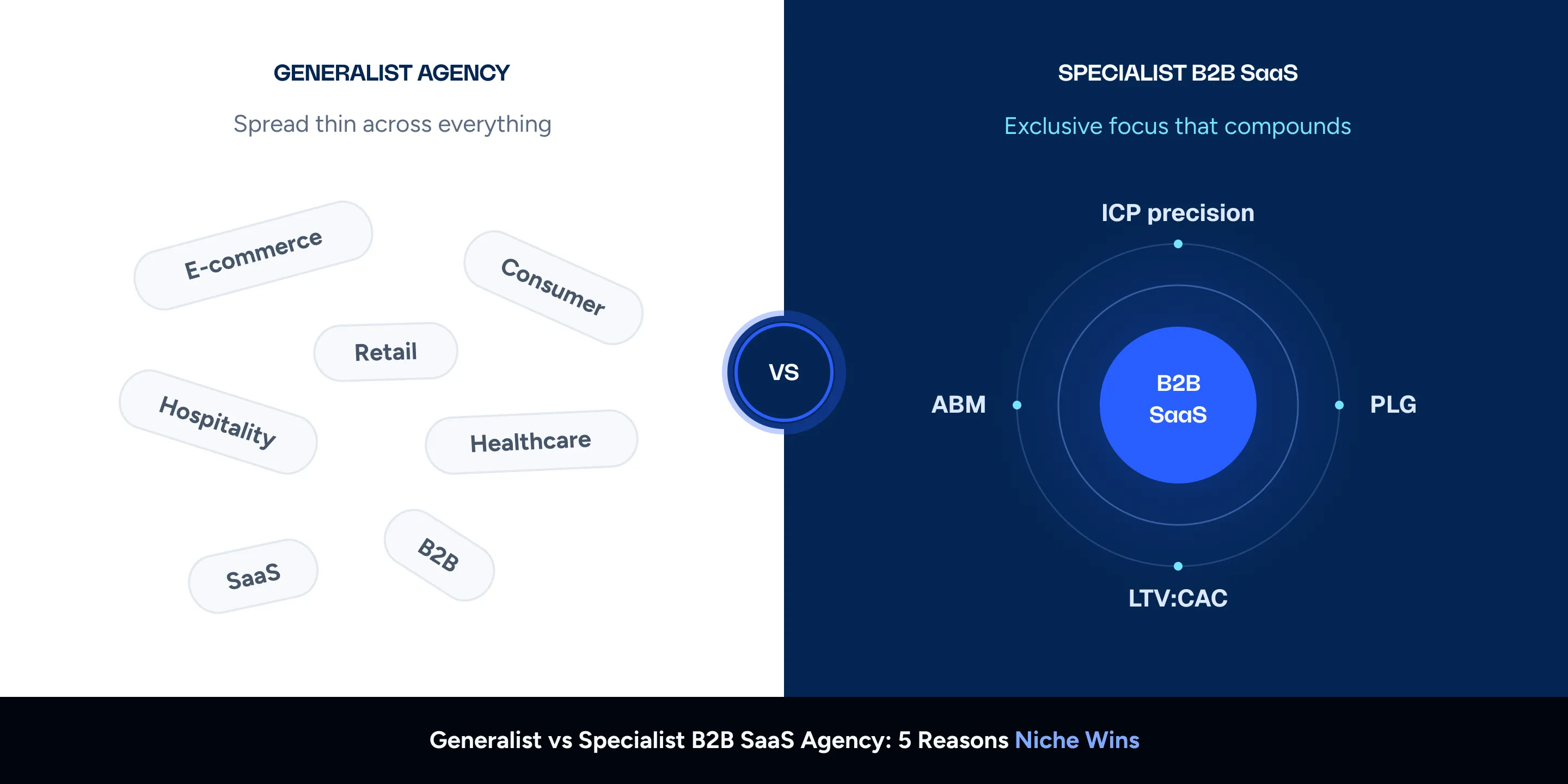
Generalist vs Specialist B2B SaaS Agency: 5 Key Reasons to Choose Niche

B2B SaaS specialists speed pipelines with custom ICPs and full teams. Skip generalist delays and freelancer risks. Discover why they win in this article.

View
Articles
View
Podcast
June 5, 2026

Building a CMO+ Mindset for Modern Marketing With Catherine Solazzo

Learn how a modern CMO drives growth by aligning product, marketing, and partner enablement to maximize revenue and customer engagement.

View
Podcast
View
Podcast
May 22, 2026

Why Customers Churn (And Why Most Teams Miss It)

Learn how customer churn signals reveal retention risks early and help B2B teams act faster before valuable accounts leave.

View
Podcast
View
Podcast
May 8, 2026

AI-Led, Human-Perfected Marketing Strategies With Nidhi Alexander

Alex Gluz is joined by Nidhi Alexander, Chief Marketing Officer and Executive Vice President at Hexaware Technologies, to discuss building AI-led, human-perfected marketing strategies.

View
Podcast
View
Podcast
April 24, 2026

AI, Data, and Human Touch in SaaS With Ben Chodor

Alex Gluz is joined by Ben Chodor, CEO of CallRevu, to discuss the evolving role of AI, data, and human connection in SaaS growth. Ben explains how AI is reshaping service and support, why data-driven marketing must go beyond vanity metrics, and how alignment across teams drives revenue. He also talks about adapting leadership as companies scale.

View
Podcast
View
Podcast
April 10, 2026

Future-Proofing Revenue Engines Using AI With Parry Bedi

Alex Gluz is joined by Parry Bedi, Co-founder and CEO of Tingono, to discuss how AI is reshaping revenue engines. They explore probabilistic versus deterministic systems, using AI to predict churn and drive retention, and why traditional SaaS workflows need a complete overhaul.

View
Podcast
View
Podcast
March 27, 2026

Cybersecurity Marketing: Building Trust Instead of Fear

Alex Gluz is joined by Dhiraj Kumar, Chief Marketing Officer at Dashlane, to discuss how cybersecurity brands can build trust instead of relying on fear. They explore balancing risk awareness with empowerment, translating complex tech into business outcomes, and focusing demand generation on the right audience. Dhiraj also shares advice on leveraging customer advocacy and first-party data.

View
Podcast
View
Articles
March 20, 2026

B2B Marketing Trends 2026: What's Actually Changing (and What to Do About It)

Sales cycles are averaging 11.5 months. Buying committees have grown to 10+ stakeholders. Here's how B2B marketers are adapting in 2026.

View
Articles
View
Podcast
March 13, 2026

Scaling a Startup and Building a High-Velocity Revenue Engine With Matt Shephard

Alex Gluz is joined by Matt Shephard, Chief Revenue Officer at BatchData, to discuss how to scale a startup and build a high-velocity revenue engine. They explore identifying the right ICP, simplifying sales for practical buyers, and aligning marketing and sales around shared accounts. Matt also shares advice on signal-based go-to-market strategies and why timing is becoming the most important advantage in modern sales.

View
Podcast
View
Podcast
February 27, 2026

Tech-Driven Payments and Customer Marketing With Jenn Reichenbacher

AI in payments marketing is reshaping how fintech companies drive growth and customer loyalty. Discover how technology, subscription pricing models, and customer-centric content strategies help payment providers scale in a hyper-competitive SaaS landscape while delivering measurable business impact.

View
Podcast
View
Podcast
February 13, 2026

Bridging the Gap Between B2C Creativity and B2B Effectiveness With Rodrigo Fontes

Rodrigo Fontes shares how B2B marketers can use B2C creativity, AI, and attention-driven strategies to build brand awareness and drive growth.

View
Podcast
View
Podcast
January 30, 2026

Building Revenue Engines in the Restaurant Technology Space With Tara Clever

Tara Clever is the Chief Revenue Officer at MarginEdge, a restaurant management and bill payment platform that leverages automation and AI to streamline restaurant operations. Under her leadership, MarginEdge has marked its 10-year anniversary by reaching major milestones, including onboarding its 10,000th restaurant customer and expanding its AI-powered product offerings. Tara brings a unique blend of sales, operations, and marketing experience, with a background in DTC and B2B growth, and focuses on customer-centric alignment and operational clarity to drive scalable go-to-market outcomes.

View
Podcast
View
Podcast
January 16, 2026

Building a Revenue Culture Rooted in Transparency and Alignment With Angela Earl

Angela Earl is the Head of Marketing at Darrow AI, a B2B SaaS company specializing in leveraging artificial intelligence to deliver actionable insights and drive revenue growth for technology organizations. With over 20 years of experience in the tech sector, Angela is a seasoned go-to-market leader who has built high-performing teams and contributed to the success of multiple high-growth software companies. As an author and advisor, she focuses on culture, transparency, and revenue performance, and often emphasizes the importance of communication and trust in achieving organizational goals.

View
Podcast
View
Podcast
December 19, 2025

Harnessing Trust, Personal Branding, and AI To Accelerate Growth

Alex Gluz reflects on his insightful conversations with Mark Stiltner, Patrick Ferdig, Sylvia LePoidevin, Kristin Oelke, and Usman Sheikh.

View
Podcast
View
Articles
December 9, 2025

How to Use MQL and SQL Data to Prove SaaS Marketing ROI

Learn how leading B2B SaaS marketers and agencies use MQL and SQL data to connect campaigns to qualified pipeline and real ROI. Practical frameworks, benchmarks, and actionable examples inside.

View
Articles
View
Podcast
October 17, 2025

Uniting Sales and Marketing to Supercharge B2B Revenue With Alex Tinsley

In this episode of The Revenue Engine Podcast, host Alex Gluz chats with Alex Tinsley of SUSE on how aligning sales and marketing boosts B2B revenue. They discuss breaking silos, improving handoffs, and building trust through empathy, structure, and transparency.

View
Podcast
View
Podcast
December 5, 2025

Revolutionizing Real-Time Customer Feedback and Operational Transformation With Steven Peltzman

Discover how Steven Peltzman of FeedbackNow uses real-time customer feedback sensors to transform operations, boost satisfaction, and drive measurable revenue.

View
Podcast
View
Podcast
November 21, 2025

Transforming Marketing Attribution and Accountability in the Digital Age With Brandon Rhoten

Discover how marketers can finally tie advertising to real business outcomes as CMO Brandon Rhoten joins Alex Gluz to discuss fixing attribution, omnichannel strategy, CFO alignment, and practical AI use.

View
Podcast
View
Podcast
November 7, 2025

Unlocking the Real Impact of Product Marketing in B2B SaaS With Jona Youdeem

Discover the real impact of product marketing in B2B SaaS with Jona Youdeem as he reveals how strategy, insights, and AI drive lasting growth.

View
Podcast
View
Articles
October 31, 2025

The B2B SaaS ROI Playbook: How CMOs Prove Impact When Budgets Are Tight

Learn how B2B SaaS CMOs are proving marketing ROI, optimizing spend, and driving growth despite tighter budgets with data-backed strategies.

View
Articles
View
Podcast
October 3, 2025

Turning Marketing From a Cost Center Into a Growth Engine With Jeff Baker

In this episode of the Revenue Engine Podcast, host Alex Gluz speaks with Jeff Baker, Senior Director of Global Marketing at smartShift, to discuss turning marketing from a cost center into a growth engine.

View
Podcast
View
Podcast
September 19, 2025

How Community-Led Marketing Drives Sustainable B2B SaaS Growth With Derek Weeks

In this episode of the Revenue Engine Podcast, host Alex Gluz sits down with Derek Weeks, Chief Marketing Officer at Katalon, to discuss how community-led marketing drives sustainable B2B SaaS growth

View
Podcast
View
Articles
September 24, 2025

When to Outsource vs. Build In-House: Balancing Resources to Optimize SaaS Marketing ROI

Learn how successful SaaS companies balance outsourced and in-house marketing. Includes comparison tables, common pitfalls, and hybrid team management strategies.

View
Articles
View
Articles
July 22, 2025

Proven Strategies to Lower B2B SaaS Customer Acquisition Costs in 2025

Cut your B2B SaaS marketing costs with this comprehensive B2B funnel optimization guide. Reduce CAC, optimize conversion rates, and accelerate growth.

View
Articles
View
Podcast
September 5, 2025

How CMOs Can Align Budgets, Metrics, and Customer Value With Christine Royston

In this episode of the Revenue Engine Podcast, host Alex Gluz sits down with Christine Royston, Chief Marketing Officer at Wrike, to discuss how CMOs can align budgets, metrics, and customer value.

View
Podcast
View
Podcast
August 15, 2025

Fixing Broken B2B Sales Workflows With AI-Powered Strategies With Usman Sheikh

Discover how AI-powered strategies can fix broken B2B sales workflows, boost efficiency, and improve conversion rates with Usman Sheikh.

View
Podcast
View
Podcast
August 1, 2025

How Trust Is Key to Growth in Today’s AI World With Kristin Oelke

In this episode of the Revenue Engine Podcast, host Alex Gluz is joined by Kristin Oelke, Managing Director for Growth Services at Brightrose Ventures, to talk about why trust is more important than ever for growth in today’s AI-driven world.

View
Podcast
View
Podcast
July 18, 2025

Balancing Brand and Performance Marketing in B2B SaaS With Mike Braund

In this episode of the Revenue Engine Podcast, host Alex Gluz sits down with Mike Braund, Senior Director of Marketing Operations and Digital Marketing at Iterable, to discuss how to align brand and performance marketing in B2B SaaS.

View
Podcast
View
Podcast
July 4, 2025

Building Trust and Standing Out in Saturated Markets With Ani Obermeier

In this episode of the Revenue Engine Podcast, host Alex Gluz sits down with Ani Obermeier, Board Advisor at WorkBuzz, to talk about building trust and standing out in saturated markets.

View
Podcast
View
Podcast
June 6, 2025

Why Understanding Your ICP Is Key to B2B SAAS Growth With Nick Naso

In this episode of the Revenue Engine Podcast, host Alex Gluz is joined by Nick Naso, Chief Revenue Officer at Recurly, to discuss why a sharp ICP is central to B2B SaaS growth.

View
Podcast
View
Podcast
June 20, 2025

Reinventing Modern B2B Marketing Through Branding, Community, and AI With Sylvia LePoidevin

In this episode of the Revenue Engine Podcast, host Alex Gluz sits down with Sylvia LePoidevin, CMO at Kandji, to talk about reinventing modern B2B marketing through branding, community, and AI.

View
Podcast
View
Podcast
May 23, 2025

The Five Pillars of Partnership Success With Patrick Ferdig

In this episode of the Revenue Engine Podcast, host Alex Gluz speaks with Patrick Ferdig, Founder and Principal Consultant at The Power of Partnering, to discuss the five pillars of partnership success. They explore why trust drives results, how alignment shapes execution, and what businesses must prioritize to turn partners into revenue engines. Patrick also gives advice on scaling outreach using AI tools.

View
Podcast
View
Articles
May 2, 2025

AI in B2B SaaS Marketing: How It’s Reshaping Strategy, Content & Customer Experience

Whether you're just exploring automation or already experimenting with tools like GPT-4 or Jasper, this guide breaks down how AI is transforming every stage of the B2B SaaS funnel.

View
Articles
View
Podcast
May 9, 2025

Building an AI-Driven Content Engine With Mark Stiltner

In this episode of the Revenue Engine Podcast, host Alex Gluz speaks with Mark Stiltner, Senior Director of Content and Web Marketing at Rapyd, to talk about building an AI-powered content strategy. They discuss weaving AI into SEO workflows, shifting from traditional search optimization to AI model visibility, and balancing automation with creativity. Mark also shares practical ways to future-proof marketing teams in an AI-driven landscape.

View
Podcast
View
Podcast
April 18, 2025

Why the B2B Funnel Is Broken and What Marketing Ops Leaders Should Do With Bethany Prettyman

In this episode of the Revenue Engine Podcast, host Alex Gluz speaks with Bethany Prettyman, Senior Director of Marketing Operations at Huntress, to discuss why the traditional B2B funnel is broken. They explore why loop-based models better reflect today’s buyer behavior, how attribution should evolve, and the dangers of tech bloat in marketing stacks. Bethany also shares her agile approach to reporting and how to bridge gaps between sales, marketing, and finance.

View
Podcast
View
Video
April 14, 2025

Interview: The Biggest Challenges in B2B SaaS Marketing with Alex Gluz

B2B SaaS companies face significant challenges in today's market environment. Dr. Jeremy Weisz of Rise25 interviews Alex Gluz. They discuss the most pressing challenges in B2B SaaS marketing and practical approaches to overcome them.

View
Video
View
Podcast
April 4, 2025

Making Cybersecurity Simple, Scalable, and Phishing Resistant With Ronnie Manning

Ronnie Manning is the Chief Brand Associate at Yubico, a global cybersecurity company renowned for inventing the YubiKey, which offers phishing-resistant multi-factor authentication solutions. With over 20 years of experience in agency and corporate communications, he has focused on public relations and marketing strategies to bring new technology products to market. Prior to joining Yubico, Ronnie held positions at Raytheon/Websense and Edelman Public Relations. At Yubico, he has been instrumental in promoting the adoption of hardware-based authentication solutions and advocating for enhanced cybersecurity measures.

View
Podcast
View
Articles
July 27, 2026

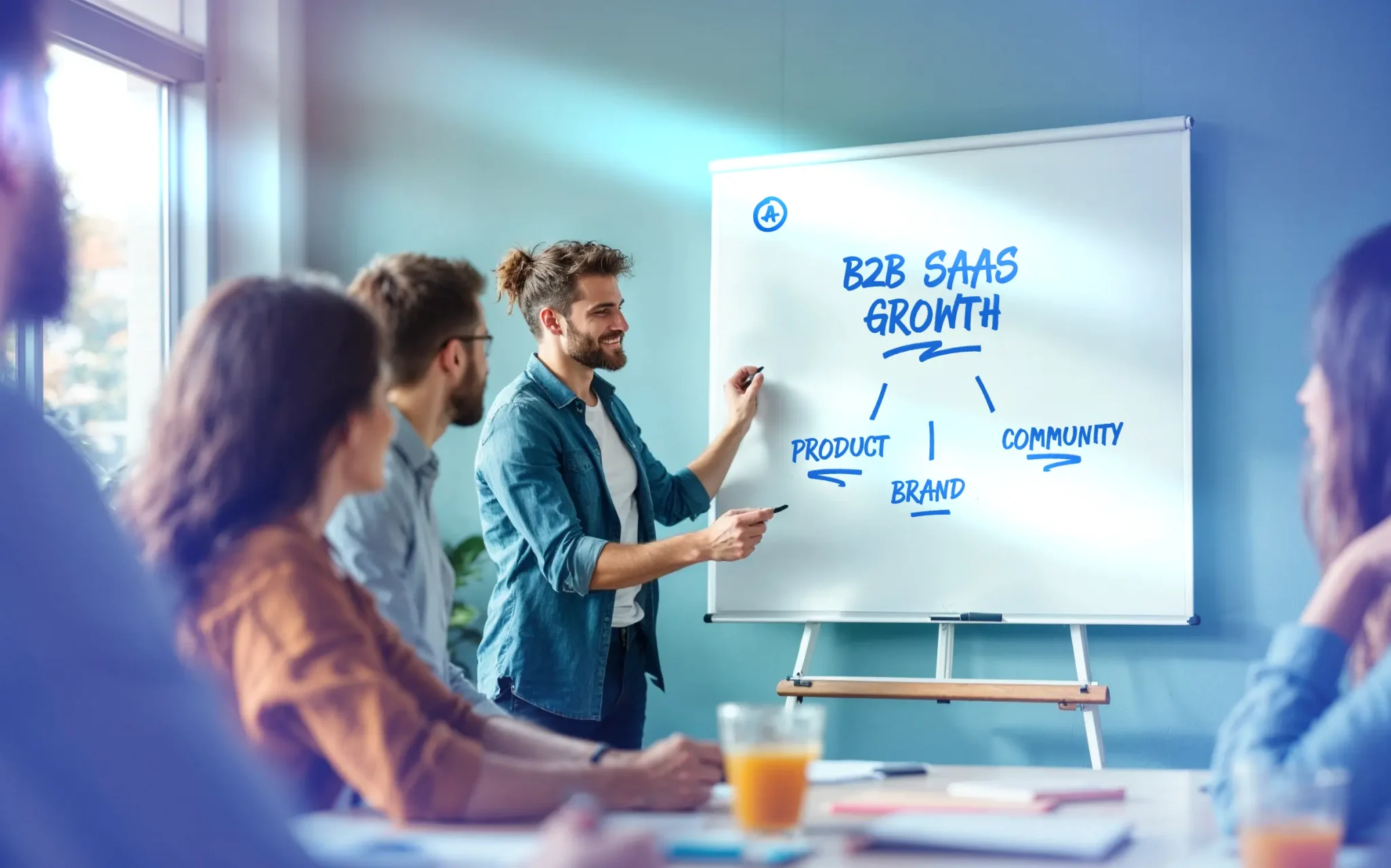
The Ultimate B2B SaaS Demand Generation Playbook for 2026: Building Sustainable Growth Through Brand, Product, and Community

Gain actionable insights and access to practical tools designed to build a robust and sustainable demand engine that will thrive in 2026 and beyond.

View
Articles
View
Podcast
March 14, 2025

The Psychology of B2B Marketing: Understanding Buyer Behavior and Demand Generation With Kerry Rana

In this episode of the Revenue Engine Podcast, host Alex Gluz and Kerry Rana, Senior Director for Digital Marketing and Experience at ExtraHop, discuss how psychology influences B2B buyer behavior and demand generation. Kerry shares insights on creating emotionally compelling messaging, structuring effective go-to-market strategies, and using data-driven decision-making to optimize engagement. She also talks about emerging trends in AI-driven personalization and what’s next for B2B marketing leaders in 2025.

View
Podcast
View
Video
April 2, 2025

Workshop: The Blueprint for Marketing & Sales Alignment With Michael Tucker

Alex Gluz and Michael Tucker of Rocky Mountain Revops share a framework to fix broken marketing-sales systems. Michael explains architecture mapping to visualize and optimize the buyer's journey across channels and sales stages.

View
Video
View
Articles
January 9, 2025

Unlocking Event Success: How Paid Media Strategies Drive High-Impact Outcomes for SaaS Event Marketing

In the competitive SaaS event marketing space, leveraging paid media strategies is essential. As economic pressures and technological advancements reshape the industry, adopting innovative approaches helps maximize ROI and stand out.

View
Articles
View
Podcast
January 31, 2025

Purpose vs. Mission: Building Brands That Inspire With Dave Minifie

In this episode of the Revenue Engine Podcast, Alex Gluz sits down with Dave Minifie, Chief Marketing Officer at Terakeet, to discuss how companies can build purpose-driven brands. Dave breaks down the difference between mission and purpose, explains how a clear purpose fuels customer engagement and growth, and explores the impact of AI and search engines on brand visibility. He also shares insights on navigating leadership transitions and staying ahead in a changing marketing landscape.

View
Podcast
View
Podcast
January 21, 2025

The Biggest Challenges in B2B SaaS Marketing and How To Approach Them

In this episode of the Revenue Engine Podcast, Dr. Jeremy Weisz from Rise25 interviews Alex Gluz to discuss the biggest challenges in B2B SaaS marketing and actionable strategies to address them. Together, they explore how marketers can navigate prolonged sales cycles, optimize acquisition costs, and differentiate their offerings in a saturated market. Alex also shares how personalization, thought leadership, and customer retention can be game changers for driving growth.

View
Podcast
View
Podcast
December 20, 2024

Building Growth Engines: Data, Compliance, and Customer Success Highlights

In this episode of the Revenue Engine Podcast, Alex Gluz reflects on his impactful conversations with Kathleen Booth, Rich Liu, Sam Li, Hunter Montgomery, and Usman Sheikh. These industry leaders unpack the power of data-driven decisions, the evolving compliance landscape, and the role of customer success in building growth engines that thrive in today’s dynamic market.

View
Podcast
View
Podcast
December 6, 2024

The Power of Long-Term Strategy in B2B Marketing With Katrine Rasmussen

In this episode of the Revenue Engine Podcast, Alex Gluz is joined by Katrine Rasmussen, Chief Marketing Officer at Pixelz, to discuss how long-term strategy shapes success in B2B marketing. They explore the nuances of managing extended sales cycles, the role of digital and in-person engagement in enterprise marketing, and the importance of differentiating your brand in a crowded market. Katrine also gives advice on scaling community building and thought leadership efforts to drive meaningful impact.

View
Podcast
View
Podcast
November 8, 2024

Building Resilient Teams and Driving Data-Driven Growth With Russ Hawkins

In this episode of the Revenue Engine Podcast, host Alex Gluz sits down with Russ Hawkins, President and CEO of Agilence, to discuss how he’s built resilient teams and driven data-powered growth throughout his career. Russ shares his insights on fostering a collaborative company culture, making strategic shifts to adapt to market demands, and the critical role of data in driving revenue growth. He also gives advice on avoiding common pitfalls in scaling.

View
Podcast
View
Podcast
November 1, 2024

RevOps Made Simple With Michael Tucker

In this episode of the Revenue Engine Podcast, host Alex Gluz sits down with Michael Tucker, Founder and Head Systems Architect at Rocky Mountain RevOps, to discuss simplifying RevOps strategies for maximum impact.

View
Podcast
View
Podcast
October 18, 2024

Agility in B2B Marketing With Ashley Widener

In this episode of the Revenue Engine Podcast, host Alex Gluz speaks with Ashley Widener, Director of Marketing at GoCo, to discuss how agility fuels success in B2B marketing. Ashley explains how building a marketing team from scratch allowed her to create a nimble, responsive approach.

View
Podcast
View
Podcast
October 4, 2024

Mastering Customer-Centric Marketing Strategies With Samantha Bergin

In this episode of the Revenue Engine Podcast, host Alex Gluz sits down with Samantha Bergin, Chief Marketing Officer at Center, to discuss mastering customer-centric marketing strategies.

View
Podcast
View
Articles
October 18, 2024

How Regular Negative Keyword Updates Improve Your B2B SaaS Ad Campaigns on Google

It’s no secret that in the B2B SaaS space, regularly optimizing Google Ads campaigns for maximum efficiency is essential. But, there’s one key strategy that is often overlooked—keeping your negative keyword list up to date.

View
Articles
View
Articles
October 10, 2024

The ROI of LinkedIn Ads: Spending Smarter, Not More

As marketers in the B2B SaaS space, one of the most common challenges with LinkedIn Ads is ensuring that your budget is fully utilized without overpaying for traffic. While LinkedIn offers access to high-quality leads, it’s easy to blow through your budget if you’re not careful.

View
Articles
View
Podcast
September 20, 2024

Balancing Innovation and Resource Management in Startup Marketing With Caroline Ang Wright

In this episode of the Revenue Engine Podcast, host Alex Gluz sits down with Caroline Ang Wright, Head of Marketing at Exodigo, to discuss building and leading marketing strategies in a startup landscape.

View
Podcast
View
Articles
October 3, 2024

The ROI of Intent Data: Measuring Success in B2B SaaS Marketing

As a B2B SaaS company, leveraging intent data has become an important action item in driving efficient growth and acquiring high-value customers. But how do you quantify its impact and prove its worth?

View
Articles
View
Podcast
September 6, 2024

Simplifying Complex Customer Journeys Through CXM With Sherri Schwartz

In this episode of the Revenue Engine Podcast, host Alex Gluz sits down with Sherri Schwartz, Head of Marketing at OvationCXM, to discuss how to simplify complex customer journeys through CXM.

View
Podcast
View
Articles
September 26, 2024

LinkedIn Ad Budgeting: Making Sense of CPM and CPC in 2024

When it comes to B2B marketing, it’s no secret that LinkedIn continues to be a powerhouse platform for reaching decision-makers and professionals. But as the end of 2024 nears, one question looms: How can we optimize our ad spend on LinkedIn to maximize ROI?

View
Articles
View
Articles
September 12, 2024

The 'Less is More' Approach: Simplifying Your B2B Strategy for Rapid Growth

B2B marketers often fall into the trap of doing more — more campaigns, more content, more channels — all in pursuit of growth. However, this can lead to diluted efforts, resource strain, and diminished returns.

View
Articles
View
Articles
September 19, 2024

Cognitive Triggers in LinkedIn Advertising: A B2B Marketer's Guide

It’s no secret that in B2B marketing, LinkedIn stands out as a powerful platform for reaching decision-makers and professionals. But what you might not know is: Understanding the cognitive triggers behind LinkedIn ads can significantly boost your campaign performance and ROI.

View
Articles
View
Articles
September 5, 2024

Measuring and Optimizing Customer Lifetime Value in B2B

When it comes to B2B SaaS, the path from initial contact to loyal customer is both challenging and rewarding. As ‘bigger and better’ solutions continue to reshape the business landscape, one element remains crucial — the ability to nurture and convert leads effectively.

View
Articles
View
Podcast
August 16, 2024

Cultivating Top-Tier Sales and Marketing Alignment in Real Estate Tech With Amanda Sullivan

In this episode of the Revenue Engine Podcast, host Alex Gluz sits down with Amanda Sullivan, the Vice President of Growth at Sierra Interactive, to discuss the art of cultivating top-tier sales and marketing alignment in real estate tech

View
Podcast
View
Articles
August 29, 2024

From Stranger to Customer: Mapping the B2B SaaS Lead Warming Journey

When it comes to B2B SaaS, the path from initial contact to loyal customer is both challenging and rewarding. As ‘bigger and better’ solutions continue to reshape the business landscape, one element remains crucial — the ability to nurture and convert leads effectively.

View
Articles
View
Podcast
August 2, 2024

The Power of Modern Market Intelligence With Greg Munves

In this episode of the Revenue Engine Podcast, host Alex Gluz sits down with Greg Munves, CEO of OpenBrand, to discuss the power of modern market intelligence.

View
Podcast
View
Articles
August 22, 2024

5 Essential Steps to Align Sales and Marketing in High-Growth B2B SaaS Companies

A rapidly evolving B2B SaaS landscape awaits, where innovative solutions and disruptive technologies are continuously reshaping the way businesses operate. In this environment, one element stands tall, guiding companies toward consistent growth and long-term success: The seamless alignment of Sales and Marketing teams.

View
Articles
View
Articles
August 15, 2024

Getting Personal: How to Create a Meaningful Customer Experience in Today's Digital-First World

It’s not news that we’re constantly being dominated by digital interactions. Creating a personal customer experience isn't just a nice-to-have — it's a crucial differentiator that sets your brand apart.

View
Articles
View
Articles
August 8, 2024

The Power of Retargeting: Strategies for LinkedIn and Search Ads

Launching a new product successfully can mean the difference between market leadership and obscurity. A well-executed product launch not only introduces your offering to the world but also sets the stage for long-term success.

View
Articles
View
Podcast
July 19, 2024

Optimizing Customer Marketing With Data-Driven Techniques With Hunter Montgomery

In this episode of the Revenue Engine Podcast, host Alex Gluz sits down with Hunter Montgomery, Chief Marketing Officer at ChurnZero, to discuss optimizing customer marketing with data-driven techniques.

View
Podcast
View
Articles
July 24, 2024

Social Media Advertising: 2024 Trends and Best Practices

Launching a new product successfully can mean the difference between market leadership and obscurity. A well-executed product launch not only introduces your offering to the world but also sets the stage for long-term success.

View
Articles
View
Articles
August 1, 2024

LinkedIn vs. Facebook Ads: Which is Right for Your B2B SaaS?

Launching a new product successfully can mean the difference between market leadership and obscurity. A well-executed product launch not only introduces your offering to the world but also sets the stage for long-term success.

View
Articles
View
Articles
July 18, 2024

How to Create an Effective Go-to-Market Plan

Launching a new product successfully can mean the difference between market leadership and obscurity. A well-executed product launch not only introduces your offering to the world but also sets the stage for long-term success.

View
Articles
View
Podcast
July 5, 2024

The Future of Digital Advertising: Mark McEachran on Privacy, Context, and Performance

In this episode of the Revenue Engine Podcast, host Alex Gluz sits down with Mark McEachran, Senior Vice President of Product Management at Yieldmo, to discuss the evolving landscape of digital advertising.

View
Podcast
View
Podcast
June 21, 2024

Mastering Go-to-Market Strategies and Customer Retention With Brian Warrick

In this episode of the Revenue Engine Podcast, host Alex Gluz sits down with Brian Warrick, Revenue Leader at Baresquare, to discuss mastering go-to-market strategies and customer retention.

View
Podcast
View
Podcast
June 7, 2024

The AI Advantage: Unlocking the Power of Data Science in Marketing With Jon Morra of Zefr

In this episode of the Revenue Engine Podcast, host Alex Gluz sits down with Jon Morra, the Chief AI Officer at Zefr, to discuss how AI is revolutionizing marketing.

View
Podcast
View
Articles
June 19, 2024

The Power of Data-Driven Marketing: How to Leverage Analytics for Growth

As a B2B SaaS company in today's digital landscape, you can't afford to rely on guesswork when it comes to your marketing efforts. The key to driving sustainable growth and staying ahead of the competition? Data-driven marketing powered by comprehensive analytics.

View
Articles
View
Podcast
May 24, 2024

The Data-Driven Guide to Thriving in a Hybrid Work Environment With Rob Sadow

In this episode of the Revenue Engine Podcast, host Alex Gluz sits down with Rob Sadow, CEO and Co-founder of Scoop, to discuss the intricacies of hybrid work.

View
Podcast
View
Podcast
May 10, 2024

Marketing and Growing as a Compliance Company With Sam Li of Thoropass

In this episode of the Revenue Engine Podcast, Alex Gluz sits down with Sam Li, the CEO and Founder of Thoropass, to discuss the secrets of marketing.

View
Podcast
View
Podcast
April 26, 2024

Invaluable Lessons From a Marketing Executive With Kathleen Booth of Pavilion

In this episode of the Revenue Engine Podcast, Alex Gluz interviews Kathleen Booth, the Senior Vice President of Marketing and Growth at Pavilion, to discuss some of her greatest insights into digital marketing.

View
Podcast
View
Podcast
March 1, 2024

Humanizing B2B Sales and Marketing Through AI With Usman Sheikh of xiQ

In this episode of the Revenue Engine Podcast, Alex Gluz interviews Usman Sheikh, the Founder and CEO of xiQ, to break down the process of personalizing sales. They talk about the power of AI to connect with customers, understanding the behavioral code in people, and making your mark in an oversaturated market. They also explain the way to maximize email marketing and where the field is heading in the future.

View
Podcast
View
Podcast
April 12, 2024

Identifying and Overcoming Challenges With Quentin Kasseh of Nomad Engineers Consulting Group

In this episode of the Revenue Engine Podcast, Alex Gluz has a conversation with Quentin Kasseh, Founder of Nomad Engineers Consulting Group, about overcoming marketing and business challenges.

View
Podcast
View
Podcast
March 29, 2024

A Coach’s Advice for Startups and Founders With Dane Holewinski of Decode Coaching

In this episode of the Revenue Engine Podcast, Alex Gluz interviews Dane Holewinski, the Founder and CEO Coach at Decode, to discuss a coach’s tips and strategies for startup founders.

View
Podcast
View
Podcast
March 15, 2024

Marketing Companies From Startups to IPO With Rich Liu of Everlaw

In this episode of the Revenue Engine Podcast, Alex Gluz interviews Rich Liu, the Chief Business Officer at Everlaw, to discuss marketing at different stages of growth. The two break down the current marketing landscape with AI, lessons learned from switching to digital marketing, and how to use funding at an early stage.

View
Podcast
View
Podcast
January 19, 2024

Developing and Marketing Technology Products With Dylan Serota of Terminal.io

In this episode of the Revenue Engine Podcast, Alex Gluz talks with Dylan Serota, the CEO and Co-founder of Terminal.io, about marketing and optimizing technology products. They discuss engineering resilience, identifying clients, AI in tech products, and how Dylan would utilize startup funding if he were to do it again.

View
Podcast
View
Podcast
February 16, 2024

Managing and Optimizing Multi-Channel Campaigns With Frederik Hermann of Beekeeper

In this episode of the Revenue Engine Podcast, Alex Gluz talks with Frederik Hermann, the Vice President of Digital Marketing at Beekeeper, to discuss multi-channel campaigns and how to manage teams. They walk through thought leadership, pipeline growth, and leveraging modern marketing technology. They also touch on the newest opportunities for marketers in 2024.

View
Podcast
View
Articles
February 5, 2024

Identifying Blindspots: Hidden Demand Gen Costs Stunting Your Growth

For B2B SaaS companies, meeting revenue growth goals depends heavily on having an effective demand-generation engine. But all too often, there are hidden costs sabotaging demand gen efforts behind the scenes.

View
Articles
View
Podcast
January 5, 2024

Driving Sustainable and Predictable Growth With Michael Krause of Tovuti LMS

In this episode of the Revenue Engine Podcast, Alex Gluz interviews Michael Krause, the COO and Chief Growth Officer at Tovuti LMS, on the best practices for sustainable growth.

View
Podcast
View
Articles
January 10, 2024

Overcoming the «Limited Marketing Budget» Challenge

LinkedIn advertising presents a major opportunity for B2B SaaS companies looking to generate quality leads and accelerate growth. With over 930 million members, LinkedIn provides access to a massive professional audience. However, simply creating a few basic Sponsored Content ads is not enough to cut through the noise on this crowded platform.

View
Articles
View
Podcast
December 22, 2023

Product Marketing to B2B, B2C, and B2G With Nitin Kartik of Carbyne

In this episode of the Revenue Engine Podcast, Alex Gluz sits down with Nitin Kartik, the Director of Product Marketing at Carbyne, to discuss the differences in marketing B2B, B2C, and B2G.

View
Podcast
View
Articles
December 8, 2023

Growing Your B2B SaaS with Demand-Gen Ads on LinkedIn

LinkedIn advertising presents a major opportunity for B2B SaaS companies looking to generate quality leads and accelerate growth. With over 930 million members, LinkedIn provides access to a massive professional audience. However, simply creating a few basic Sponsored Content ads is not enough to cut through the noise on this crowded platform.

View
Articles
View
Podcast
December 8, 2023

Acquiring and Nurturing Top Talent With Angela Yeh of Yeh IDeology

In this episode of the Revenue Engine Podcast, Alex Gluz talks with Angela Yeh, the CEO and Founder of Yeh IDeology, to discuss talent acquisition and development. They discuss the Great Resignation, maintaining great employees, and how to cultivate talent at companies of any size.

View
Podcast
View
Podcast
November 24, 2023

Powerfully Combining AI and Cloud Technology With Brian Lillie of Rackspace Technology

In this episode of the Revenue Engine Podcast, Alex Gluz sits down with Brian Lillie, the President of Private Cloud at Rackspace Technology, about the intersection of AI and cloud resources. They touch on the company’s work, how AI is evolving rapidly in the space, and what companies need to know about private cloud services.

View
Podcast
See all posts

More Resources

Google Search Ads Benchmarks Report

Learn why your search ads cost more and convert less (and what to do about it).

Download Now

5 Must-Know 2026 B2B Marketing Trends

Five trends shaping B2B SaaS pipeline generation in 2026, and the one move to make on each. A fast way to check your current strategy against what's actually working now.

Download Now

2026 AI Buyer Effect Field Guide

Buyers ask an AI tool instead of clicking through your funnel. This guide shows where that shows up first in your account, and what to do about it.

Download Now

The Competitor Teardown Skill

Point it at any competitor URL. Get their positioning gaps, the buyers they've written off, and the one line that wins the deal.

Download Now

AI Marketing Strategies Playbook: How 5 Marketing Leaders Cracked the AI Code

How 5 Marketing Leaders Cracked the AI Code.

Download Now

B2B SaaS Persona Builder

Copy & Paste prompt for ChatGPT.

Download Now

B2B SaaS LinkedIn Targeting Blueprint

How to drive qualified leads in under 7 days using LinkedIn’s targeting capabilities (including account-based marketing).

Download Now

Explore Proven Formulas for High‑Impact LinkedIn Ads

LinkedIn Ads Swipe File.

Download Now

Creating a Complete Full-Funnel Strategy for Predictable Revenue Growth

Download Now

How to Stop Overpaying for Your Branded Google Ads Keywords

The Ultimate Branded Google Ads Optimization Guide.

Download Now

The 2026 Ultimate Revenue Engine Blueprint

Your guide to standing out in crowded markets without overspending on ads. Covers branding, PLG triggers, and community tactics in one concise playbook.

Download Now

5 Tips To Find Success on Google Ads

Download Now

7 High-ROI Google Ads Optimization Tips & Strategies + Bonus Checklist

Download Now

Improve Your MQL Quality in 90 Days Cheat Sheet

In this cheat sheet, you’ll learn the top hacks to get more marketing‑qualified leads for your sales funnel.

Download Now

4 Secrets for Running Paid Social Ads That You’re Not Supposed to Know

Download Now

Discover the 7 Essential Steps for an Effective Go-to-Market Strategy

Download Now

B2B SaaS Revenue Growth Checklist

If your revenue engine falls short of expectations, this checklist will help you quickly identify and address the underlying issues.

Download Now

LinkedIn Targeting Cheat Sheet

Four targeting layers, three ABM moves, and a 48-hour launch timeline. One page, actionable today.

Download Now

2026 Reddit Prelaunch Targeting Guide

No wasted spend, no setup surprises. Get your Reddit targeting right before you go live.

Download Now

LinkedIn Ads Benchmarks Report 2026

The 2026 LinkedIn benchmarks B2B marketing teams use to lower CPLs and protect budget. Format-level data across four formats, two regions, and three industries.

Download Now

2026 B2B Marketing Trends Report

What leading B2B marketers are prioritizing in 2026. The trends, data, and tactics to sharpen your strategy.

Download Now
See all free resources
Revenue Engine Newsletter

Get B2B Marketing & Growth Insights

Our SaaS-focused frameworks help you scale qualified pipeline and accelerate revenue growth.

Thank you! Your submission has been received!
Oops! Something went wrong while submitting the form.
T.A. Monroe logo, white version
Address:
7284 West Palmetto Park Road, Suite 101, Boca Raton, Fl 33433
Contact:
+1 (646) 844-9480
support@tamonroe.com
ServicesCase StudiesAbout UsCareersContact
Resource HubPodcastArticlesVideoLibrary
Copyright © 2026 – T.A. Monroe Digital Agency
Privacy Policy