Building a B2B SaaS ICP That Paid Media Can Actually Target
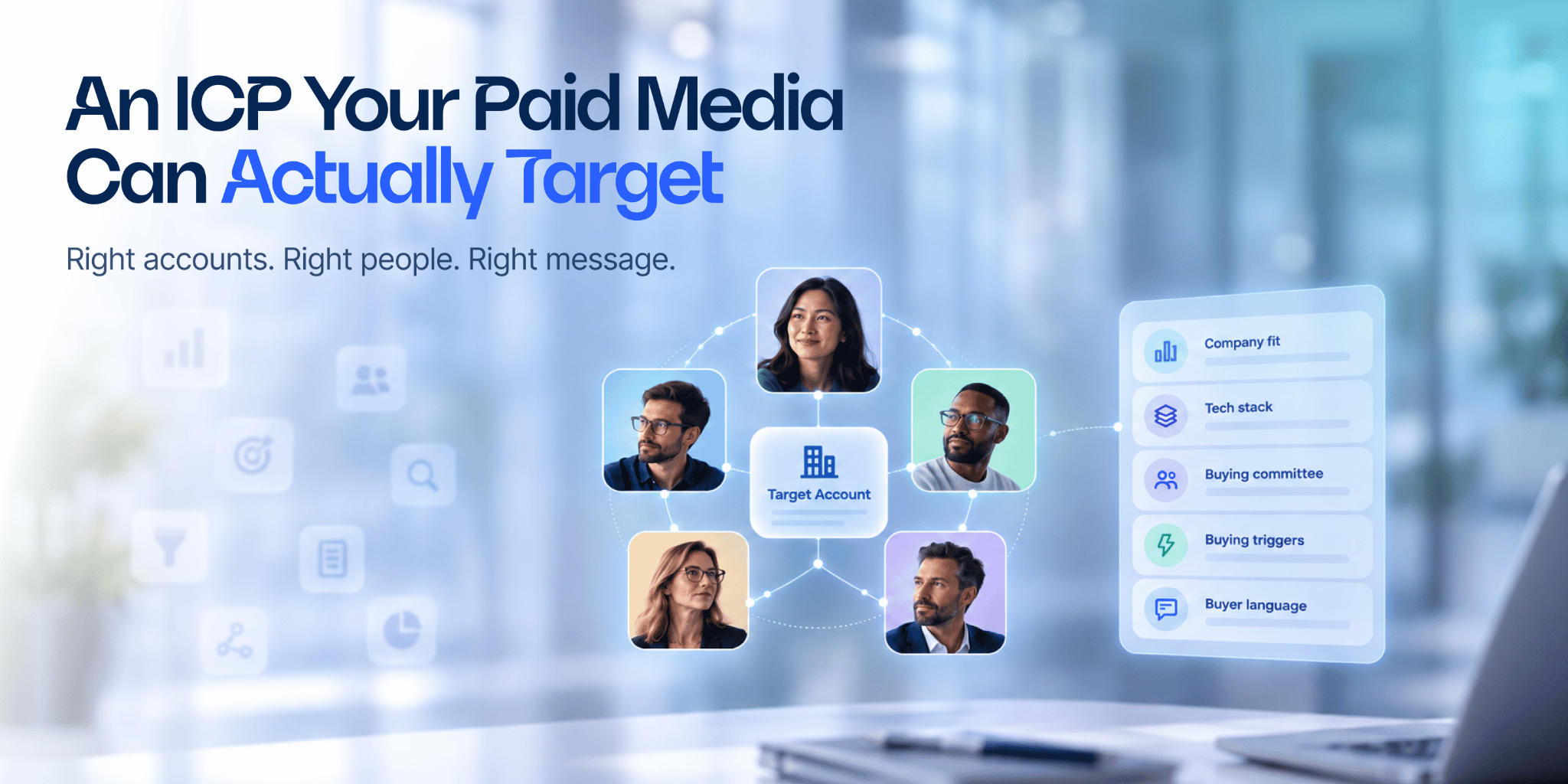
A B2B SaaS ICP built for paid media names the firmographic and technographic filters (headcount, ARR band, tech stack), the exact buying-committee titles, and the trigger events an ad platform can actually target, in the language those buyers use to describe their own problem. A persona slide with a name and a stock photo cannot do any of that.
Most B2B SaaS teams already have an ICP document. Very few have one that a media buyer could open and build a campaign from without guessing. This is the difference that determines whether paid spend reaches the right accounts or simply reaches everyone who fits a one-word industry label, and it is the same gap the Strategic Narrative points at when it says that standing out starts with a sharp, defensible read on who you are actually talking to, not louder marketing.
What a Paid-Media-Ready ICP Actually Means
“ICP” gets used loosely enough that it is worth being precise. A persona is a description: a name, a job title, a few pain points, sometimes a stock photo. An ICP that paid media can use is a targeting specification: a set of firmographic, technographic and behavioural filters specific enough to build directly into LinkedIn Campaign Manager’s audience builder or a Google Ads Customer Match list, plus the buying-committee titles and the language each of them uses. One is a slide. The other is an input to a campaign.
The distinction matters because most of the waste in a B2B SaaS paid media account is not creative or bidding, it is targeting an audience that was never precise enough to exclude the accounts that were never going to buy. Fixing that starts before a single ad is built.
Why Most B2B SaaS ICPs Are Too Vague to Target
Four patterns show up repeatedly in ICPs that look complete on paper and fail the moment a media buyer tries to build a campaign from them.
- A single named persona stands in for the whole account. Real B2B SaaS deals are bought by committees, and a campaign built for one champion misses the economic buyer, the technical evaluator and whoever can block the deal entirely.
- The industry label is the only filter. “B2B SaaS” describes hundreds of thousands of companies with very different buying behaviour. Fintech, martech and devtools inside that label do not respond to the same message, the same trigger event or the same committee structure.
- There is no trigger event. A firmographic match without a “why now” signal, a funding round, a new VP hire, a compliance deadline, a tool migration, produces impressions on accounts that fit the profile but have no active reason to buy this quarter.
- The language is the vendor’s, not the buyer’s. An ICP written in internal terminology (“demand generation,” “full-funnel optimisation”) does not match what a VP of Growth actually types into a search bar or says out loud in a discovery call, which is closer to “our pipeline isn’t predictable.”
Every one of these is fixable, and the fix is the same for all four: replace a description with a specification. The next section breaks that specification into five inputs. Generic messaging is what a vague ICP produces downstream, which is exactly what a dedicated positioning test is built to catch.
See a filled-in ICP before building your own: the B2B SaaS Persona Builder is a step-by-step prompt template that turns the five inputs below into a working ICP document, built for teams who want a first draft before a strategy conversation.
Want us to show you how to build your B2B SaaS ICP? Talk to our expert team here.
The Five Inputs That Make an ICP Targetable
A targetable ICP is built from five inputs. Each one maps to a real filter or targeting field, not a descriptive attribute.
- Firmographics. Headcount band, ARR or funding stage, and the specific vertical inside B2B SaaS, not the category label alone. “50 to 500 employees, Series B or later, vertical SaaS in fintech or healthtech” is targetable. “B2B SaaS company” is not.
- Technographic signals. The tools already in the stack that indicate fit (a CRM that supports the integration) or conflict (a competitor already embedded). These narrow an audience that firmographics alone leave too broad.
- Buying-committee map, by title. Economic buyer, champion, technical evaluator and likely blocker, named by title and function, not by a single persona name. Each role often needs its own campaign and its own message.
- Trigger events. The specific, time-bound reasons an account is likely to act now: a funding round, a new VP hire in the relevant function, a compliance deadline, a tool migration or contract renewal.
- Buyer language. The literal words each committee member uses for the problem, sourced from sales call transcripts and support tickets, not from the vendor’s own product marketing. This is the input that turns targeting precision into message precision.
Turning the Five Inputs Into Platform Targeting
Each input only earns its place in the ICP if it can be built into an actual targeting field. This is what that looks like once the five inputs above are filled in with a real, illustrative example.
From ICP to Messaging: Speaking the Buyer’s Language
The fifth input, buyer language, is where ICP work and messaging work become the same job. An accurate committee map with the wrong words on the landing page still reads as generic, because targeting precision only shows up to the buyer through the message they actually see. A VP of Growth who has been targeted correctly but greeted with “full-funnel optimisation” copy will not recognise themselves in it, and a sophisticated buyer notices that gap immediately.
This is the same test worth putting to any piece of messaging: read it back and ask whether it could describe any vendor in the category, or whether it could only have been written by someone who has actually sat in this buyer’s specific committee meetings. An ICP built from the five inputs above is what makes the second answer possible.
Where This Shows Up First: The Fintech ICP
Fintech is the sharpest version of this framework, not a separate exercise, because fintech is the ICP inside B2B SaaS rather than a side vertical worth a footnote. Run the five inputs against a fintech account specifically and each one gets more demanding, not different in kind.
The buying committee usually runs longer: a Head of Growth, a Head of Compliance and sometimes a CFO, rather than a single marketing buyer. Trigger events are often regulatory rather than purely commercial, a compliance deadline or a new reporting requirement, alongside the usual funding and hiring signals. Technographic signals include existing compliance and security tooling, which can indicate either fit or an incumbent that is hard to dislodge. And buyer language in fintech skews toward risk and defensibility (“can we prove this to an auditor”) more than growth language alone. A fintech ICP built on the same five inputs as any other B2B SaaS account, without adjusting each one for this context, will under-target the committee and use language that reads as naive to a compliance-aware buyer.
How T.A. Monroe Builds This With Clients
This is the first diagnostic run on any new T.A. Monroe account, before targeting, creative or bidding work starts, because every later decision inherits whatever the ICP gets wrong. The process runs the five inputs above against the client’s own closed-won and closed-lost deals, not against assumptions: firmographics and technographics pulled from the accounts that actually bought, the buying committee mapped from who was actually in the deal, trigger events checked against what was true of the account in the 90 days before it engaged, and buyer language sourced from sales call transcripts rather than the client’s own website copy.
The ICP and messaging frameworks behind this process sit inside the same system that has delivered an average 53% increase in high-quality leads and a 27% reduction in CAC across T.A. Monroe’s client accounts, built from more than 3,500 paid campaigns over the past 8 years. Getting the ICP right first is why that system compounds instead of resetting with every new campaign.
Once the ICP is targetable, it drives everything downstream: which channel gets the next dollar (see the Google Ads vs LinkedIn Ads comparison), which committee role each campaign speaks to, and which messaging actually holds up under scrutiny. Skipping this step is the most common reason a paid media account and a positioning document exist side by side without ever actually meeting.
Start with a free strategy call. We’ll run your account through the five inputs above and hand back a targeting-ready ICP, using the same process that has delivered a 53% increase in high-quality leads and a 27% reduction in CAC across T.A. Monroe’s client accounts.
FAQ
1. What’s the difference between an ICP and a buyer persona?
A buyer persona is a description of one type of buyer, often a name, a title and a few pain points. An ICP built for paid media is a targeting specification: firmographic, technographic and behavioural filters plus a full buying-committee map, specific enough to build directly into an ad platform’s audience tools rather than just to guide creative tone.
2. How specific does an ICP need to be for LinkedIn Ads to use it?
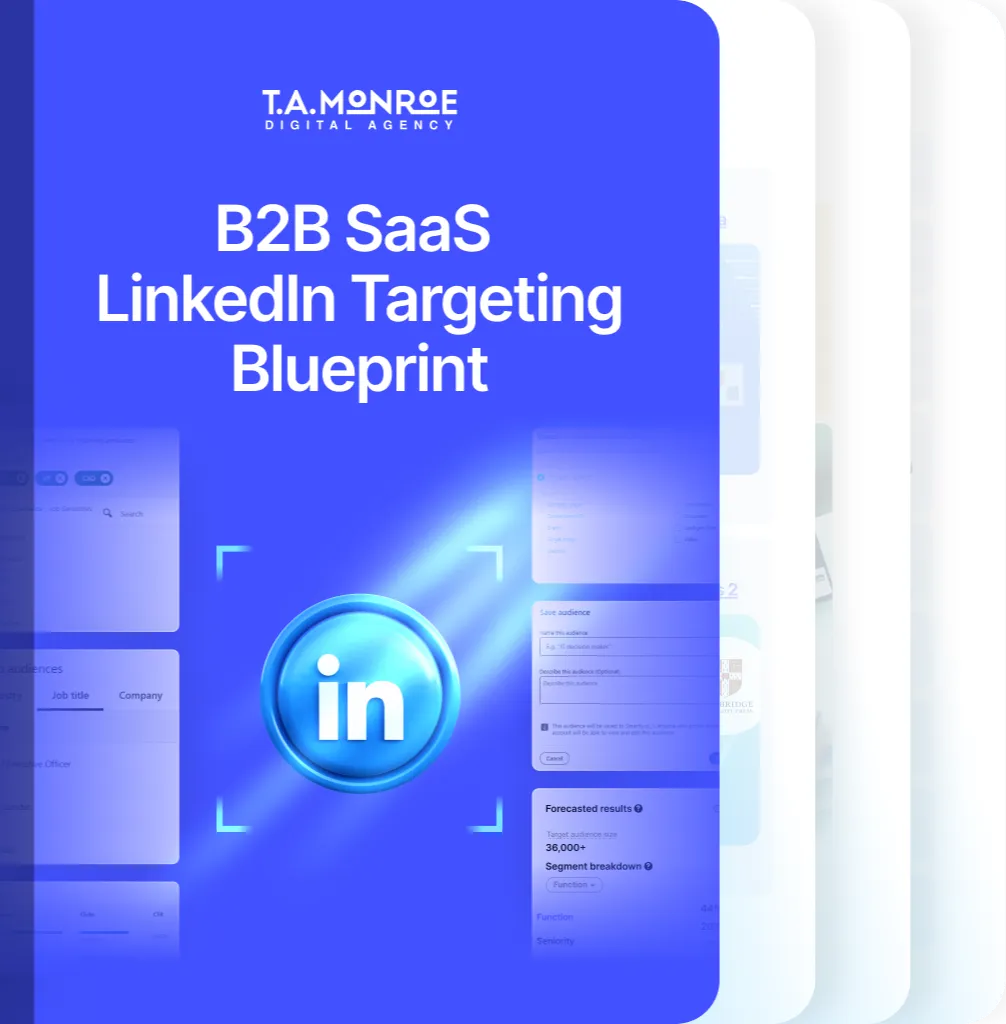
Specific enough to set company size, industry, job title, function and seniority as distinct filters, ideally with one campaign per buying-committee role rather than one blended audience. An ICP that only names an industry label is too broad for LinkedIn’s targeting tools to do useful work.
3. Should a B2B SaaS company have one ICP or several?
Most should have a primary ICP plus named variants for materially different buying contexts, fintech being the clearest example inside B2B SaaS. A single ICP forced to cover every vertical usually ends up too broad to target or message precisely in any of them.
4. How does fintech change the ICP for a B2B SaaS company?
The buying committee typically lengthens to include compliance and sometimes finance, trigger events often include regulatory deadlines alongside commercial ones, and buyer language shifts toward risk and defensibility rather than growth alone.
5. How often should an ICP be revisited?
At minimum whenever the product, pricing or target market shifts, and as a standing check each time a new cohort of closed-won deals is large enough to compare against the existing profile. An ICP built once and never rechecked against actual closed-won data drifts from reality faster than most teams expect.
6. Can Google Ads use an ICP the same way LinkedIn Ads does?
Partially. Google Ads cannot target by job title or seniority the way LinkedIn can, but the same ICP still drives Customer Match audiences, in-market and affinity signal selection, and which keywords and ad copy are built around the buyer’s actual language rather than the vendor’s.
7. What’s the fastest way to test whether an ICP is right?
Run it against the last 10 to 20 closed-won deals and check how many would actually have matched every filter, firmographic, technographic, committee and trigger event, before they bought. An ICP that only fits half of the deals that actually closed is describing an aspiration, not the real buyer.