
How to Use MQL and SQL Data to Prove SaaS Marketing ROI

In B2B SaaS, it is no longer enough to say “marketing generated leads.” Leadership wants to see exactly how every dollar invested in campaigns turns into qualified pipeline, closed‑won revenue, and predictable ARR. That level of revenue accountability starts with how you define, track, and use your Marketing Qualified Leads (MQLs) and Sales Qualified Leads (SQLs). When these stages are clearly defined and consistently measured, they become the bridge between day‑to‑day marketing activity and the metrics your board actually cares about.
This is especially critical in B2B SaaS, where buying journeys are long, non‑linear, and involve multiple stakeholders across product, finance, and IT. Prospects may move from an ebook to a webinar, then into a free trial and several sales calls before a deal is signed, and the real value only shows up over months of recurring subscription revenue. Without a disciplined approach to MQL and SQL data, it becomes almost impossible to see where high‑intent opportunities emerge, where they stall, and which programs truly move the needle on new ARR and expansion.
The goal of this article is to show how a structured, data‑driven approach to MQLs and SQLs can close that attribution loop for B2B SaaS companies. You will see how to define these stages in a way that reflects your revenue model, track conversion rates and velocity at each step, and tie those insights back to concrete ROI.
Defining MQLs and SQLs for B2B SaaS
“Lead quality” is only as good as the definitions behind it. If marketing and sales are not aligned on what qualifies as a Marketing Qualified Lead (MQL) and a Sales Qualified Lead (SQL), you end up with bloated pipelines, frustrated sales teams, and unreliable ROI reporting.
This section clarifies how modern SaaS companies should define MQLs and SQLs, and how those definitions evolve to include product usage and trial behavior in more mature go‑to‑market models.
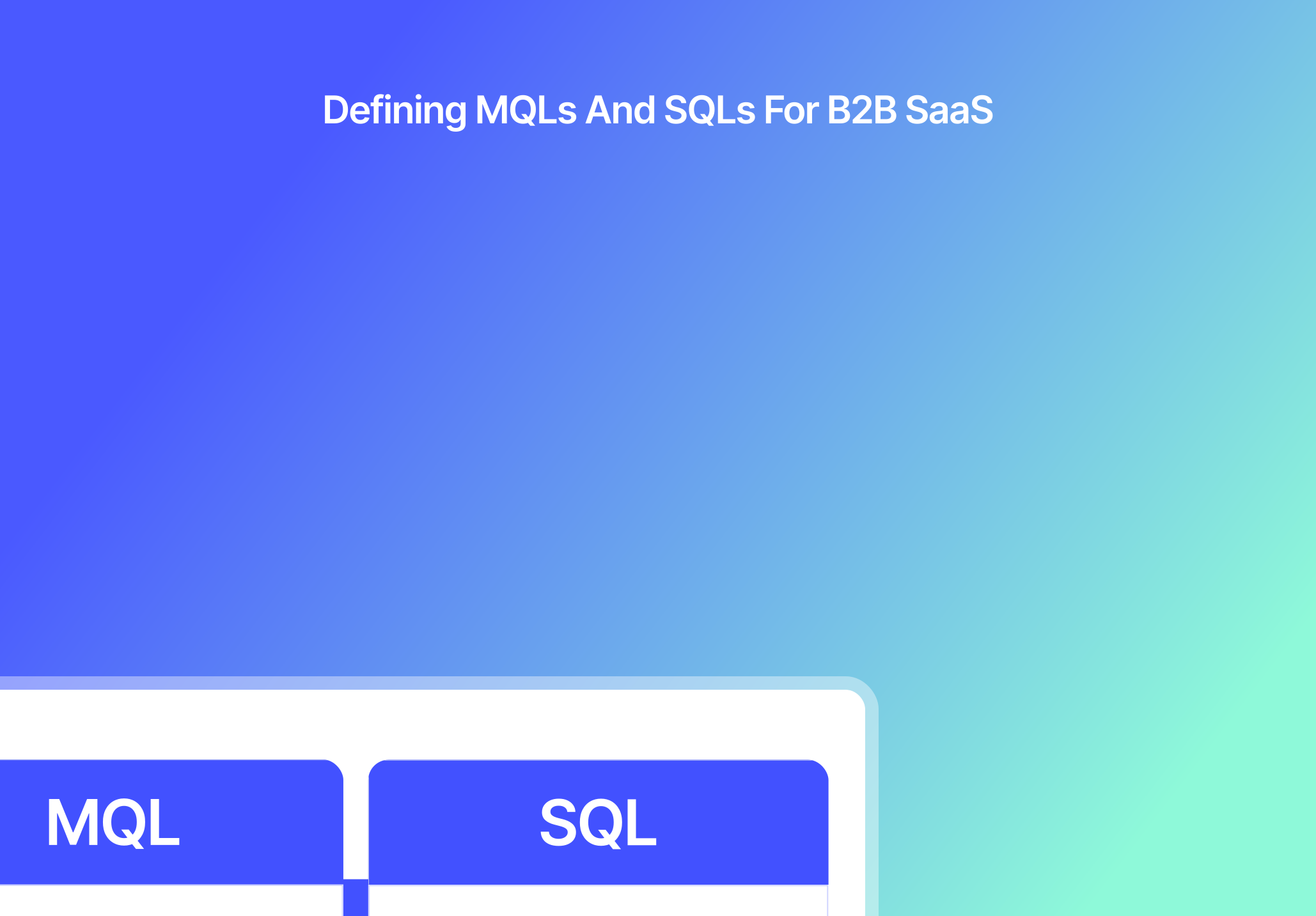
What Is a Marketing Qualified Lead (MQL)?
An MQL is a lead that has shown meaningful engagement with your brand and matches your Ideal Customer Profile (ICP), but has not yet been vetted by sales. In B2B SaaS, this goes beyond a single ebook download. It usually combines firmographic and technographic fit with high‑intent behaviors that signal real interest in your product.
Typical SaaS‑relevant MQL criteria include:
- Engagement with high‑value offers such as demo requests, pricing page visits, or product tours.
- Repeated interaction with mid‑to‑bottom‑funnel content (e.g., case studies, comparison guides, ROI calculators).
- Firmographic fit: right industry, company size, and geography for your ICP.
- Technographic fit: relevant tools in their stack, complementary platforms, or ecosystems you integrate with.
When you define MQLs this way, it shows that marketing is not chasing vanity volumes, but deliberately optimizing for leads with real buying potential in a SaaS context.
What Is a Sales Qualified Lead (SQL)?
An SQL is an MQL that sales has reviewed and confirmed as ready for a direct sales conversation or opportunity. At this stage, qualification moves from automated scoring to human vetting, where an SDR or AE validates that the prospect has genuine intent, the right role, and a realistic timeline.
In B2B SaaS, SQL criteria typically include:
- Clear interest: explicit request for a demo, proposal, or technical evaluation.
- Authority and role: the contact is a decision‑maker or strong champion involved in the buying process.
- Urgency and timing: an active project, upcoming contract renewal, or defined implementation window.
- Budget and fit: reasonable budget or willingness to invest in a solution like yours, plus use case alignment.
- Confirmed meeting: a discovery or demo call booked with sales, often the hard line between MQL and SQL.
Positioning SQLs this way reinforces your agency’s focus on pipeline quality and sales efficiency rather than just lead volume.
How SaaS Modifies Traditional Lead Definitions
SaaS go‑to‑market models introduce additional lead types and signals that sit alongside MQLs and SQLs. Product‑led and hybrid companies often use Product Qualified Leads (PQLs), trial‑activated accounts, or expansion signals from existing customers to capture intent that does not always show up via classic marketing forms.
Common SaaS‑specific modifications include:
- Product Qualified Leads (PQLs): Users who hit key in‑app milestones (e.g., activated core features, invited teammates) that correlate with higher close rates.
- Trial‑activated leads: Prospects who start a free trial, reach an activation point, and then exhibit sales‑ready behavior (asking about security, integrations, or rollout).
- Account‑level scoring: Aggregating behavior from multiple contacts within the same account to upgrade an MQL to an SQL when buying‑committee engagement crosses a threshold.
By explicitly acknowledging these nuances, you’re showing that you understand modern SaaS buying behavior and can design a qualification model that fits PLG, SLG, or hybrid motions.
Why B2B SaaS Firms Need Strong MQL/SQL Data
For most B2B SaaS companies, pipeline issues rarely start at the top of the funnel. The real problems sit in the middle: leads that look good on paper but never turn into opportunities, handoffs that break between marketing and sales, and reporting that cannot clearly show which channels or campaigns are actually driving revenue. Without strong MQL and SQL data, it is almost impossible to understand where the funnel is leaking or how to fix it.
As a B2B SaaS marketing agency focused on paid media and demand generation, we see the same patterns across martech, cybersecurity, and broader SaaS. Teams invest heavily in acquisition, but because qualification criteria are vague and inconsistently applied, sales ends up with bloated queues of “leads” that are not truly ready for a conversation. The result is low conversion velocity, wasted follow-up effort, and growing skepticism about whether marketing budgets are really contributing to sustainable growth.
The Cost of Weak MQL/SQL Data
When MQL and SQL definitions are unclear or misaligned, it creates several compounding issues:
- Handoff friction between marketing and sales, where both teams disagree on what a “good” lead looks like.
- Slower progression from first touch to opportunity, because high-intent leads are mixed with low-quality contacts.
- Disconnected data that makes it hard to attribute pipeline and revenue back to specific campaigns or channels.
Over time, these issues don’t just hurt efficiency, they undermine confidence in the entire demand generation function. This makes it harder to secure the investment needed to scale.
The Opportunity: Turning Lead Data into a Growth Lever
The flip side is that when sales and marketing align around shared MQL and SQL definitions, and both teams work from the same data, performance improves quickly.
With clear criteria and consistent tracking, you can see which audiences, offers, and channels are producing leads that reliably convert into pipeline and revenue. That allows you to shift spend toward what works, cut what does not, and build a repeatable engine for growth.
This is where strong MQL/SQL data becomes more than a reporting requirement, it becomes a strategic lever. It supports better forecasting, more accurate CAC calculations, and smarter decisions about when and how to scale budgets. It also creates transparency for leadership, who can now see a direct link between marketing investment and commercial outcomes.
Our Approach: Frameworks, Scoring, and Shared Visibility
At T.A. Monroe, the focus is on building demand generation engines that turn MQL and SQL data into predictable, scalable revenue for B2B SaaS companies. We use battle-tested, data-driven demand generation frameworks to help clients predictably scale their revenue within six months, without the risk of wasting budget on unqualified leads.
Over the last seven years, we have built and optimized more than 3,500 paid campaigns across Google, LinkedIn, and Facebook, and those programs have on average delivered a 53% increase in high-quality leads and a 27% reduction in CAC.
That level of performance comes from being precise about what counts as a “good” lead and how it is measured. Rather than relying on generic lead scoring, we define custom models that reflect each client’s ICP, buying journey, and deal dynamics. Our criteria is designed to distinguish between casual interest and real intent, so your paid and demand gen activity is optimized for the leads that are most likely to move through the funnel.
Once those definitions are in place, we make the data usable. We build shared reporting and dashboards that highlight the metrics that matter most to marketing and leadership. Because these components sit inside standard frameworks, they can be adapted quickly across different SaaS verticals, while still reflecting the nuances of each market.
The result is a demand generation system where campaigns are designed from day one to create and capture qualified demand, and where every MQL can be traced back to specific channels, messages, and investments. This gives marketing teams the confidence to scale spend, knowing they have the structure and data needed to prove impact and continuously improve performance.
A Partner in Sustainable, Data-Driven Growth
We do not see ourselves as a campaign factory; we position as a long-term growth partner. By centering our work on reliable MQL and SQL data, we can help clients move beyond “more leads” and toward “more of the right leads, at a lower cost, with a higher chance of becoming revenue.” That shift is what enables sustainable, repeatable growth from paid media and demand generation.
Key SaaS Lead Funnel Metrics (With Benchmarks)
To make MQL and SQL data actionable, SaaS teams need a small set of clear funnel metrics and realistic benchmarks. This section gives readers tangible numbers they can compare against, while naturally reinforcing that your agency thinks in terms of data, not just clicks and impressions.
Core Conversion Metrics to Track
MQL → SQL Conversion Rate
This shows what percentage of marketing-qualified leads progress to sales-qualified leads. It’s one of the clearest indicators of lead quality and how well targeting, offers, and qualification criteria are working.
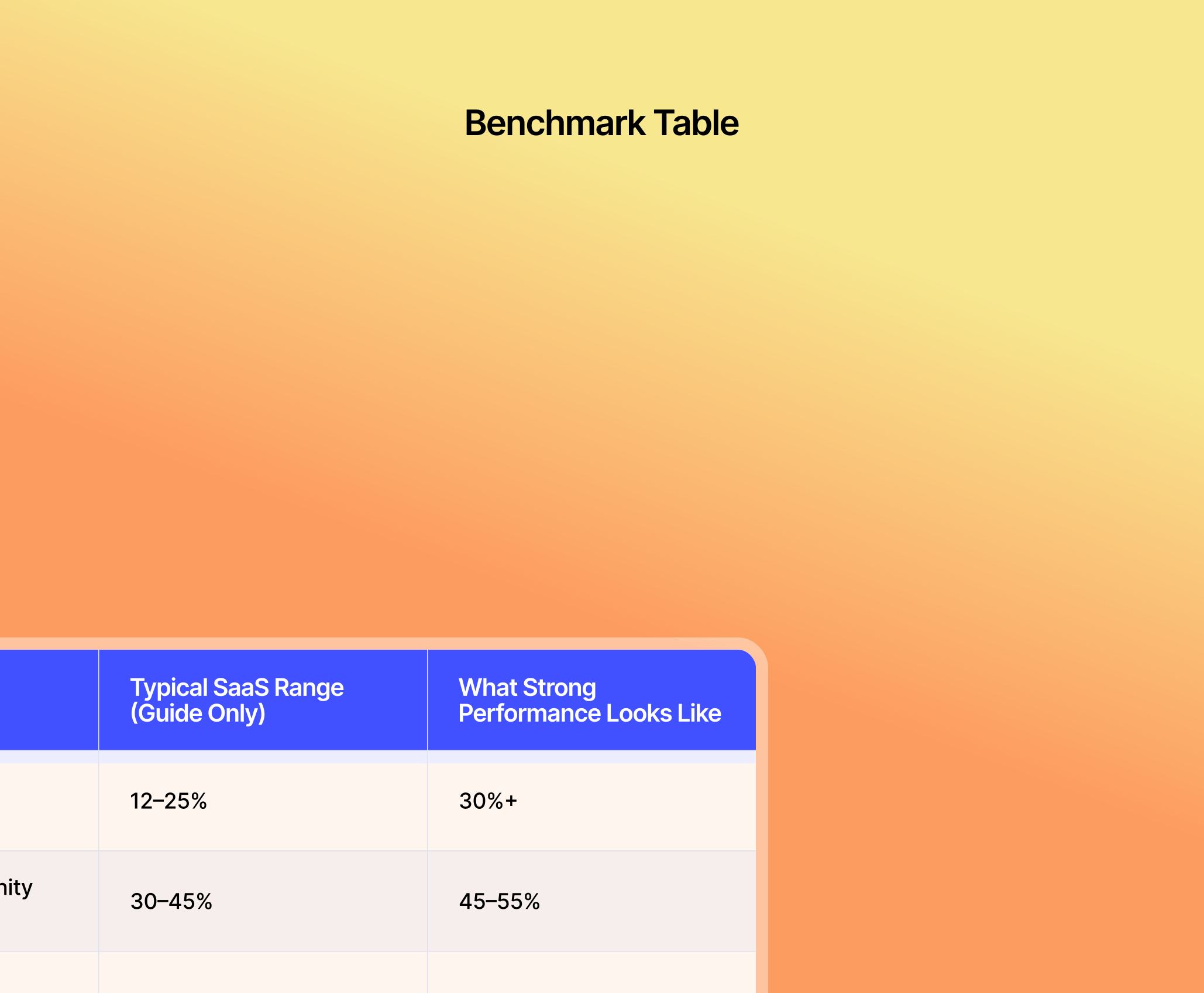
- Many B2B SaaS companies see MQL→SQL conversion in the low‑ to mid‑teens (roughly 12–25%), with high performers pushing beyond 30% when definitions and scoring are tight.
- If this number is weak, it usually points to misaligned MQL criteria, poor fit traffic, or nurture gaps, not just “sales follow-up issues.”
SQL → Opportunity and Opportunity → Customer
These two metrics connect lead quality to revenue impact.
- SQL → Opportunity shows how many sales‑ready leads become genuine pipeline. If this is low, either qualification is loose or the value proposition is not landing in sales conversations.
- Opportunity → Customer (win rate) reveals how efficiently the business converts real deals. For many SaaS companies, a 20–30% win rate is a common target, with more mature or niche players aiming higher.
Efficiency Metrics: Velocity and Cost
Pipeline Velocity
Pipeline velocity captures how quickly value moves through the funnel. You can express it in days from MQL to Closed Won, or in revenue per day moving through the pipeline.
- Shorter cycles mean faster feedback loops and more confidence in scaling spend.
- When you improve MQL→SQL and SQL→Opportunity conversion, you often see cycle time shrink as sales spends more time with better‑fit deals.
Cost per Qualified Lead
Rather than obsessing over cost per click or generic cost per lead, focus on cost per MQL and cost per SQL.
- For any given channel, it’s more meaningful to ask, “What does it cost us to generate a sales‑ready lead that fits our ICP?”
- This is where your paid media and demand gen frameworks shine, because you can show improvements in cost per qualified lead even if top‑of‑funnel CPL holds steady.
Data-Driven Agency Practices: Moving MQLs to SQLs
A high-performing SaaS funnel isn’t just about capturing leads. It's about prioritizing, nurturing, and advancing the right prospects through each stage. Effective movement from MQL (Marketing Qualified Lead) to SQL (Sales Qualified Lead) demands a data-driven approach, blending robust scoring models, automation, and personalized nurture tactics.
Creating a Lead Scoring System for SaaS
The foundation of any reliable MQL-to-SQL process is a multi-layered lead scoring system. This involves:
- Scoring specific actions and attributes: Assigning weights to high-intent behaviors (demo requests, repeat pricing page visits, webinar attendance) as well as demographic, firmographic, and technographic fit (job title, company size, relevant tools).
- Historical conversion data: Analyzing what lead actions and attributes are most correlated with conversion, then assigning higher point values to those behaviors.
- Segment-specific models: Different buyer types (enterprise, SMB, or by product line) should have tailored scoring because what signals intent for one segment, may mean little in another.
Automating Lead Movement and Funnel Progression
Automation plays a crucial role in moving high-value leads through the funnel:
- Real-time triggers: When a lead surpasses a threshold score, their status can automatically update (e.g., from MQL to SQL), ensuring no delay in nurturing or follow-up.
- Workflow integration: Lead scoring should be built into your CRM or marketing automation platform (HubSpot, Marketo, etc.), allowing for immediate, rule-based routing to relevant nurture paths or further qualification.
- Lead decay logic: Scores decrease for inactivity over time, keeping sales and marketing focused on genuinely engaged prospects.
Multi-Channel Nurture Paths: Keeping Prospects Engaged
A sophisticated nurture strategy is needed because SaaS buyers move through various touchpoints and decision stages:
- Personalized content tracks: Deliver educational assets (case studies, product comparisons, tutorials, webinars) that match a lead’s interests or funnel stage.
- Retargeting campaigns: Use paid social and display channels to keep high-scoring leads engaged after their initial interaction.
- Integrated email workflows: Multi-step automated emails based on behavior signals keep relevant information in front of prospects at the right moment.
Tracking & Measuring for Demonstrable ROI
A truly data-driven SaaS marketing strategy doesn’t stop at lead generation, it makes ROI clear at every stage of the funnel. With closed-loop tracking, custom reporting, and actionable analysis, SaaS teams move from guesswork to confident investment.
Reporting Process: Dashboards and Conversion Analytics
The foundation of measurable ROI is a set of robust dashboards built inside your core analytics or CRM platform: typically HubSpot, Salesforce, or a dedicated BI tool.
- Custom Dashboards: Track MQLs, SQLs, opportunities, customer wins, velocity, and payback periods by channel and campaign.
- Conversion Rates: Measure stage-by-stage conversion: lead to MQL, MQL to SQL, SQL to customer, to immediately spot bottlenecks or leaks.
- Cohort Analysis: Review conversions, lifetime revenue, and churn for groups of leads sourced from specific campaigns, channels, or segments. This reveals campaign ROI beyond first touch, helping you understand true long-term value.
Sample ROI Calculation: Making the Math Visible
SaaS ROI calculations should connect funnel stages to revenue. This ensures you’re going beyond surface-level lead numbers.
For example:
- If you generate 20 SQLs per month, with a 25% SQL-to-customer conversion rate, and your average customer creates $1,000 in monthly recurring revenue (MRR), here's the calculation:
- Customers per month =20×0.25=5
- Added MRR per month =5×$1,000=$5,000
- Over a year, that's $60,000 in new recurring revenue and visibility into which channel, campaign, or keyword provided the best returns.
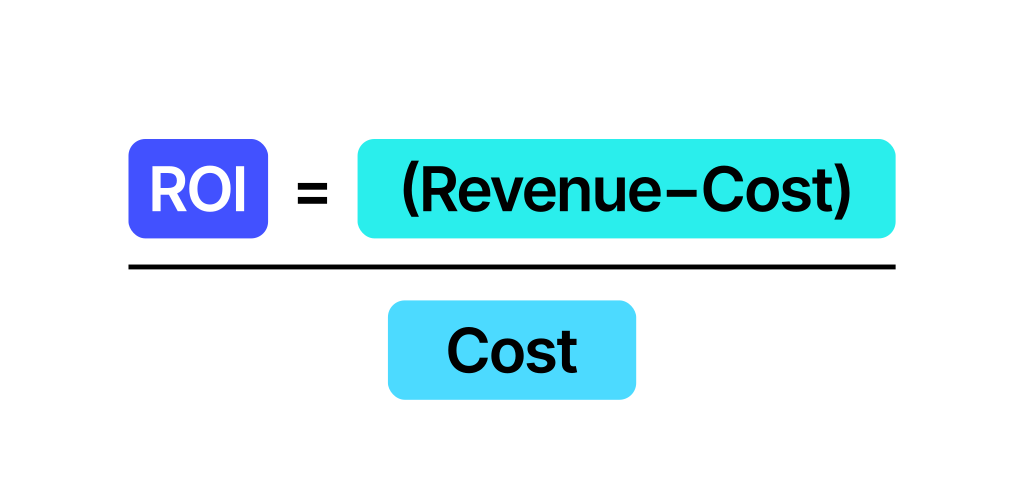
ROI formula (classic):
So, for a campaign that cost $20,000:
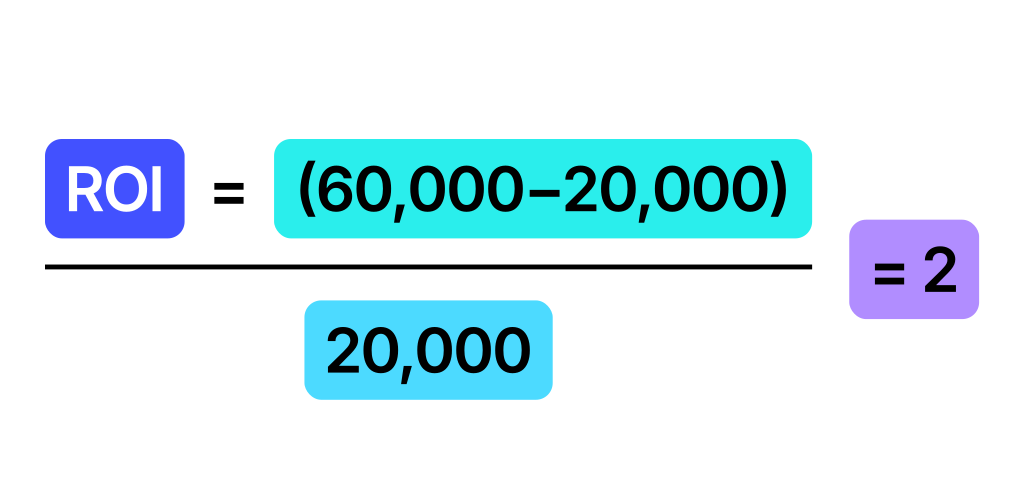
That’s a 200% ROI for paid media, easily benchmarked quarter-over-quarter.
Continuous Review: Iteration and Funnel Optimization
Demonstrable ROI requires regular funnel reviews and ongoing A/B testing:
- Weekly and Quarterly Reviews: Analyze funnel conversion rates, channel efficiency, and pipeline velocity to detect emerging leaks or wins.
- A/B Testing: Experiment with messaging, offer structure, and nurture sequences to continually drive higher conversion and lower CAC.
- Pivoting on Insights: When a segment, channel, or offer underperforms, optimize quickly. Whether it’s reallocating budget, refining audience criteria, or deploying new content.
ROI Visualization: SaaS Outcomes from Better MQL/SQL Data
Making ROI visible is essential for building stakeholder trust and making smart, data-driven decisions in SaaS marketing. Visualization (dashboards, before/after metrics, or client stories) translates funnel improvements into financial impact that everyone can understand.
Before-and-After Scenarios: Quantifying Marketing’s Real Impact
One of the clearest ways to show the value of improved MQL/SQL data is through before-and-after analytics. This involves comparing key metrics like pipeline volume, customer acquisition cost (CAC), and revenue growth before and after refining lead scoring or funnel automation.
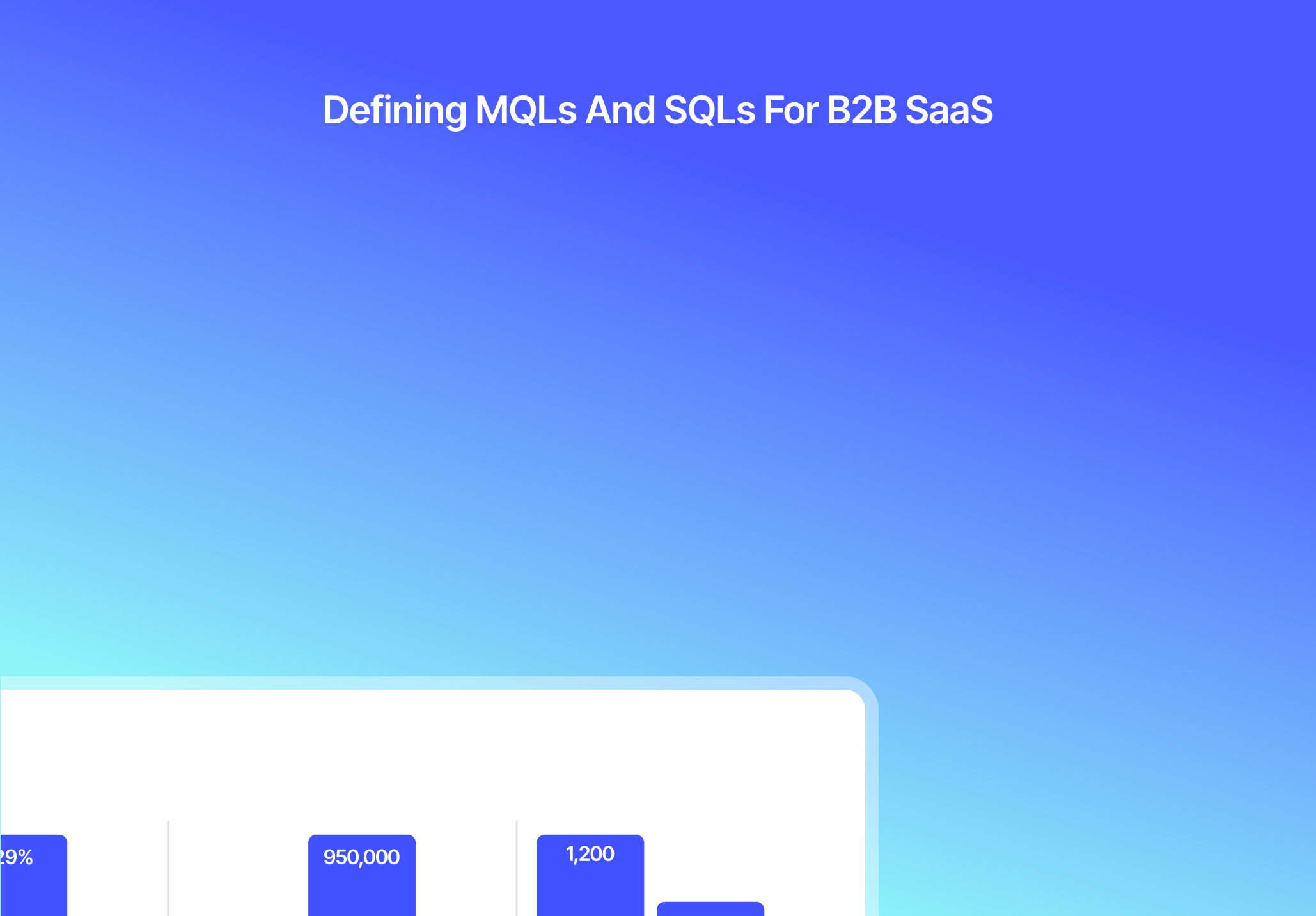
Pipeline Growth Example
- Before: 14% MQL→SQL conversion, $500K quarterly pipeline, CAC at $1,200 per SQL.
- After: 29% MQL→SQL conversion, $950K quarterly pipeline, CAC at $900 per SQL.
- Visualization: Funnel chart illustrating wider SQL and Opportunity stages, bar graph showing CAC decrease over time, line chart tracking pipeline growth.
Revenue Lift
Improvements in funnel efficiency directly translate to higher MRR and ARR, allowing better planning and budget allocation.
Visual Tools and Data Annotations: From Metrics to Insights
Visual dashboards turn raw performance data into narratives that drive action. Essential visualization tools and techniques include:
- Funnel Charts: Display drop-off and conversion rates across each lead stage.
- Time-Series Bar Graphs: Show how key metrics (MQL→SQL conversion and CAC) change month-over-month.
- ROI and Growth Cards: Highlight percentage improvements, cost savings, and total revenue gained after implementation.
- Annotations: Call out points of improvement, such as “Retargeting introduced here; result: 15% lift in SQL conversions within 30 days.”
Modern SaaS dashboards refresh in real-time, allowing teams to continually monitor pipeline health and respond quickly to performance shifts.
SaaS Pitfalls and Remediation: How to Fix Revenue Leaks
SaaS marketing is loaded with unique challenges. Even experienced teams encounter mistakes that can drain pipeline and stall growth. By recognizing typical pitfalls and deliberately structuring processes to fix them, organizations can transform marketing from a source of frustration to a driver of compounding revenue.
Common Errors in the B2B SaaS Funnel
- Premature handoffs: Passing leads to the next funnel stage before they’re truly qualified. This results in missed opportunities and wasted sales effort.
- Poor feedback loops: Lack of regular, actionable communication between marketing and product or customer success, so funnel leaks persist unnoticed.
- Lead dumps: Sending large volumes of undifferentiated leads into sales or account management. Resulting in disengagement, low conversion, and burnout.
- Binary scoring models: Overly simplistic lead scoring systems, where leads are either “hot” or “cold,” fail to capture nuance and prevent optimal nurturing.
Remediation Strategies: Building a Resilient Growth Process
- Implement real-time SLAs: Service Level Agreements for each stage, so leads progress only when they’ve met objective criteria.
- Weekly alignment reviews: Regular meetings (weekly or biweekly) and dashboard check-ins to identify friction, clarify definitions, and iterate qualification rules.
- Shared ownership of lead progression: Marketing, product, and customer teams collaborate on funnel criteria, nurturing, and content. By doing this, you’re closing gaps between stages and driving accountability.
- Multilayered scoring and nurture: Replace binary models with complex, behavior-driven scoring that recognizes gradual engagement and intent.
Commitment to Continuous Optimization
- Ongoing A/B testing: Experiment with messaging, nurture sequences, and scoring weights, so funnel improvements never stagnate.
- Closed-loop feedback: Track not just conversions, but post-sale retention, churn, and customer feedback—ensuring funnel optimization benefits all growth stages.
- Innovation in tools and playbooks: Use current data, new attribution solutions, and industry best practices to adapt strategies as business needs and market trends evolve.
Conclusion: Transform Your Lead Data Into Predictable Revenue Growth
When B2B SaaS companies master their MQL and SQL data, the entire revenue engine transforms. Instead of guessing which campaigns drive pipeline, you see clear attribution from first touch to closed won. Rather than sales rejecting marketing leads, both teams work from shared definitions that accelerate deals. Marketing shifts from defending budgets to confidently scaling what works, backed by data that proves ROI at every funnel stage.
This level of clarity doesn't happen by accident. It requires proven frameworks for lead scoring, automation that moves prospects at the right velocity, and reporting that connects marketing activity to ARR impact. The companies that get this right see 30%+ MQL to SQL conversion rates, shortened sales cycles, and sustainable CAC reduction quarter over quarter.
At T.A. Monroe, we've refined these exact frameworks across 3,500+ campaigns for cybersecurity, martech, and B2B SaaS clients. Our data-driven approach consistently delivers 53% more high-quality leads while reducing customer acquisition costs by 27%.
FAQs
What's the difference between an MQL and SQL in B2B SaaS?
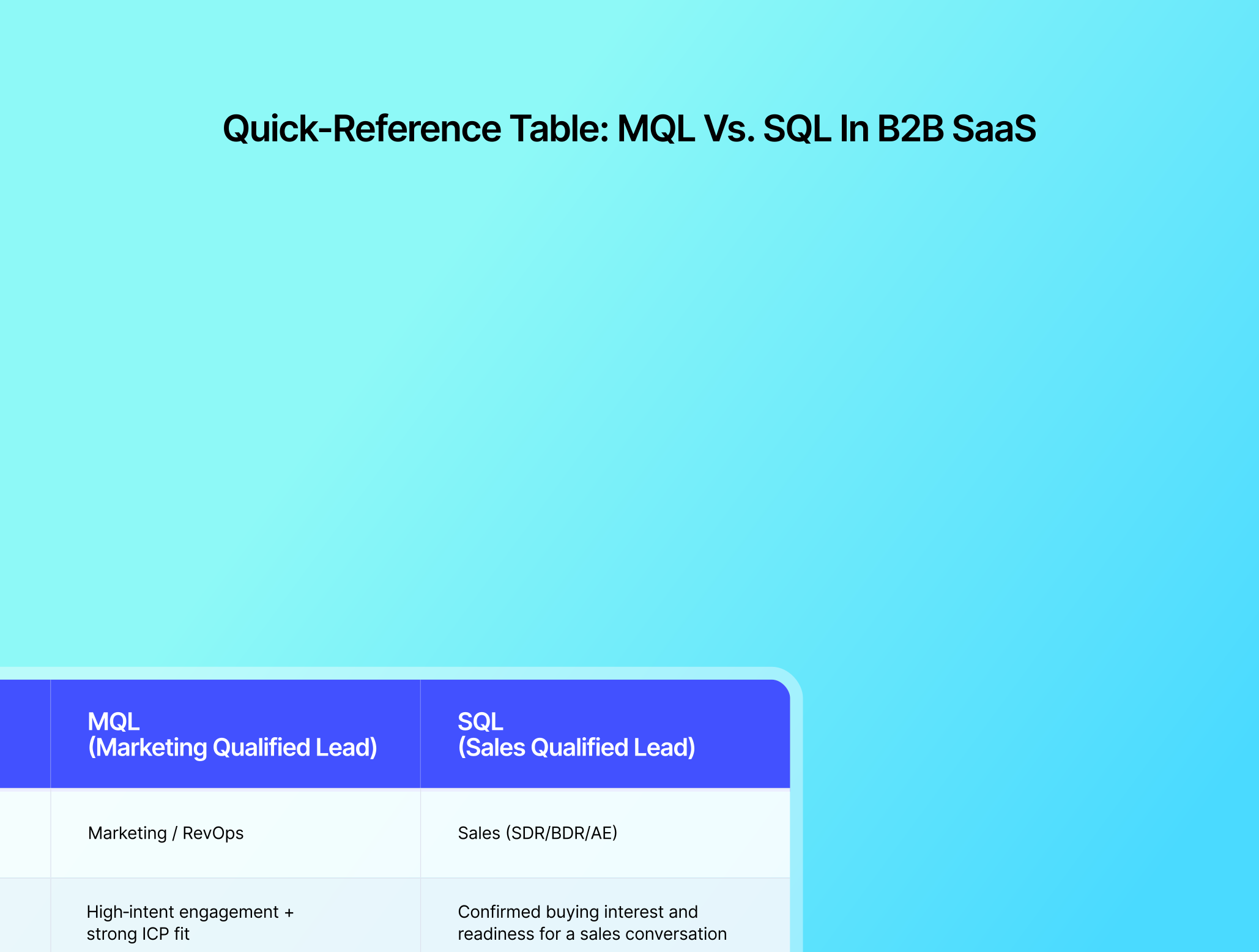
An MQL is a lead that has shown real interest in your product and fits your ideal customer profile, but hasn’t been contacted by sales yet. An SQL is when sales reviews that lead and confirms they’re actually ready to buy, with the right authority, budget, and timeline for a purchase decision.
What's a good MQL to SQL conversion rate for SaaS companies?
Most B2B SaaS companies convert between 12-25% of their MQLs to SQLs, though top performers hit 30% or higher when they have clear definitions and strong lead scoring in place.
How do you calculate marketing ROI for SaaS?
Take the number of SQLs you generate monthly, multiply by your close rate to get new customers, then multiply by average monthly recurring revenue. Compare that annual revenue to your campaign costs. For example: 20 SQLs with a 25% close rate gives you 5 new customers at $1,000 MRR each, creating $60,000 in annual revenue.
What behaviors indicate a high-quality MQL in SaaS?
Look for prospects who request demos, visit your pricing page multiple times, download case studies or ROI calculators, and engage repeatedly with your product content. They should also match your ideal company size, industry, and have the right tech stack.
What's the most common mistake SaaS companies make with their funnel?
Passing leads to sales too early, before they’re actually ready to buy. This creates friction between teams, wastes sales time on unqualified prospects, and ultimately hurts conversion rates and revenue growth.
How long should a typical SaaS sales cycle be from MQL to close?
The typical range is 60-120 days from MQL to closed deal, but high-performing companies often get this under 75 days by having better qualification processes and moving qualified leads through the pipeline more efficiently.
More Posts












































More Resources
B2B SaaS Persona Builder
Copy & Paste prompt for ChatGPT.

AI Marketing Strategies Playbook: How 5 Marketing Leaders Cracked the AI Code
How 5 Marketing Leaders Cracked the AI Code.
B2B SaaS LinkedIn Targeting Blueprint
How to drive qualified leads in under 7 days using LinkedIn’s targeting capabilities (including account-based marketing).
LinkedIn Ads Benchmarks Report 2025
Learn how top B2B marketing teams protect budgets & accelerate pipeline.
Explore Proven Formulas for High-Impact LinkedIn Ads
LinkedIn Ads Swipe File.
How to Stop Overpaying for Your Branded Google Ads Keywords
The Ultimate Branded Google Ads Optimization Guide.
The 2025 Ultimate Revenue Engine Blueprint
Your guide to standing out in crowded markets without overspending on ads. Covers branding, PLG triggers, and community tactics in one concise playbook.
Google Search Ads Benchmarks Report 2025
Learn why your search ads cost more and convert less (and what to do about it).
Creating a Complete Full-Funnel Strategy for Predictable Revenue Growth

5 Tips To Find Success on Google Ads
7 High-ROI Google Ads Optimization Tips & Strategies + Bonus Checklist
Improve Your MQL Quality in 90 Days Cheat Sheet
In this cheat sheet, you’ll learn the top hacks to get more marketing-qualified leads for your sales funnel.

4 Secrets for Running Paid Social Ads That You’re Not Supposed to Know
Discover the 7 Essential Steps for an Effective Go-to-Market Strategy
B2B SaaS Revenue Growth Checklist
If your revenue engine falls short of expectations, this checklist will help you quickly identify and address the underlying issues.