What does B2B SaaS paid media look like without third party cookies? With Mark McEachran
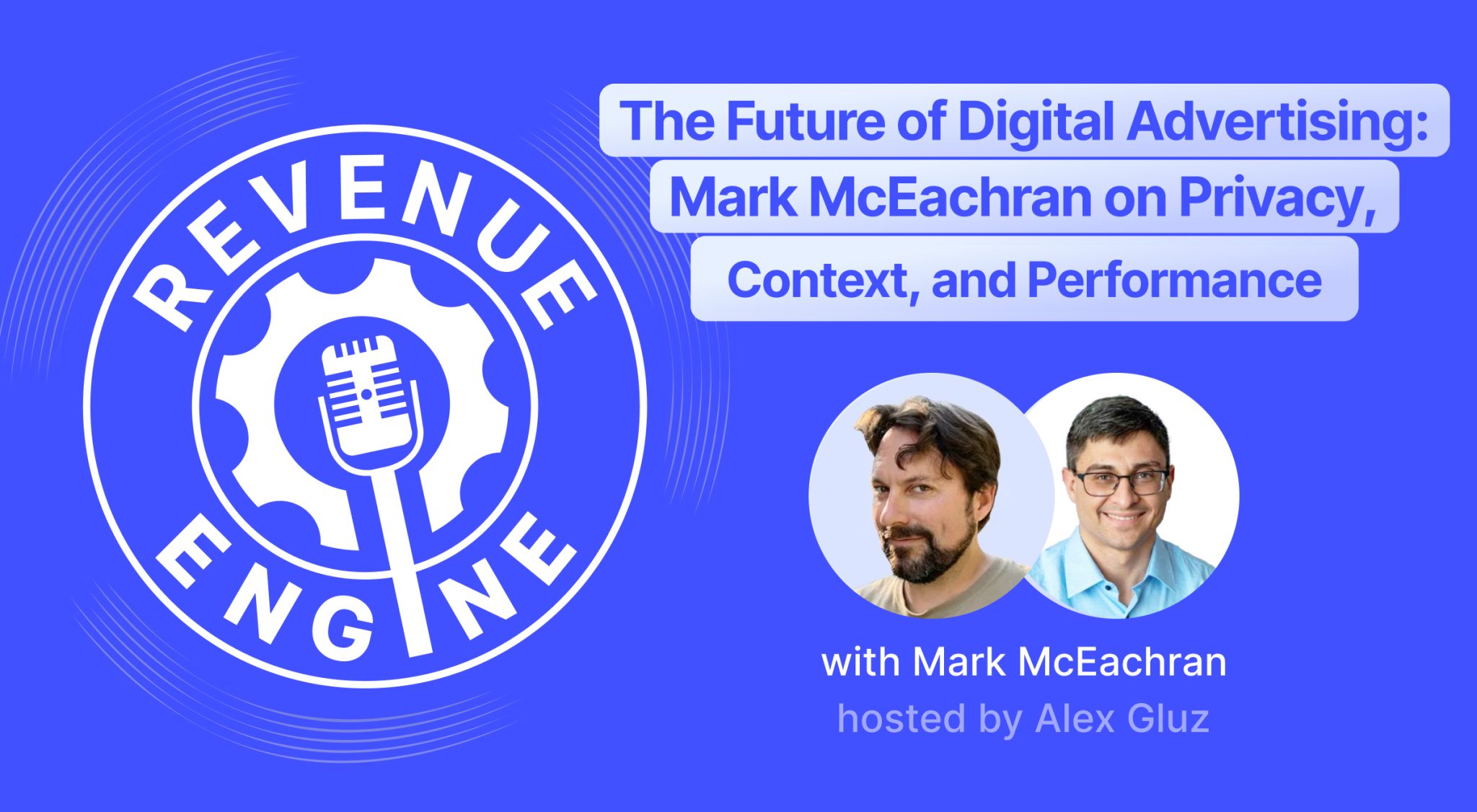
Yieldmo SVP of Product Mark McEachran joins Alex Gluz on privacy, contextual targeting and first party data, and what the end of reliable third party tracking means for B2B SaaS paid media strategy.
Without third party cookies, B2B SaaS paid media runs on first party data and context. You build audience signal from site behavior, CRM records and email, you target by the content a buyer is reading rather than by who a cookie says they are, and you judge performance on pipeline contribution rather than last click attribution.
What You Will Take Away
1. First party data is the asset, not the campaign.
Email addresses, site behavior and CRM history are the only signal you fully control. Teams that treat data collection as a marketing program, not a tracking setting, keep their targeting when the identifiers go.
2. Context is a targeting method again.
Reaching a buyer through the content they are reading works without knowing who they are. For B2B SaaS, where the addressable audience is small and the intent signals are editorial, this is a practical replacement rather than a downgrade.
3. Measurement has to move before targeting does.
If the reporting still rewards last click, the first cookieless quarter looks like a performance collapse. Marketing sourced pipeline and revenue is the measure that survives signal loss.
4. Keep a standing test budget.
Mark's point is that the landscape keeps moving, so a fixed share of spend should always be finding the next channel or format that works. That is cheaper than discovering a dead channel at renewal.
Listen to the full conversation:






About the Guest
Mark McEachran, Senior Vice President of Product Management, Yieldmo. Mark has a degree in computer science and a career in digital advertising that began in 1997, starting at a small company that quickly became the third most trafficked website of its time. His work includes pioneering work at the Rubicon Project, where he contributed to building the first supply side platform exchange.
About the Host
Alex Gluz, CEO, T.A. Monroe. Alex hosts the Revenue Engine Podcast and builds performance driven growth frameworks for B2B SaaS companies, with a focus on customer acquisition, demand generation, pipeline and measurable revenue outcomes.
In This Episode…
The digital advertising landscape is being reshaped by the decline of reliable third party tracking and the rise of privacy expectations. How will these changes shape advertising, and what should businesses do to stay ahead?
Mark McEachran's view is that the answer lies in first party data and contextual targeting, used together to deliver relevant advertising without compromising privacy. As identifiers become unreliable, companies have to innovate to keep performance while respecting how people expect their data to be handled. That is not only a technology change. It changes how advertisers reach buyers in the first place.
In this episode of the Revenue Engine Podcast, Alex Gluz sits down with Mark McEachran, Senior Vice President of Product Management at Yieldmo, to discuss the evolving landscape of digital advertising. They cover first party data, contextual targeting in a post cookie world, what B2B teams specifically should do differently, and where the opportunities sit for privacy focused companies.
What Is Covered
What Has Changed Since This Episode
This conversation was recorded in 2024, when a hard deadline for third party cookies in Chrome still looked likely. The deadline moved. The direction did not.
In July 2024 Google stepped back from forced deprecation in Chrome and moved to a user choice model, leaving cookie preferences in the browser's privacy settings rather than removing the cookies outright. Google has since retired several Privacy Sandbox features, including the Attribution Reporting API, IP Protection and the Topics API, citing low adoption, and has pointed instead at interoperable attribution and privacy first identity through FedCM and CHIPS.
For a B2B SaaS paid media strategy the practical position is unchanged. Safari, Firefox, Brave and DuckDuckGo already block third party cookies by default, so a large share of traffic was never addressable that way. Consent prompts and tracking prevention reduce the rest. The signal loss arrived on a different timetable, not a different destination, which is why the work Mark describes still applies: own your data, target by context, and measure on pipeline.
What the 2026 Benchmarks Show
Two of our own benchmark reports put numbers on what signal loss has cost B2B advertisers since this conversation was recorded.
Non branded search is getting more expensive and less effective
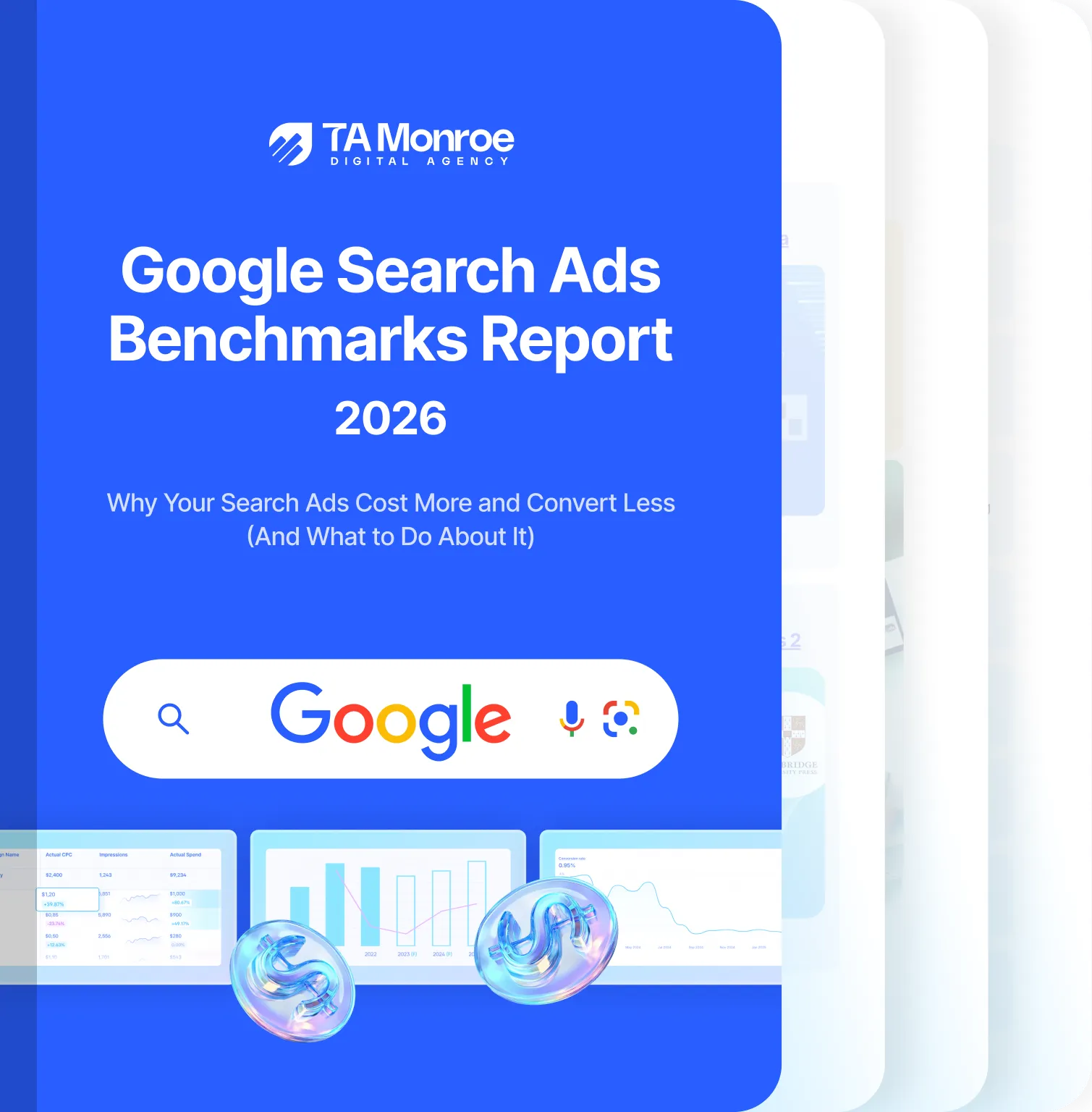
Our Google Search Ads Benchmarks Report 2026, built on aggregated B2B advertiser data for July 2025 to June 2026, records non branded search cost per click rising from $5.34 to $6.81 across that period, a 28% increase, while click through rate fell from 4.04% to 3.60%. Non branded search has dropped from 38.10% of B2B budget in August 2024 to 33%. AI Overviews are part of the reason: ad position visibility is now lost around 25% of the time, and roughly 30% of US Google queries return an AI Overview.
Budget is moving toward the channel where the audience is declared
In the same dataset LinkedIn overtook non branded Google Search in B2B budget share for the first time, at 41% against 33%. That is Mark's argument arriving as a budget line. When cross site identity becomes unreliable, spend moves to places where the audience identifies itself rather than places where it has to be inferred.
The formats that collect first party data are the cheapest
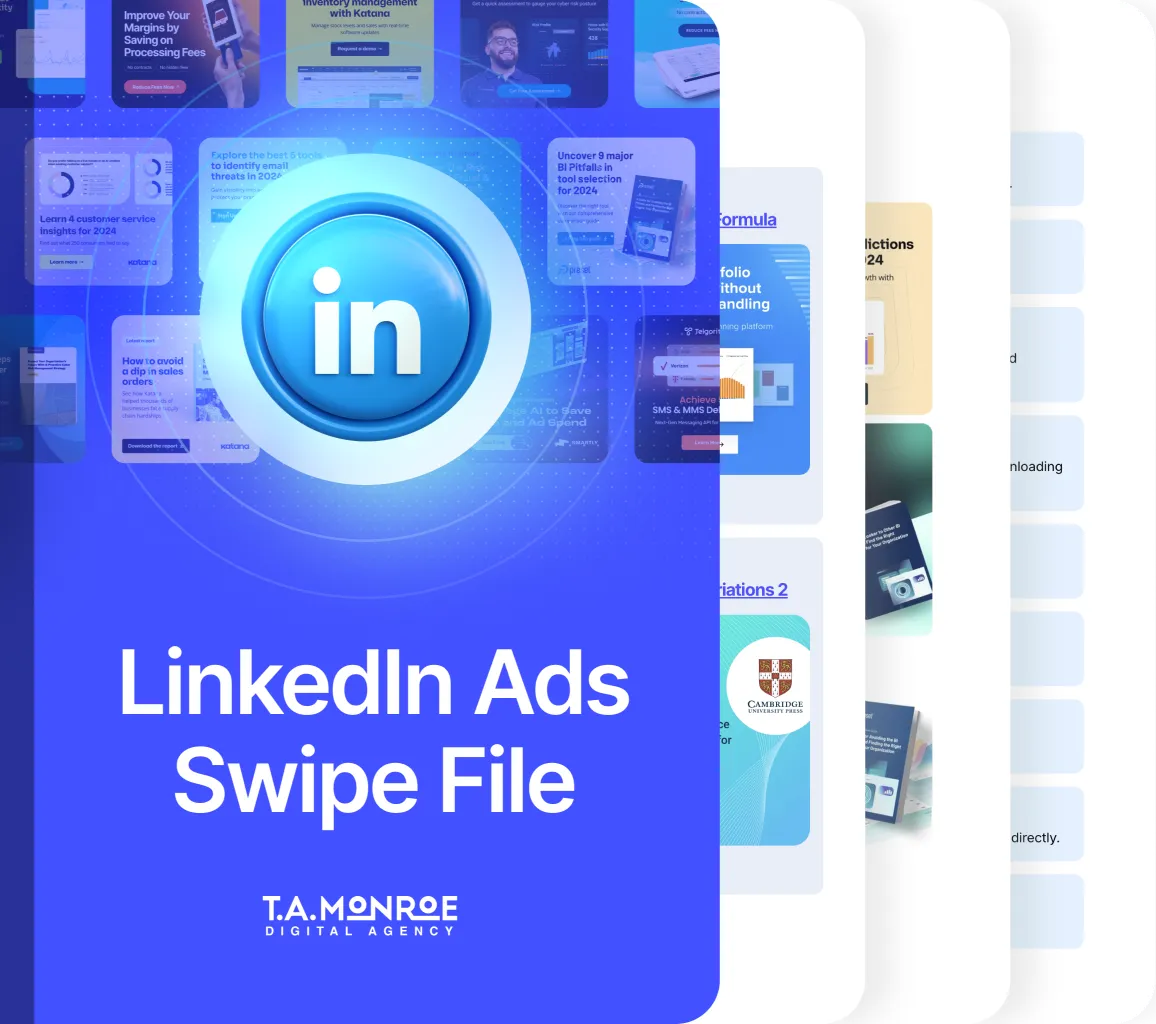
Our 2026 LinkedIn Ads Benchmarks Report, built on aggregated campaign data through Q1 2026 across four ad formats, two geographies and three industry verticals, shows Document Ads completing lead forms at 26.81% in US software development against 3.28% for video. That completion gap produces a cost per lead of $272.42 for Document Ads against $914.89 for Carousel, a $642 spread inside one channel and one vertical. The formats that trade content for a contact detail are the ones producing usable first party data at the lowest cost.
Both reports state their date range and scope. Neither publishes a campaign level sample size, so read these as directional against your own account rather than as population statistics.
Want to Know What Your LinkedIn Spend Should Be Producing in 2026?

Quotable Moments
- “Contextual is really just a proxy for audience.”
- “That email address becomes the token that goes to the bidstream and now becomes the identifier instead of the cookie’s ID.”
- “The irony is that these efforts are being driven to improve privacy. But then the countermeasures, in order for publishers to continue to make money, are to kind of reduce privacy.”
- “Always have a little bit of budget set aside to test and find new areas that are working.”
- “Right now, the open web is sitting in a place of massive uncertainty.”
- “If you can take complexity and simplify it, that’s a valid business in any arena.”
- “Lead with your heart.”
Frequently Asked Questions
What replaces third party cookies in B2B SaaS paid media?
First party data and contextual targeting, used together. First party data covers what you collect directly: site behavior, form fills, email engagement and CRM history. Contextual targeting reaches buyers through the content they are reading. Neither depends on a cross site identifier.
How should a B2B SaaS team start building first party data?
Treat it as a marketing program rather than a tracking setting. Give buyers a reason to identify themselves, through research, benchmarks, tools and events, then connect that data to the CRM so audiences can be built and suppressed properly. The value compounds, so starting late is expensive.
Does contextual targeting actually work for B2B?
It suits B2B better than most. The audience is small and the intent signals are editorial, so the publication and the topic a buyer is reading carry real information about where they are in a decision. It does require tighter creative, since you are matching a message to a context rather than to a known individual.
How do you measure paid media without cookie based attribution?
Move the reporting to marketing sourced pipeline and revenue, supported by self reported attribution on forms, incrementality testing and holdouts. Last click reporting will understate channels that create demand rather than capture it, and that understatement gets worse as signal degrades.
What should change in a B2B SaaS paid media budget?
Fund the data layer, not just the media. Then hold a standing share of spend for testing new channels and formats, so the next working placement is found before the current one stops working.
Is the open web still worth buying for B2B SaaS?
Mark's own description is that the open web sits in a place of uncertainty. It still reaches buyers that walled gardens do not, but it needs contextual buying, tighter inventory controls and honest measurement to earn its place in the plan.
Metrics Mentioned
Cost per lead · Lead generation form completion rate · Cost per click · Cost per mille · Click through rate · Frequency capping · Video completion rate · Viewability · Marketing sourced pipeline and revenue.
Tools & Channels Discussed
Tools and platforms. Yieldmo · The Trade Desk · DV360 · ID5 · LiveIntent · Rubicon Project · Apple email anonymizer · Consent management platforms · LinkedIn Conversions API
Channels and surfaces. Open web programmatic · Contextual inventory · Connected television · Walled gardens · LinkedIn · Facebook · YouTube · Trade publications such as Business Insider and Forbes
Action Steps
- Collect and manage first party data, including email addresses and behavior on your own properties. First party data is the targeting currency once cross site identifiers stop being reliable.
- Choose solutions that do not depend on a single identifier. Independence from any one vendor's signal is what keeps a campaign running through the next change.
- Use analysis tools to read consumer behavior, with a person deciding what the output means. The reading is the easy part. Knowing which pattern is worth acting on is the work.
- Track state and federal privacy regulation. Compliance is a moving target and the cost of getting it wrong is not only legal.
- Hold part of the budget for continuous testing. That is how new formats, placements and audiences get found before the current ones decay.
Resources Mentioned
Special Mentions
Related Episodes
T.A. Monroe's Take: Build the Measurement Before You Rebuild the Targeting
Most teams respond to signal loss by changing their targeting first. That is the wrong order. If the reporting still credits the last click, every move toward contextual and first party targeting will look like a loss, and the budget gets pulled back before the approach has had a chance to work.
The last mile is where revenue lives. Audience data and placements are inputs. What decides the outcome is which signal you trust, which test you scale, and which channel you stop funding. That judgement is the part no identifier was ever providing.
Across eight years and more than 3,500 campaigns on Google, LinkedIn and Meta, the pattern is consistent: the accounts that survive a measurement change are the ones that were already reporting on marketing sourced pipeline and revenue rather than on platform conversions.
What a Rebuilt Paid Programme Produces
Preset's LinkedIn ads were completing at 12.5% with a cost per lead of $142. Refining targeting, creative and lead forms produced a 273% increase in new pipeline opportunities, a 50% better completion rate and a 54% lower cost per lead.